Did you know that shifting your weight by just a few millimeters can significantly alter your body’s internal energy flow? Many people overlook how small adjustments in their stance create a massive impact on their long-term health. Mastering tai chi posture basics is the secret to unlocking better balance and mental clarity in your daily life.
Proper alignment serves as the foundation for both physical stability and a calm mind. By focusing on these simple movements, you can transform your routine from the comfort of your own home. Learning these tai chi posture basics helps you build a stronger connection between your body and breath.
Key Takeaways
- Proper alignment improves your overall physical stability.
- Small adjustments lead to significant health benefits.
- Consistent practice fosters deep mental clarity.
- You can easily learn these techniques at home.
- Focusing on form enhances your daily movement quality.
The Foundation of Tai Chi Posture Basics
Proper alignment serves as the silent engine behind every graceful movement you perform. When you focus on tai chi posture basics, you move beyond simple choreography and enter the realm of true moving meditation. This intentional approach allows you to unlock the deeper, restorative benefits of your practice.
Why Posture is the Gateway to Tai Chi
Many students view this practice as a series of steps, but it is actually a gateway to internal peace. By maintaining correct structure, you create a clear path for energy to flow without obstruction. This intentional stillness within movement is what separates a casual exercise from a profound meditative experience.
Consider these primary benefits of prioritizing your alignment:
- Enhanced stability during complex transitions.
- Greater efficiency in energy expenditure.
- A deeper sense of calm and mental clarity.
- Reduced physical strain on your joints.
The Connection Between Mind and Physical Structure
Your physical body and your mental state are deeply linked. When you master tai chi posture basics, you provide your nervous system with a signal of safety and balance. This physical stability naturally encourages the mind to settle into a state of quiet observation.
If your body is tense or misaligned, your mind often mirrors that chaos. By refining your tai chi posture basics, you transform your physical form into a vessel for tranquility. This unified experience ensures that every movement you make contributes to a lasting sense of peace and well-being.
Understanding the Concept of Song or Relaxation
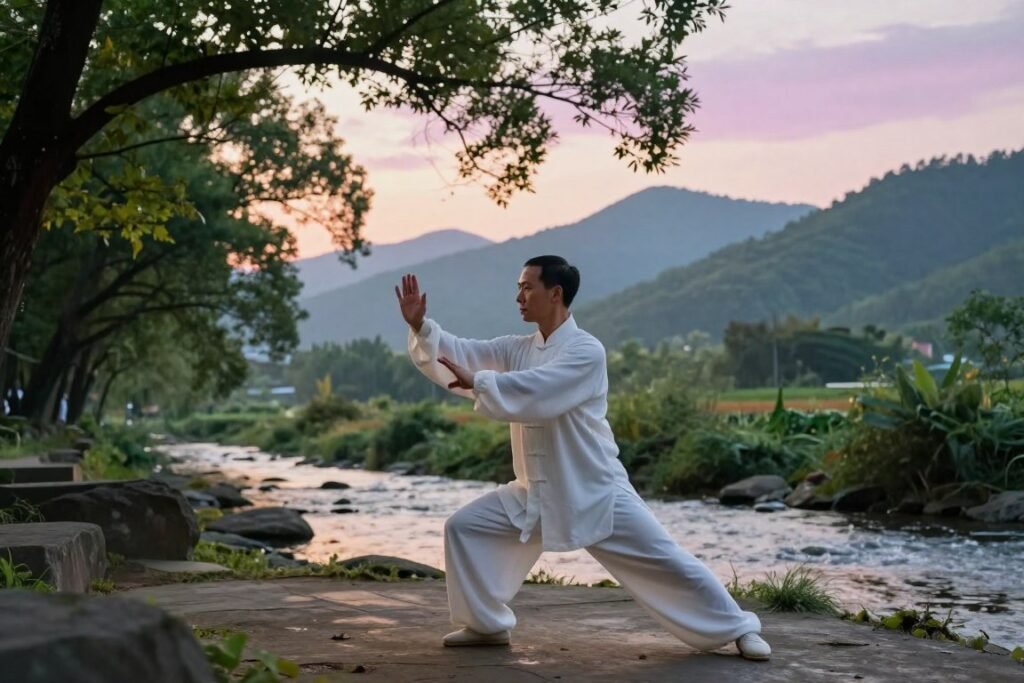
In the world of internal martial arts, Song serves as the bridge between stillness and motion. While many people equate relaxation with simply letting go, in the practice of Tai Chi, it represents a highly active and focused state of being. This concept is essential for anyone looking to refine their physical form and internal awareness.
Defining Song in the Context of Movement
The term Song refers to a deep, internal release of unnecessary muscular effort. It is not a passive collapse of the body, but rather a conscious decision to shed tension while maintaining structural integrity. For instance, the 18 movements found in Shibashi Qigong, which were developed through the traditional Yang style, rely heavily on this principle to ensure fluid transitions.
“True relaxation is the secret to power; it is the ability to remain alert and ready without the interference of rigid, defensive muscles.”
When you practice this state, you allow your joints to open and your breath to settle naturally. This active relaxation ensures that your body remains responsive rather than stiff. By cultivating this quality, you transform your movements into a seamless expression of grace and efficiency.
How Tension Blocks Internal Energy
Physical tension acts as a significant barrier that prevents the smooth flow of vital energy, or Qi, throughout your body. When muscles are locked or overly contracted, they create “kinks” in your internal structure that restrict movement. Releasing these deep-seated tensions is the only way to allow your energy to circulate freely from your core to your limbs.
The following table highlights the key differences between a passive, collapsed state and the active, engaged state of Song:
| Feature | Passive Collapse | Active Song |
|---|---|---|
| Muscle State | Limp and lifeless | Supple and alert |
| Posture | Slumped or sagging | Upright and aligned |
| Energy Flow | Blocked or stagnant | Fluid and continuous |
| Mental Focus | Distracted or dull | Present and centered |
By consciously identifying where you hold stress, you can begin to soften those areas during your daily practice. This process of releasing tension is a lifelong journey that rewards you with greater mobility and a calmer mind. As you master this, you will find that your movements become more natural and effortless.
Achieving Proper Tai Chi Stance and Grounding
Your journey toward a proper tai chi stance begins with the way you interact with the earth. When you stand, you are not merely resting; you are creating a dynamic connection that supports your entire body. This connection serves as the base for every movement you perform.
The Importance of Rooting to the Earth
Rooting is the practice of feeling your weight sink into the ground, much like the roots of a tree. This essential concept provides the stability needed to move with both power and fluidity. Without this connection, your movements may feel disconnected or fragile.
Stepping incorrectly is the primary cause of soreness or injury in Tai Chi. By focusing on your roots, you protect your joints from unnecessary strain. Consistent practice ensures that your body remains supported by the earth rather than relying solely on muscular tension.
Finding Stability in the Feet
To maintain a proper tai chi stance, you must learn to distribute your weight evenly through your feet. Many beginners make the mistake of landing with their full weight too quickly, which can jar the knees and ankles. Instead, aim to place your foot down with intention and control.
Think of your feet as having three distinct points of contact: the heel, the ball of the foot, and the outer edge. By spreading your weight across these points, you create a stable platform for your transitions. This mindful approach to weight distribution is the first step toward achieving a truly balanced form.
Remember that a proper tai chi stance is not static; it is a living, breathing foundation. As you shift your weight, keep your knees slightly bent and aligned with your toes. This simple adjustment prevents injury and allows your internal energy to flow without obstruction.
The Importance of Spinal Alignment in Tai Chi
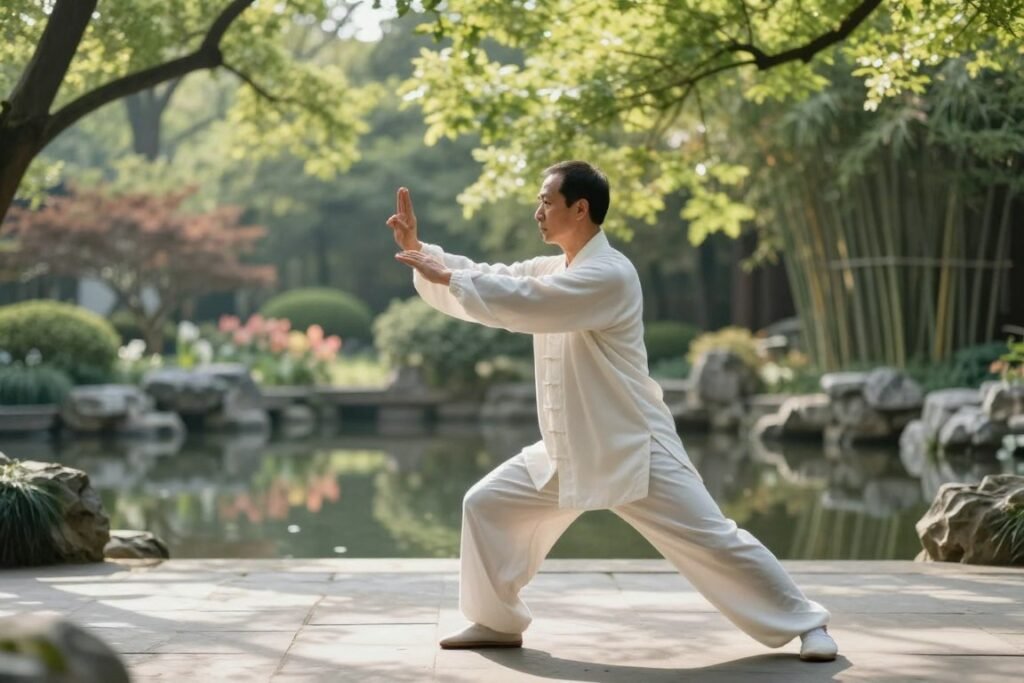
Your spine serves as the central pillar for every movement you perform in Tai Chi. When your back is properly aligned, it acts as a strong, central axis that supports your entire body weight. This structural integrity allows you to move with grace while maintaining a deep sense of internal stability.
Without this alignment, your energy can become trapped or scattered, making it difficult to achieve the fluid transitions required in your practice. By focusing on your posture, you create a clear path for movement that feels both effortless and powerful.
Maintaining a Straight but Supple Spine
A common misconception is that a straight spine must be rigid or stiff. In reality, your spine should remain supple and relaxed, allowing for natural micro-movements that absorb tension. Think of your back as a flexible bamboo stalk that can bend with the wind without breaking.
This balance between strength and flexibility is vital for your overall energy flow. When you avoid locking your vertebrae, you allow your nervous system to function optimally. This state of being helps you stay alert and responsive during every movement.
The Concept of Suspending the Crown
To achieve this ideal posture, practitioners often use the visualization of “suspending the crown.” Imagine a thin, invisible thread attached to the top of your head, gently pulling you upward toward the sky. Simultaneously, feel a soft weight pulling down from your tailbone toward the earth.
This dual sensation creates a gentle elongation of the spine, which naturally corrects your posture. It helps you maintain perfect balance and keeps your torso upright without unnecessary muscular strain. By practicing this technique, you will notice a significant improvement in your physical presence and mental clarity.
| Feature | Aligned Spine | Slouched Posture |
|---|---|---|
| Energy Flow | Smooth and Uninterrupted | Blocked and Stagnant |
| Joint Pressure | Distributed Evenly | Concentrated on Lower Back |
| Stability | High and Centered | Weak and Unsteady |
| Breath Capacity | Full and Deep | Shallow and Restricted |
Mastering Tai Chi Form Alignment for Energy Flow
Achieving perfect tai chi form alignment is the secret to unlocking fluid energy throughout your body. When your physical structure is balanced, you create a clear path for internal energy to travel during every movement. This harmony allows you to perform each sequence with greater efficiency and grace.
Aligning Joints for Structural Integrity
To maintain structural integrity, you must ensure that your joints remain soft and supple. Locking your knees or elbows creates physical barriers that block the natural flow of blood and energy. By keeping these pathways open, you allow your body to function as a unified, connected system.
Proper tai chi form alignment requires constant attention to the subtle positioning of your ankles, knees, and hips. When these joints are stacked correctly, they support your weight without unnecessary muscular strain. This intentional relaxation is what allows you to remain stable while moving through complex transitions.
The Relationship Between Limbs and the Core
In this practice, all movement should originate from the center of your body, often referred to as the core or the dantian. Your limbs act as extensions of this central power rather than independent parts. When you initiate motion from your core, you ensure that your tai chi form alignment remains consistent and powerful.
Think of your body as a single, integrated unit where the core leads and the limbs follow. This connection prevents disjointed movements and helps you maintain your balance throughout the entire session. By focusing on this relationship, you will find that your practice becomes more effortless and rhythmic over time.
Essential Tai Chi Postures for Beginners
Every journey in movement begins with a solid foundation, and these key stances are your starting point. By focusing on essential tai chi postures, you develop the necessary muscle memory to move with grace and stability. These positions serve as the building blocks for every sequence you will eventually learn.
The Wuji Stance Explained
The Wuji stance represents the state of emptiness and potential before movement begins. In this position, you stand with your feet shoulder-width apart and your weight distributed evenly across both soles. It is a neutral and balanced posture that encourages your body to settle into a state of calm readiness.
When you stand in Wuji, imagine your body is suspended from above by a thin thread. This helps you maintain a straight spine while keeping your joints soft and relaxed. This is one of the most essential tai chi postures because it teaches you how to find your center before you take your first step.
Transitioning into the Bow and Arrow Stance
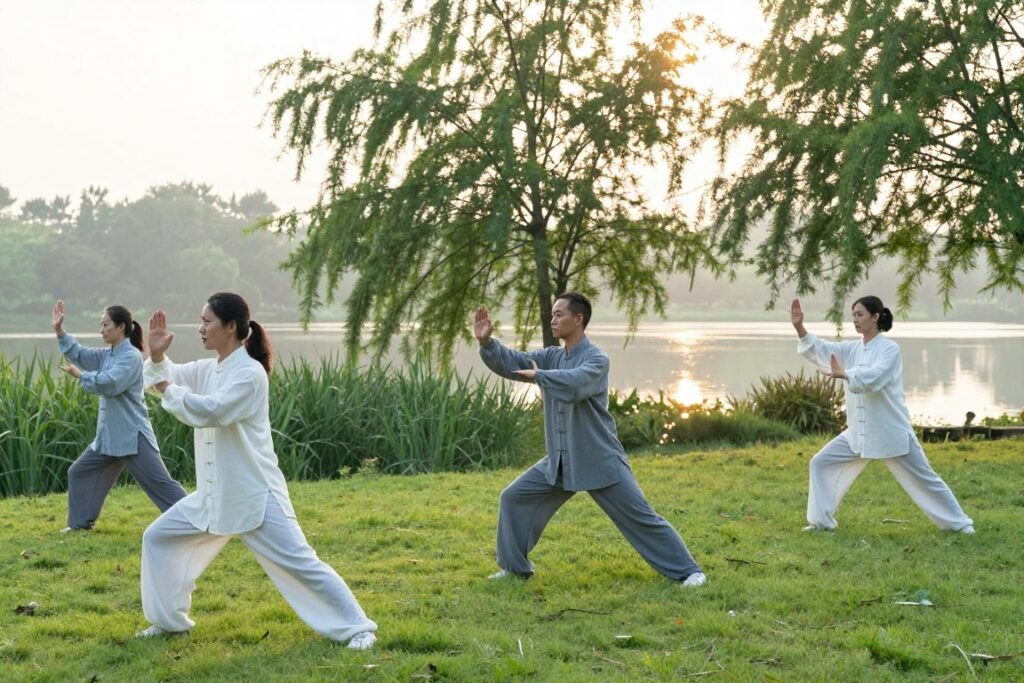
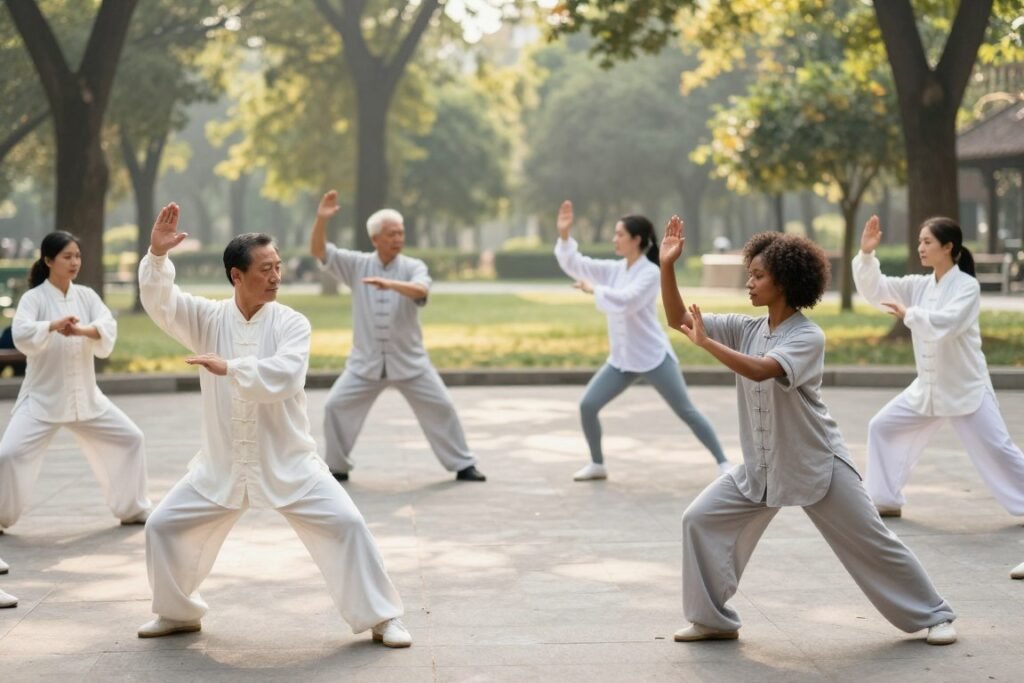
Once you feel comfortable in a neutral position, you can begin exploring the Bow and Arrow stance. This posture is frequently used in various forms to generate power and maintain balance during movement. You step forward with one leg while keeping the back leg anchored firmly to the ground.
The front knee should be bent, but it must remain aligned with your toes to protect the joint. Your back leg stays straight, acting as a strong support beam that allows you to shift your weight smoothly. Mastering this transition is vital for anyone looking to refine their essential tai chi postures for better flow.
| Posture Name | Primary Focus | Stability Level |
|---|---|---|
| Wuji Stance | Neutral Balance | High |
| Bow and Arrow | Weight Shifting | Moderate |
| Empty Stance | Agility | Low |
Practicing these stances daily will help you build the physical awareness required for more complex sequences. Remember that patience is key when learning these foundational movements. As you continue to practice these essential tai chi postures, you will notice your coordination and internal strength improving significantly.
Correct Tai Chi Body Alignment and Pelvic Tilt
Achieving a proper tai chi stance begins with the subtle adjustment of your pelvis. This area of the body serves as the foundation for your entire structure, influencing how weight travels from your upper body down to your feet. When your hips are positioned correctly, you create a stable base that supports fluid movement.
The Role of the Pelvis in Supporting the Torso
The pelvis acts as the central hub that connects your torso to your lower limbs. By keeping this area neutral, you allow the spine to lengthen naturally without unnecessary strain. This alignment ensures that your internal energy can flow freely through your core, which is essential for maintaining balance during complex transitions.
When you focus on your pelvic position, you effectively distribute your body weight more evenly. This correct tai chi body alignment helps you stay grounded, even when you are moving through challenging postures. Think of your pelvis as the anchor that keeps your torso upright and steady against the pull of gravity.
Avoiding Excessive Lumbar Curvature
A common mistake for many practitioners is allowing the lower back to arch too deeply. This excessive lumbar curvature can lead to tension and discomfort, effectively blocking your progress. By performing a slight pelvic tilt, you can flatten this curve and protect your lower back from unnecessary stress.
Maintaining a gentle tuck of the tailbone is a simple way to keep your spine elongated and supple. This adjustment is vital for ensuring that your weight remains centered throughout your practice. When you avoid arching your back, you create a more efficient structure that supports long-term health and comfort in your proper tai chi stance.
Fundamental Tai Chi Movements and Weight Distribution
The secret to graceful motion lies in how you distribute your weight across your legs. When you engage in fundamental tai chi movements, your body acts as a single, connected unit. By mastering the way you transfer your center of gravity, you create a sense of ease that defines the practice.
Shifting Weight Smoothly Between Legs
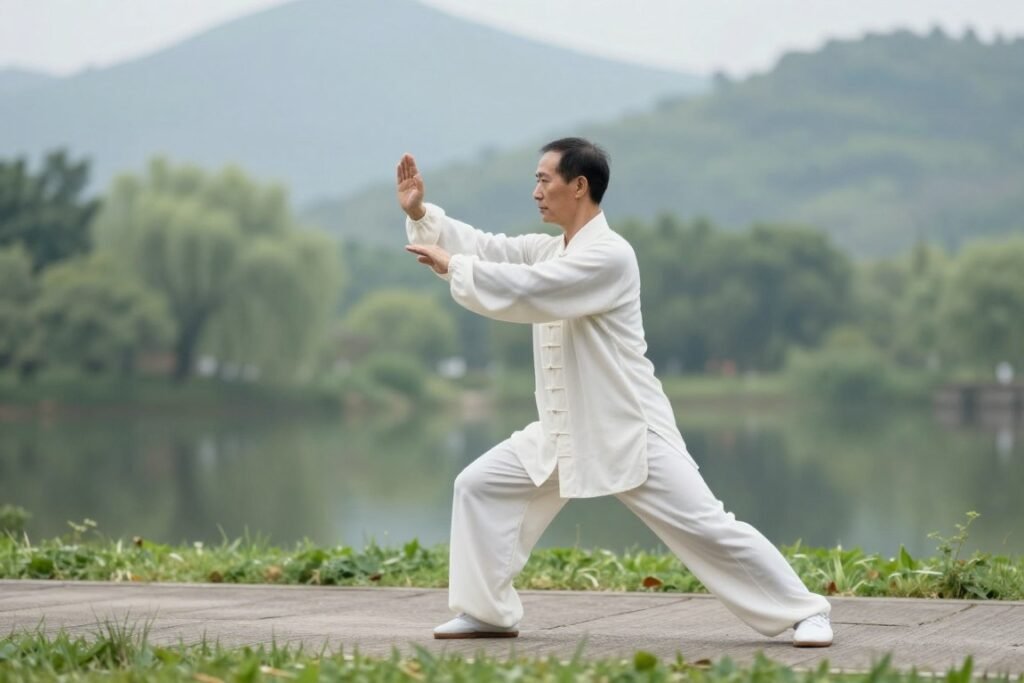
To move with true fluidity, you must avoid the common mistake of “stepping” and then shifting. Instead, your weight should transition gradually, like water flowing from one vessel to another. This continuous motion ensures that you never feel stuck or rigid during your routine.
Consider these essential tips for a smoother weight transfer:
- Keep your knees slightly bent to maintain a stable base.
- Imagine your weight sinking into the heel before moving to the ball of the foot.
- Ensure your torso remains upright to prevent leaning, which disrupts your center.
“Movement is the song of the body; when the weight flows, the spirit follows.”
Maintaining Balance During Transitions
Balance in this practice is not a static state but a dynamic process. As you move through various fundamental tai chi movements, your body must constantly adjust to its position in space. You should maintain a heightened awareness of your alignment even when you are in the middle of a transition.
If you feel wobbly, check your connection to the ground. A relaxed, rooted stance allows you to recover your center quickly if you lose your footing. Remember that every transition is a chance to refine your internal structure and improve your overall coordination.
Refining Tai Chi Body Mechanics for Efficiency
Efficient movement begins when you learn to control your body from its center. By focusing on tai chi body mechanics, you can transform your practice into a seamless flow of energy. This approach allows you to move with less effort while gaining more power in every gesture.
Learning to move as a single, integrated unit is a hallmark of advanced practice that beginners can start developing early on. When your body works in harmony, you avoid unnecessary strain and fatigue. This efficiency is essential for mastering fundamental tai chi movements that feel natural and light.
Using the Waist as the Commander
In this practice, the waist acts as the primary engine for all physical action. Think of your waist as the commander that directs the limbs rather than letting them move independently. When you initiate movement from your core, you ensure that your entire structure remains stable and connected.
This principle prevents the common mistake of using only the arms or legs to perform a technique. Instead, you rotate your torso to guide your limbs through space. Consider these benefits of leading with your waist:
- Increased stability during complex transitions.
- Greater power generated from the center of your body.
- Reduced tension in the shoulders and neck.
Coordinating Upper and Lower Body Movement
True grace comes from the perfect synchronization of your upper and lower body. When your legs and arms move in unison, you create a unified action that is both effective and beautiful to watch. This coordination is vital for executing fundamental tai chi movements with precision.
To achieve this, keep your awareness on the connection between your feet and your hands. As you shift your weight, allow your torso to turn and your arms to follow naturally. Improving your tai chi body mechanics in this way ensures that your energy flows without interruption from the ground up to your fingertips.
Common Mistakes in Tai Chi Posture to Avoid
Achieving mastery in this art requires a keen eye for subtle physical errors. Even experienced students sometimes develop habits that limit their potential for growth. By addressing these issues early, you ensure that your practice remains both safe and highly effective.
Identifying Collapsed Chests and Shoulders
A frequent error involves the chest and shoulder area. Many beginners allow their shoulders to hunch forward, which creates a collapsed appearance in the upper torso. This tension restricts your breathing and prevents the natural flow of energy throughout your body.
To maintain proper tai chi form alignment, focus on keeping your chest slightly hollow rather than sunken. Imagine a gentle, soft curve in your upper back that allows your shoulders to drop naturally. This simple adjustment opens the lungs and promotes a sense of inner calm during your movements.
Correcting Knee Alignment Issues
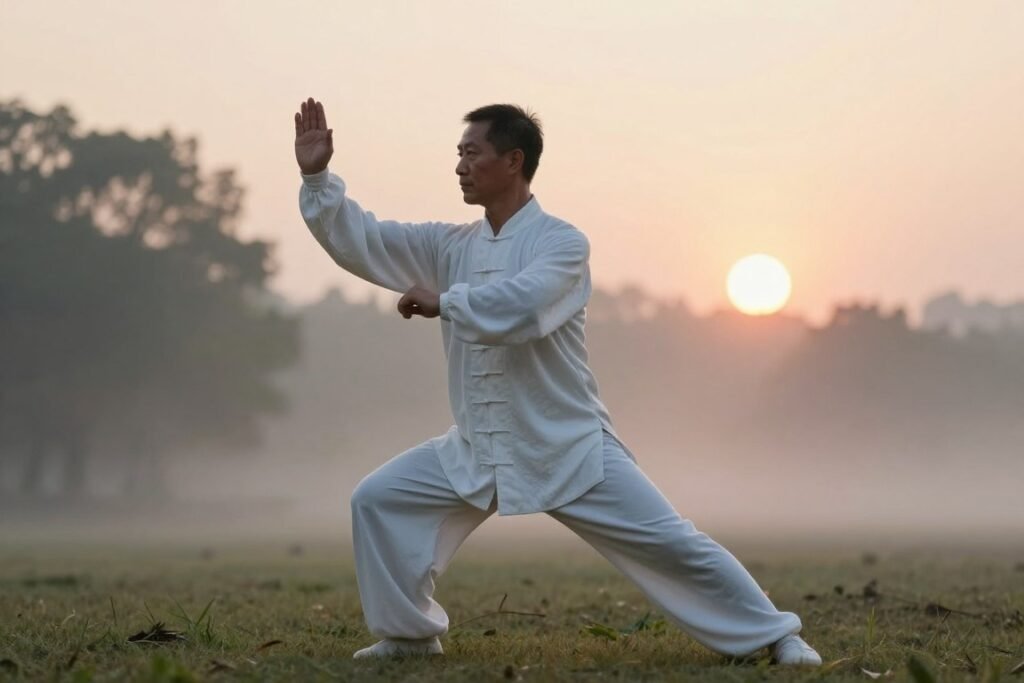
Your lower body serves as the foundation for every movement you perform. A common mistake is allowing the knees to cave inward or extend too far past the toes. This misalignment places unnecessary stress on the joints and can lead to discomfort over time.
Always ensure that your toe is in direct alignment with your knee during every transition. This correct tai chi body alignment provides the structural support needed to protect your ligaments. When your joints are properly stacked, you will feel significantly more stable and grounded while moving through your routine.
Consistency is key when refining these physical mechanics. By checking your knee position and shoulder posture regularly, you build a solid base for long-term progress. Small, intentional corrections today will lead to a much more fluid and graceful practice tomorrow.
How Breathwork Influences Your Physical Stance
Your breath acts as the invisible thread that connects your internal state to your physical posture. When you breathe with intention, you create a foundation that supports every movement you make. This practice transforms your stance from a static position into a dynamic, living structure.
Synchronizing Breath with Movement
The secret to a fluid practice lies in matching your inhalation and exhalation to your physical transitions. By creating a steady rhythm, you naturally encourage your muscles to release unnecessary tension. This rhythmic flow allows you to maintain focus while moving through complex forms.
When your breath is synchronized with your limbs, you achieve a sense of harmony that is difficult to reach otherwise. This coordination helps you stay grounded, ensuring that your weight remains balanced during every shift. You will find that your movements become more graceful and efficient as you refine this connection.
Using Abdominal Breathing to Stabilize the Core
Abdominal breathing, often called diaphragmatic breathing, is the key to unlocking true core stability. This technique involves using the full extent of your lung capacity by expanding the lower abdomen during the inhale. As you exhale, you gently contract the abdomen to support your torso.
This method of breathing provides a solid anchor for your body, preventing the common issue of a collapsed chest. By engaging the diaphragm, you create internal pressure that stabilizes the spine and protects your lower back. Consider these primary benefits of integrating this practice into your routine:
- Enhanced stability during slow, deliberate transitions.
- Improved postural alignment by reducing upper body strain.
- Greater mental clarity and stress reduction throughout the day.
- Increased energy flow by removing physical blockages.
Practicing this deep breathing technique helps you remain calm even during challenging postures. It serves as a constant reminder to stay present and centered in your body. Over time, this habit will naturally carry over into your daily life, helping you maintain better posture while sitting or standing.
Integrating Beginner Tai Chi Form Principles into Daily Life
Learning to move with intention does not have to stop when you leave the studio. By embracing beginner tai chi form principles, you can transform how your body interacts with the world throughout the day. These concepts are not just for the practice mat; they are tools for living with greater ease and grace.
Applying Posture Awareness to Sitting and Standing
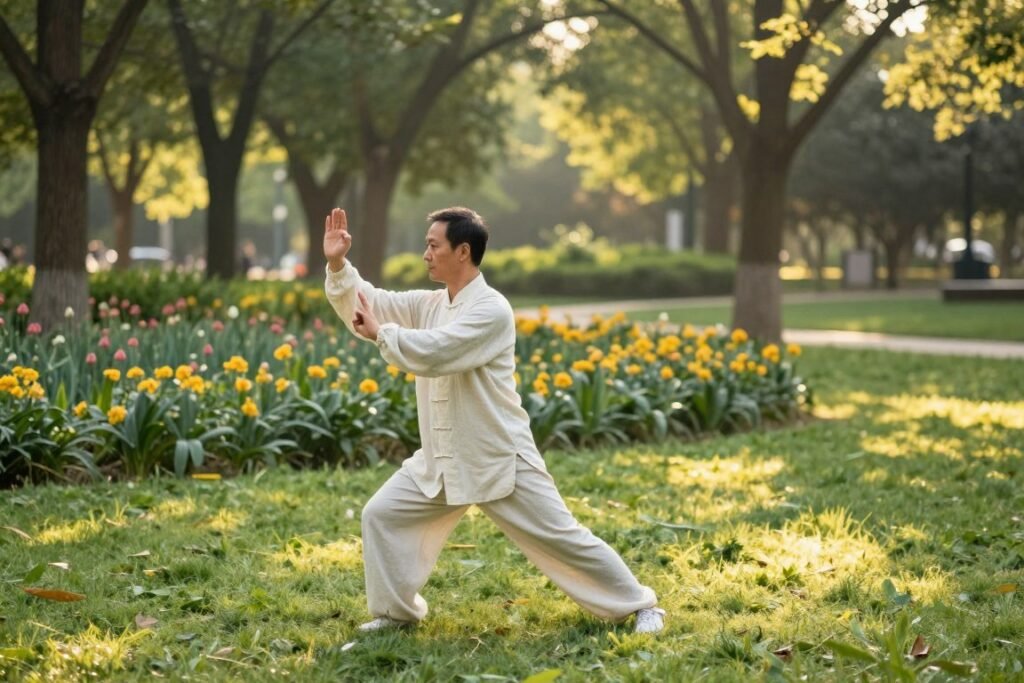
Most of us spend hours hunched over desks or standing in long lines, often ignoring our body’s alignment. You can apply the concept of suspending the crown while sitting at your computer to keep your spine elongated and alert. This simple shift prevents the common slump that leads to neck and shoulder fatigue.
When standing in line, focus on your weight distribution by keeping your knees soft and your feet firmly rooted. By practicing these beginner tai chi form principles, you turn mundane moments into opportunities for structural refinement. Maintaining this awareness helps you stay balanced and centered, regardless of your environment.
Reducing Daily Tension Through Tai Chi Principles
Chronic tension often builds up because we hold our muscles in rigid, unnatural positions. You can use the principle of Song, or intentional relaxation, to release tight shoulders and a clenched jaw while you work. When you consciously soften your muscles, you allow energy to flow more freely through your body.
Integrating these movements into your routine fosters a more mindful lifestyle that supports long-term well-being. By checking in with your posture periodically, you catch tension before it becomes painful. This proactive approach ensures that the benefits of your practice remain a permanent part of your daily life.
| Habit | Common Mistake | Mindful Adjustment |
|---|---|---|
| Desk Sitting | Rounded shoulders | Elongated spine |
| Standing | Locked knees | Soft, rooted stance |
| Walking | Heavy, jarring steps | Smooth weight shift |
| Breathing | Shallow chest breaths | Deep abdominal flow |
The Role of the Head and Neck in Tai Chi Posture
Proper alignment of the head and neck is essential for mastering advanced tai chi body mechanics. When your head is positioned correctly, it acts as a guide for the rest of your frame, ensuring that you remain centered and alert during every movement.
Keeping the Neck Relaxed and Elongated
To support the spine effectively, you must keep your neck relaxed and elongated. Imagine a soft thread pulling the crown of your head toward the sky, which naturally releases tension in the cervical vertebrae. This gentle extension allows for a clear flow of energy throughout your body.
By maintaining this length, you prevent the common habit of tilting or straining the neck. Consistent practice of these tai chi body mechanics helps you cultivate a sense of lightness that radiates from the top of your head down to your feet.
The Gaze and Its Impact on Balance
Your gaze plays a significant role in how you maintain stability and focus. Instead of letting your eyes wander, keep your vision soft and directed toward the horizon or the path of your movement. This intentional focus anchors your awareness and prevents your body from swaying off-center.
When your eyes are steady, your internal tai chi body mechanics become more efficient. A calm, steady gaze signals to your nervous system that you are safe and grounded, which is vital for maintaining balance during complex transitions.
Shoulder and Chest Positioning for Optimal Flow
Mastering the subtle mechanics of your shoulders and chest will transform your practice. When you focus on these areas, you unlock a more fluid energy flow that is central to all essential tai chi postures. Proper alignment prevents blockages and ensures that your movements remain graceful and effective.
Dropping the Shoulders and Sinking the Elbows
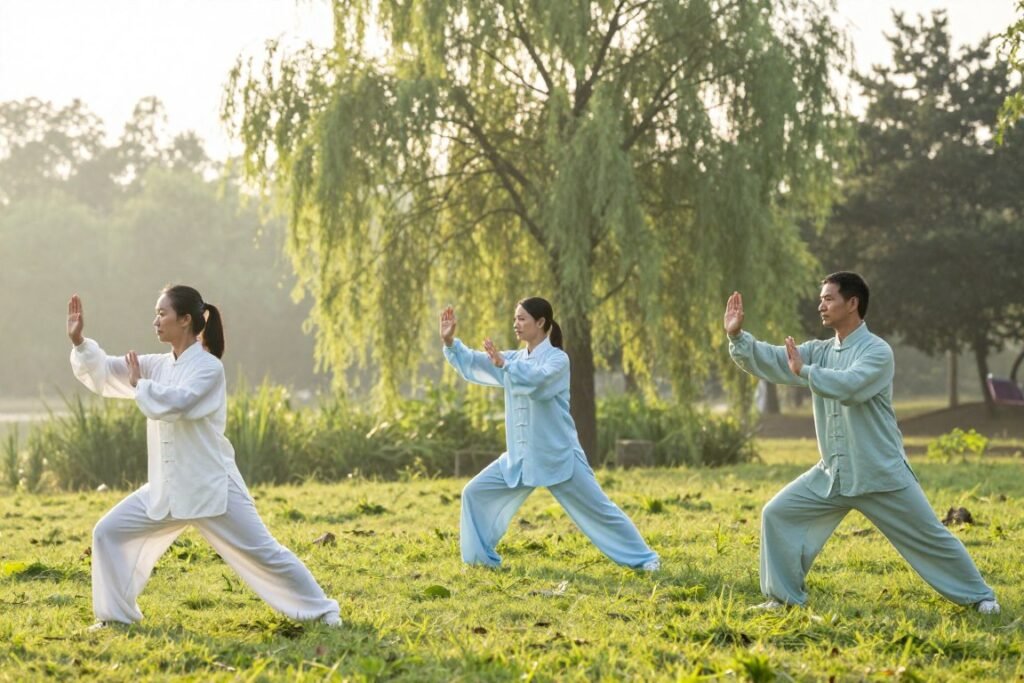
To maintain an open structure, you must consciously drop your shoulders away from your ears. This simple adjustment releases stored tension and allows your energy to circulate freely through the upper body. You should also focus on sinking your elbows toward the ground, which helps to keep the joints relaxed.
It is important to keep your armpits slightly open, as if you are holding a small ball under each arm. Never allow your knees or elbows to bend at an angle smaller than 45 degrees. Maintaining this open geometry is one of the most essential tai chi postures for ensuring that your internal energy remains unrestricted.
Creating Space in the Chest for Breath
Your chest should remain soft and slightly concave rather than puffed out or rigid. By creating this gentle space, you allow your diaphragm to move without restriction during your practice. This physical openness is crucial for deep, abdominal breathing that supports your overall stability.
When the chest is relaxed, you avoid the common mistake of holding your breath or creating unnecessary strain. This refined positioning allows you to integrate your breath with every movement seamlessly. By keeping the chest open and the shoulders dropped, you ensure that your form remains both powerful and sustainable for long-term health.
Tai Chi Posture Benefits for Long-Term Health
Investing in your physical alignment today pays dividends for your health tomorrow. By focusing on consistent movement patterns, you create a stronger foundation for your body to thrive as you age. Understanding the various tai chi posture benefits allows you to take control of your physical well-being and prevent common issues before they start.
Improving Posture and Reducing Back Pain
One of the most significant advantages of this practice is the natural correction of spinal alignment. Many people suffer from chronic discomfort due to slumping or poor habits developed at desks. Through mindful practice, you learn to stack your vertebrae correctly, which relieves unnecessary pressure on your lower back.
This structural adjustment helps distribute your body weight more evenly. When your spine remains straight but supple, you reduce the strain on your muscles and ligaments. Over time, these tai chi posture benefits lead to a noticeable reduction in daily back pain and improved overall comfort.
Enhancing Joint Mobility and Flexibility
Maintaining a regular routine is essential for keeping your joints healthy and fluid. As we grow older, our range of motion often decreases, but intentional movement helps counteract this natural decline. By practicing proper alignment, you ensure that your joints move through their full, healthy range without unnecessary friction.
This focus on joint health promotes better circulation and keeps your connective tissues pliable. You will find that simple tasks become easier as your body gains better coordination and suppleness. Ultimately, leveraging these tai chi posture benefits supports an active, independent lifestyle that lasts well into your later years.
Conclusion
Mastering the art of movement is a rewarding journey that offers profound physical and mental health rewards. You now possess the tools to transform your daily habits through consistent practice.
Focusing on alignment, relaxation, and breath helps you build a strong foundation. These tai chi posture benefits will support your wellness goals for years to come.
Start with small, steady steps as you refine your technique. Patience remains your best ally while you develop your skills in this ancient discipline.
Integrate these beginner tai chi form principles into your routine to feel the difference in your energy levels. The goal is not immediate perfection but the ongoing process of cultivating a peaceful life.
Share your progress with the community at the Tai Chi for Health Institute. Your dedication to this practice creates a ripple effect of calm in your world.