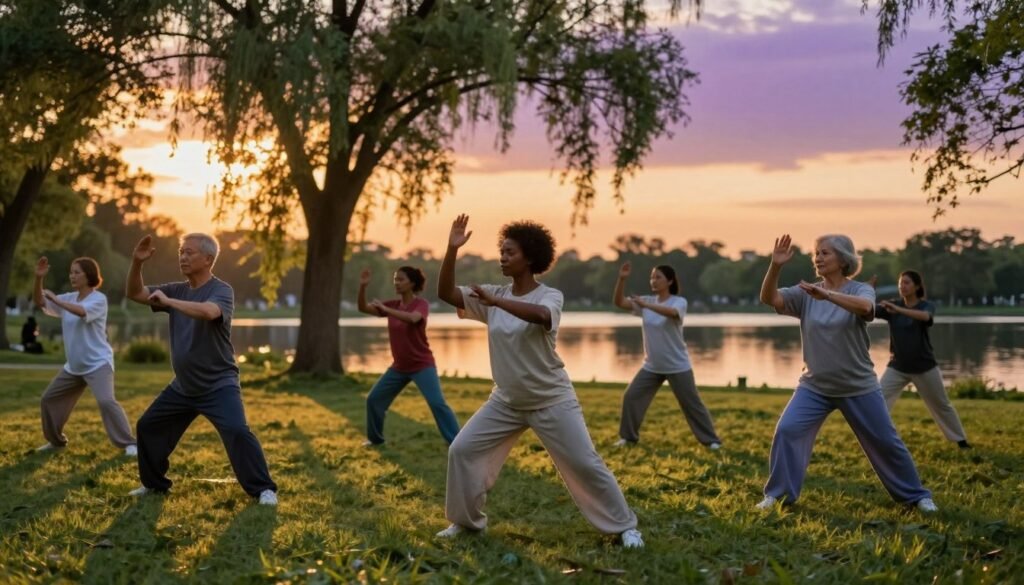
Did you know that nearly 77% of Americans regularly experience physical symptoms caused by high levels of daily tension? When the workday ends, your body often holds onto that lingering pressure. Engaging in an evening tai chi session offers a gentle path to release this burden without the need for intense gym workouts.
This ancient mind-body practice focuses on slow, deliberate movements paired with deep breathing. By shifting your attention inward, you can effectively lower your heart rate and calm a racing mind. It serves as a perfect ritual to signal to your nervous system that it is finally time to rest.
Beyond simple relaxation, this routine promotes better sleep quality and overall physical wellness. You do not need special equipment or prior experience to begin. Embracing this habit provides a sustainable form of stress relief that fits easily into your nightly schedule.
Key Takeaways
- Reduces physical tension accumulated throughout the day.
- Promotes better sleep through gentle, rhythmic movement.
- Requires no strenuous exercise or expensive equipment.
- Encourages mindfulness to help quiet a busy mind.
- Supports long-term wellness through consistent, low-impact activity.
Evening Tai Chi for Stress Relief and Wellness
Evening tai chi serves as a bridge between the demands of your professional life and the quiet sanctuary of your home. Unlike high-intensity workouts that spike your heart rate, this practice focuses on slowing down the body and mind. It allows you to shed the weight of the day through intentional, fluid motion.
What makes an evening practice different from daytime exercise
Most daytime fitness routines aim to build strength or cardiovascular endurance through vigorous activity. While these are beneficial, they often leave the nervous system in a state of high alert. In contrast, relaxation exercises performed in the evening prioritize recovery and mental clarity.
By choosing a slower pace, you avoid the adrenaline rush that can interfere with your ability to fall asleep. This approach treats movement as a way to release tension rather than a way to burn calories. It is a shift from performance-based fitness to mindful self-care.
| Feature | Daytime Exercise | Evening Tai Chi |
|---|---|---|
| Primary Goal | Performance/Strength | Relaxation/Balance |
| Intensity | Moderate to High | Low and Controlled |
| Nervous System | Stimulating | Calming |
| Focus | External Results | Internal Awareness |
How slow movement can create a calmer transition into nighttime
Engaging in gentle movements helps signal to your brain that the workday is officially over. These patterns encourage you to let go of lingering thoughts and focus entirely on the present moment. This process is often described as meditation in motion, where every gesture is synchronized with your breath.
As you move, you naturally lower your cortisol levels and invite a sense of deep calm. These relaxation exercises act as a buffer, preventing the stress of the day from following you into your evening hours. By practicing these gentle movements, you create a consistent ritual that prepares your body for a restful night of sleep.
Why Evening Tai Chi Fits a Busy American Lifestyle
Modern life moves at a rapid pace, leaving little room for genuine relaxation after a long day. Many people struggle to find a balance between professional demands and personal well-being. Fortunately, this mindfulness workout offers a flexible solution that adapts to your unique schedule.
Releasing workday tension without strenuous exercise
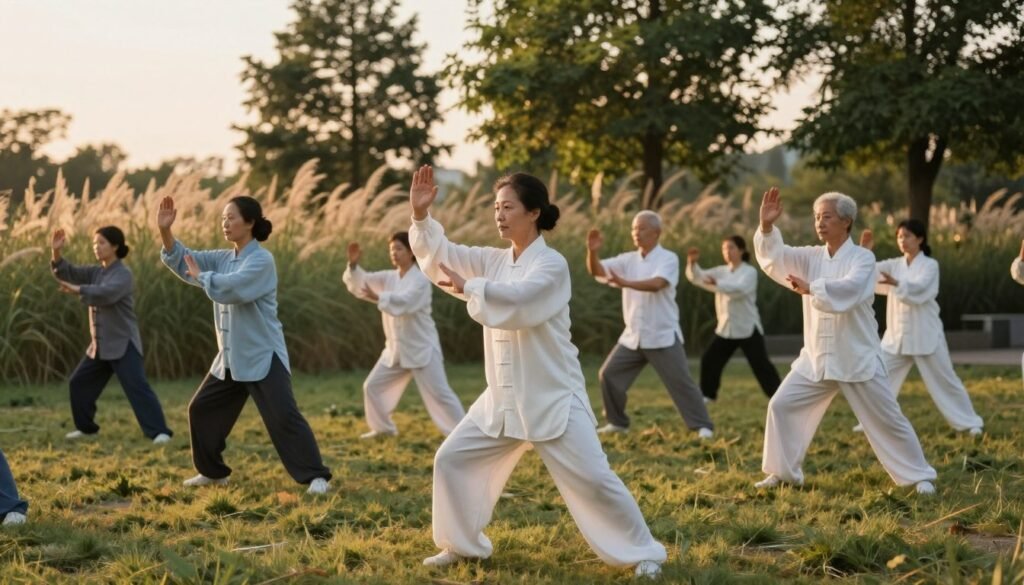
You do not need to head to a gym or engage in high-intensity training to feel better. Tai Chi focuses on gentle, flowing movements that help melt away the physical tightness accumulated during office hours. By choosing this path, you prioritize effective stress relief without adding more fatigue to your body.
Practicing at home, outdoors, or in a community setting
One of the greatest advantages of this practice is its versatility. You can easily roll out a mat in your living room for a private session or head to a local park to connect with nature. If you prefer social interaction, many tai chi classes are available in community centers, providing a sense of belonging and shared growth.
| Setting | Primary Benefit | Best For |
|---|---|---|
| Home | Total Privacy | Quick, late-night sessions |
| Outdoors | Nature Connection | Fresh air and mental clarity |
| Community | Social Support | Learning from expert instructors |
Choosing a realistic time for consistent practice
Consistency is more important than duration when building a new habit. You should select a time that feels sustainable, even if it is just fifteen minutes before dinner or right before bed. By integrating tai chi classes or self-guided sessions into your existing routine, you ensure that stress relief remains a priority rather than a chore. Remember that a short, mindful session is far more beneficial than an occasional, long, and stressful workout.
How Tai Chi Supports Stress Relief
Tai chi offers a unique path to tranquility through intentional, flowing movement. By engaging in this mind-body practice, you can create a sanctuary of calm at the end of your day. It serves as a gentle bridge between the chaos of work and the restorative peace of your evening.
Using rhythmic movement to shift attention away from daily worries
The repetitive nature of these movements acts as a natural anchor for your focus. When you concentrate on the flow of your arms and the shift of your weight, your mind has less space for lingering thoughts about deadlines or emails. This meditation in motion effectively redirects your mental energy toward the present moment.
You will find that as your body moves in a steady rhythm, your internal chatter begins to fade. This process allows you to detach from the stressors of the day without needing to force your mind to be quiet. It is a gentle way to reset your perspective before you head to bed.
Connecting relaxed posture, breathing, and nervous system regulation
Physical tension often mirrors the stress we carry in our minds. By maintaining a relaxed, upright posture, you signal to your body that it is safe to let go of that tightness. This alignment supports deeper, more natural breathing, which is essential for calming the nervous system.
When your breath slows down, your heart rate often follows suit. This mind-body practice encourages a shift from the “fight or flight” response into a state of rest and recovery. You are essentially teaching your body how to return to a balanced state through simple, physical cues.
Understanding tai chi as a supportive wellness practice rather than a cure
It is important to view this activity as a helpful tool for your overall well-being. While it provides excellent stress relief, it should not be seen as a replacement for professional medical or psychological care. Think of it as a supportive habit that complements your existing health routines.
By practicing meditation in motion, you are building resilience and fostering a healthier relationship with your daily stressors. Consistent, light movement provides sustainable stress relief that helps you feel more grounded. Always remember that the goal is progress and comfort, not achieving a perfect state of relaxation every single time.
Preparing Your Body and Space for Evening Practice
You can transform any corner of your home into a sanctuary for relaxation exercises. By dedicating a small, intentional space to your practice, you signal to your brain that it is time to let go of the day’s stress. This simple act of preparation makes your evening routine feel like a special ritual rather than just another chore.
Creating a quiet, comfortable practice area
You do not need a large studio to enjoy the benefits of these movements. A clear space roughly the size of a yoga mat is usually sufficient for most sequences. Ensure the area is free from clutter to help your mind stay focused and calm.
- Choose a spot with minimal distractions or noise.
- Adjust the lighting to be soft and warm, which helps encourage a restful mood.
- Keep the temperature comfortable so you can move without feeling too hot or cold.
Wearing flexible clothing and stable footwear
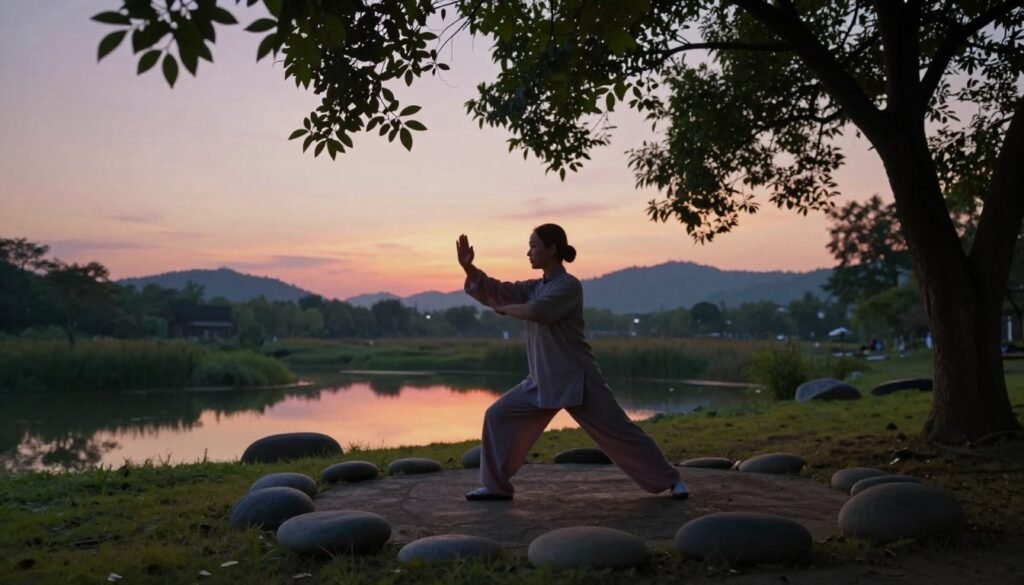
Comfort is the most important factor when choosing what to wear. Select loose-fitting clothes that allow your body to move freely without restriction. Tight fabrics can hinder your circulation and make it difficult to maintain proper alignment during your relaxation exercises.
Regarding footwear, stability is key. Many people prefer to practice in socks with grip or thin-soled shoes that provide good contact with the floor. This helps you feel grounded and secure as you shift your weight from side to side.
Allowing time to settle before the first movement
Before you begin, take a few minutes to simply stand still. This transition period is vital for shifting your focus away from your busy schedule and into your body. Stand with your feet hip-width apart, keeping your knees soft and your spine tall.
As you stand, let your shoulders drop away from your ears and release any tension in your jaw. Slow, gentle arm motions can be very effective here to help ease lingering tightness in the neck and shoulders. Allow yourself to breathe deeply, knowing that this time is dedicated entirely to your own well-being.
Core Principles That Make Tai Chi a Mind-Body Practice
Understanding the core principles of Tai Chi transforms it into a true mind-body practice. Rather than focusing on repetitive physical drills, this discipline invites you to harmonize your internal state with your external movements.
Maintaining comfortable alignment instead of forcing posture
Many people mistakenly believe that exercise requires rigid, forced positions. In Tai Chi, you should prioritize comfortable alignment that feels sustainable for your unique body. If a posture feels strained, your muscles will naturally tighten, which defeats the purpose of your evening relaxation.
“The softest things in the world overcome the hardest things in the world.”
Moving with softness, balance, and continuous awareness
True progress in this art comes from moving with softness and balance. You are encouraged to maintain continuous awareness of how your weight shifts from one foot to the other. This gentle focus helps you stay present, turning your session into a moving meditation that clears the mind.
- Keep your joints relaxed and supple.
- Maintain a steady, grounded connection to the floor.
- Observe your breath without trying to control it.
Following qi flow as a traditional concept while staying grounded in practical body awareness
While many practitioners enjoy the traditional concept of qi flow, you do not need to be an expert in ancient philosophy to benefit. Think of this energy as a metaphor for the smooth, unobstructed movement of your own vitality. By staying grounded in practical body awareness, you ensure that your practice remains safe, accessible, and deeply restorative for your evening routine.
Gentle Tai Chi Movements for Releasing Evening Tension
Evening relaxation becomes a natural process when you focus on gentle movements that soothe both the body and the mind. Rather than viewing these exercises as a rigid performance, think of them as a way to gently release the physical weight of your day. By moving with intention, you create a bridge between your busy schedule and a restful night.
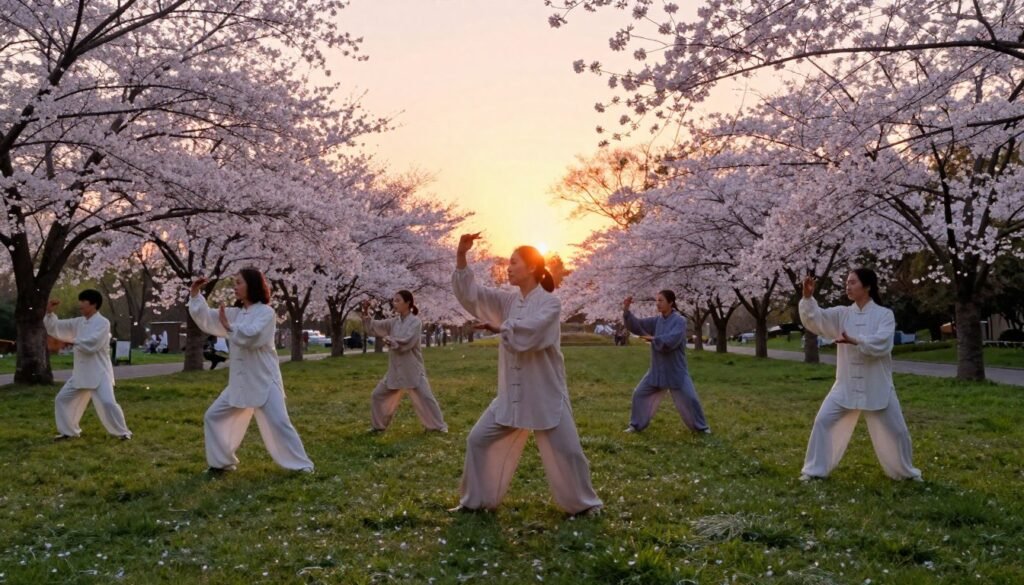
Beginning with standing awareness and relaxed shoulder rolls
Start by standing with your feet hip-width apart and your knees slightly soft. Allow your weight to sink evenly into the floor, feeling a sense of grounded stability. Gently roll your shoulders back and down to release any tightness held in your neck and upper back.
Using “Gathering Energy” to coordinate arms and breath
As you inhale, slowly raise your arms in front of you, imagining you are gathering a soft, warm light. Exhale as you lower your hands, feeling the rhythmic connection between your breath and your limbs. This simple motion helps you cultivate a sense of qi flow, making your body feel lighter and more at ease.
Practicing “Opening and Closing” for upper-body mobility
Bring your hands toward each other at chest height, then slowly move them apart as if stretching a soft band. This movement encourages upper-body mobility and helps you let go of the tension often stored in the chest and shoulders. Focus on the sensation of space between your palms as you breathe deeply.
Adding “Cloud Hands” to encourage smooth weight shifting
Shift your weight slowly from one leg to the other while moving your arms in a soft, circular motion. This practice mimics the movement of clouds, helping you maintain a steady balance while keeping your joints fluid. By focusing on this smooth qi flow, you allow your mind to settle into the present moment, leaving the day’s worries behind.
Breathing Techniques That Deepen Relaxation
Breathing is the hidden anchor that transforms simple movement into a true mindfulness workout. Rather than treating your breath as a complex skill to master, view it as a natural foundation for your evening relaxation exercises.
Letting the breath remain slow, quiet, and natural
Your body knows how to breathe without any extra effort from your conscious mind. During your practice, allow your breath to stay soft and unforced. If you find yourself gasping or trying to take deep, exaggerated breaths, simply return to your normal, quiet rhythm.
Pairing inhalation and exhalation with comfortable movement phases
You can coordinate your breathing with the flow of your body to enhance the sense of calm. Generally, you might inhale as you rise or open your arms, and exhale as you lower or close your movements. This rhythmic synchronization helps you stay present and grounded throughout your session.
Avoiding breath holding, forceful breathing, or performance pressure
It is vital to remember that there is no “perfect” way to breathe. Avoid holding your breath or pushing for deep inhalations, as this can lead to dizziness or unnecessary tension. If you feel any strain, let go of the effort and focus on keeping your breath light and steady. Your goal is to enjoy the process, not to perform a specific technique perfectly.
Meditation in Motion and Mindful Attention
Transforming your evening routine starts with the simple act of moving with intention. By treating your practice as meditation in motion, you shift your focus from the stresses of the day to the immediate experience of your body in space.
Using sensations, sounds, and breath as attention anchors
To stay grounded, you can use specific anchors that keep your awareness in the present. Focus on the feeling of your feet pressing into the floor or the gentle rhythm of your lungs expanding and contracting.
Environmental sounds, such as the hum of a fan or distant traffic, can also serve as gentle reminders to stay present. These sensory inputs help you maintain a steady mind-body practice without needing to force your focus.
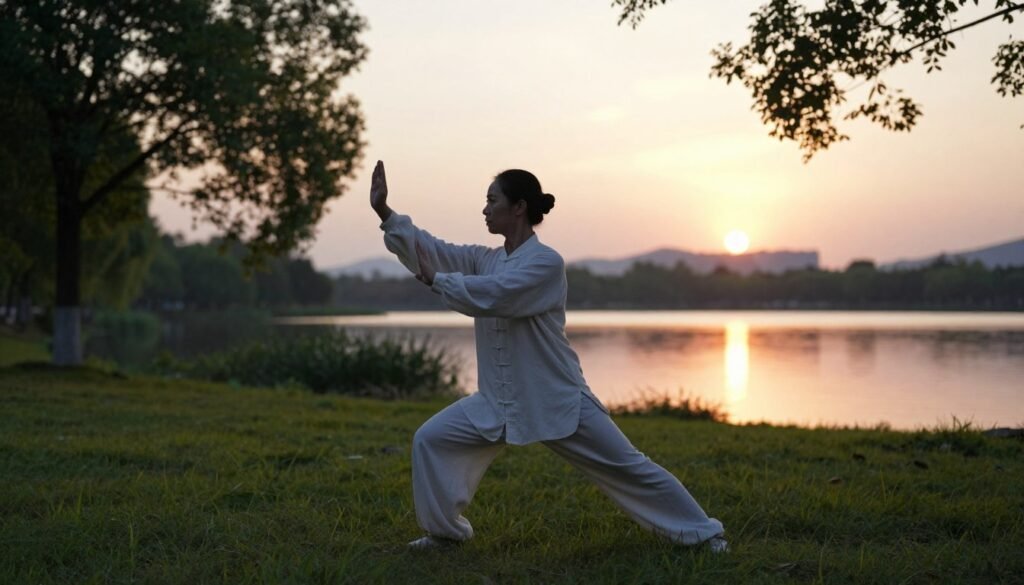
Returning to the present moment when the mind wanders
It is completely natural for your thoughts to drift toward tomorrow’s to-do list or past conversations. When you notice your mind wandering, simply acknowledge the thought without judgment and guide your attention back to your movement.
This process of returning is the core of the practice. Each time you bring your focus back, you strengthen your ability to remain calm and centered, regardless of external distractions.
Replacing perfectionism with curiosity and relaxed concentration
Many beginners worry about performing movements perfectly, but this mindset often creates unnecessary tension. Instead, approach your session with curiosity, observing how your body feels as you move through each sequence.
Focusing on the natural qi flow—or the internal sense of energy and ease—allows you to let go of rigid expectations. By prioritizing relaxed concentration over technical precision, you create a more sustainable and enjoyable habit.
| Anchor Type | Focus Area | Benefit |
|---|---|---|
| Physical | Weight shifting | Improves balance |
| Auditory | Ambient sounds | Reduces distraction |
| Respiratory | Natural breath | Calms nervous system |
| Internal | Body alignment | Increases awareness |
Designing a 20- to 30-Minute Evening Tai Chi Routine
Creating a consistent evening tai chi routine can transform your nights into a peaceful sanctuary. By dedicating just 20 to 30 minutes to your practice, you provide your body and mind with the space needed to release the day’s accumulated stress. If you are short on time, you can easily condense this sequence into a 10- to 15-minute session right before bed.
Starting with a brief grounding and warm-up period
Begin your session by standing still for a few moments to find your center. Focus on your feet connecting with the floor and allow your shoulders to drop away from your ears. This initial phase helps you shift your mindset from the busyness of the day into a state of meditation in motion.
Building a steady sequence of standing and flowing movements
Once you feel grounded, transition into gentle, continuous movements. Focus on shifting your weight slowly from one leg to the other while keeping your knees soft. Consistency is more important than complexity, so choose a few simple movements that feel natural and fluid for your body.
Including pauses for breathing and body awareness
Integrate short pauses between your movements to check in with your physical sensations. Use these moments to observe your breath without trying to change its natural rhythm. These intentional breaks reinforce the concept of meditation in motion, allowing you to remain fully present throughout your practice.
Ending with stillness, gentle stretching, and a gradual transition
Conclude your evening tai chi routine by returning to a standing position of stillness. Perform a few light, gentle stretches to release any remaining tension in your neck or back. Finally, take a slow, deep breath and carry this sense of calm with you as you move toward your bedtime ritual.
Choosing Tai Chi Classes and Instruction
Selecting the perfect place to learn can transform your experience with this ancient art. Whether you prefer the social energy of a group or the convenience of your own living room, there are many tai chi classes available to suit your lifestyle.
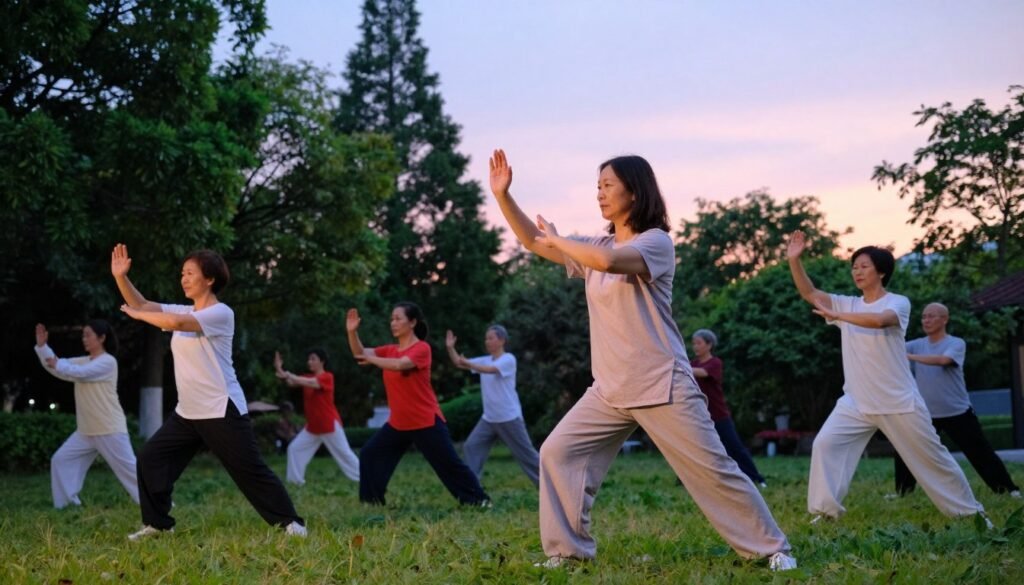
Comparing community centers, studios, parks, and online classes
Community centers often provide an affordable way to start, though some may require a local membership before you can register. Studios offer a more dedicated environment, which is ideal if you want personalized feedback from experienced teachers.
Practicing in public parks is a wonderful way to connect with nature, often organized by local clubs or volunteer groups. If you have a busy schedule, online tai chi classes offer the flexibility to practice whenever you have a quiet moment at home.
Looking for instructors who emphasize safety and accessible movement
A great teacher prioritizes your physical well-being above all else. Look for instructors who provide clear modifications for different fitness levels, including options for seated practice if standing for long periods is difficult.
Safety should always come first in any movement program. A qualified instructor will observe your posture to ensure you are not straining your joints or forcing your body into uncomfortable positions.
Questions to ask before joining a class
Before you commit to a program, it is helpful to gather all the necessary details. Asking the right questions ensures that the environment aligns with your personal wellness goals.
- What is the instructor’s background and training experience?
- Are there specific modifications available for beginners or those with limited mobility?
- What is the policy regarding footwear and comfortable clothing?
- Is there a flexible cancellation policy if my schedule changes?
Taking the time to research these tai chi classes will help you feel confident and prepared. Remember that the best environment is one where you feel supported, relaxed, and encouraged to grow at your own pace.
Adapting Tai Chi for Different Fitness Levels and Abilities
Adapting your practice ensures that Tai Chi remains accessible and effective for your unique body. You do not need perfect balance or high endurance to begin exploring these gentle movements. By making small adjustments, you can enjoy the practice regardless of your current physical condition.
Practicing seated tai chi with controlled arm movements
If standing for long periods feels uncomfortable, you can easily transition to a seated position. Sitting in a sturdy chair allows you to focus entirely on your upper body and breath. You can perform the same flowing arm patterns while keeping your feet firmly planted on the floor for stability.
Reducing stance depth and range of motion when needed
You are in complete control of how much effort you exert during your session. If a deep stance feels too demanding, simply narrow your feet or keep your knees slightly softer. Listening to your body is the most important part of achieving lasting health benefits without overexertion.
Using a wall or chair for balance support
Safety is a priority for any wellness routine. If you feel unsteady, feel free to place one hand on a wall or the back of a chair. This extra point of contact provides the security you need to move with confidence and ease. Over time, you may find that you rely on these supports less frequently.
Progressing gradually as confidence, mobility, and endurance improve
Avoid the urge to compare your progress with others. Instead, focus on your own journey toward better flexibility and functional movement. By increasing your duration and range of motion slowly, you build a sustainable habit that supports your long-term health benefits. Remember that consistency is far more valuable than intensity.
Safety Considerations for a Calm and Comfortable Practice
Prioritizing your physical safety is the foundation of a sustainable and enjoyable practice. When you engage in gentle movements, you create a space where your body can truly unwind and recover from the day.
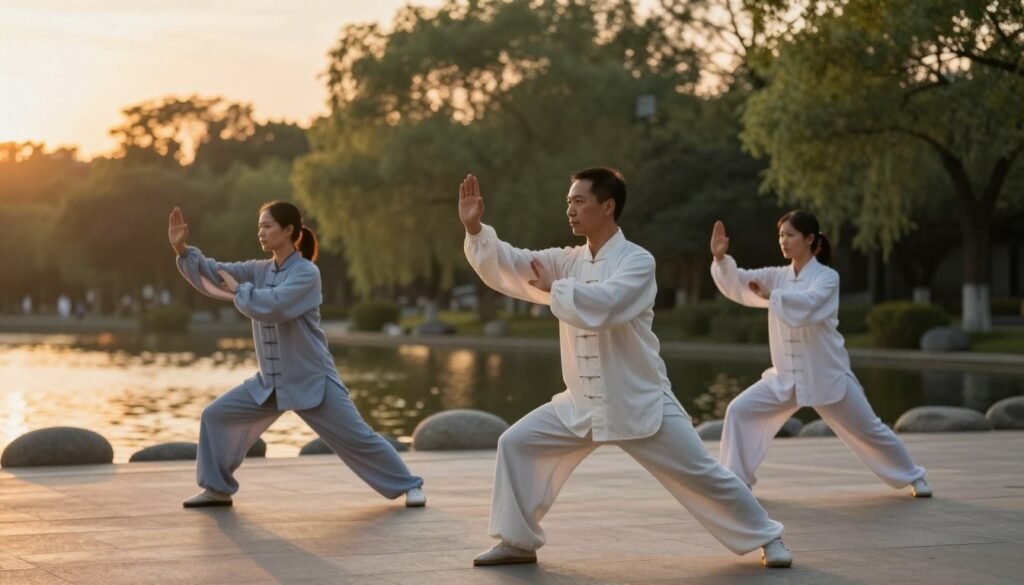
Recognizing the difference between gentle effort and pain
It is vital to distinguish between the sensation of a productive stretch and the sharp signal of pain. Gentle movements should feel like a natural extension of your body’s range, not a forced position.
If you feel a sharp, stabbing, or radiating sensation, stop immediately. Listen to your body and back away from the intensity until you find a position that feels stable and comfortable.
Managing balance concerns, joint limitations, and fatigue
Tai Chi is highly adaptable, but you must respect your current physical boundaries. If you feel unsteady, keep a sturdy chair or a wall nearby to provide extra support during your practice.
Those with joint limitations should focus on smaller, controlled motions rather than deep stances. If you feel significant fatigue, it is perfectly acceptable to shorten your session or transition to a seated position to maintain your flow.
Modifying practice for heat, cold, uneven ground, or dim lighting
Your environment plays a significant role in how safely you can perform your routine. Always ensure your practice area is well-lit to prevent trips or stumbles during evening sessions.
If you are outdoors, check the ground for uneven surfaces or debris before you begin. In extreme temperatures, adjust your clothing or move your practice indoors to ensure your body remains at a comfortable temperature throughout the session.
If you have specific medical conditions or persistent safety concerns, please consult with a qualified instructor or healthcare professional. Seeking individualized guidance ensures that your practice remains a safe and supportive part of your wellness journey.
Health Benefits Associated With Consistent Tai Chi
You might be surprised by how small, steady changes in your evening habits can foster lasting vitality. While many people start this journey for stress relief, the long-term advantages often extend far beyond simple calm. Consistent practice acts as a gentle foundation for your overall physical and mental well-being.
Supporting balance, coordination, flexibility, and functional movement
Regular movement helps maintain the natural range of motion in your joints. By focusing on slow, controlled shifts, you naturally improve your balance and coordination over time. This functional approach makes everyday activities feel easier and more fluid.
Encouraging relaxation and emotional resilience
Engaging in these relaxation exercises allows your nervous system to shift away from the “fight or flight” mode common after a busy day. This process builds emotional resilience, helping you handle life’s challenges with a steadier heart. You will likely find that your capacity to remain calm under pressure grows as you continue your practice.
Promoting body awareness and mindful stress management
Developing a deeper connection with your physical self is a core advantage of this practice. By paying attention to how your body moves, you cultivate a heightened sense of body awareness. This mindfulness serves as a powerful tool for stress relief, allowing you to identify and release tension before it accumulates.
How regular practice may complement sleep and general wellness habits
Integrating these relaxation exercises into your evening routine can signal to your body that it is time to wind down. Many practitioners report that the gentle nature of the movements helps them transition into a more restful state. While it is not a cure-all, the health benefits of a consistent routine often support better sleep quality and a more balanced lifestyle.
Turning Evening Tai Chi Into a Lasting Wellness Habit
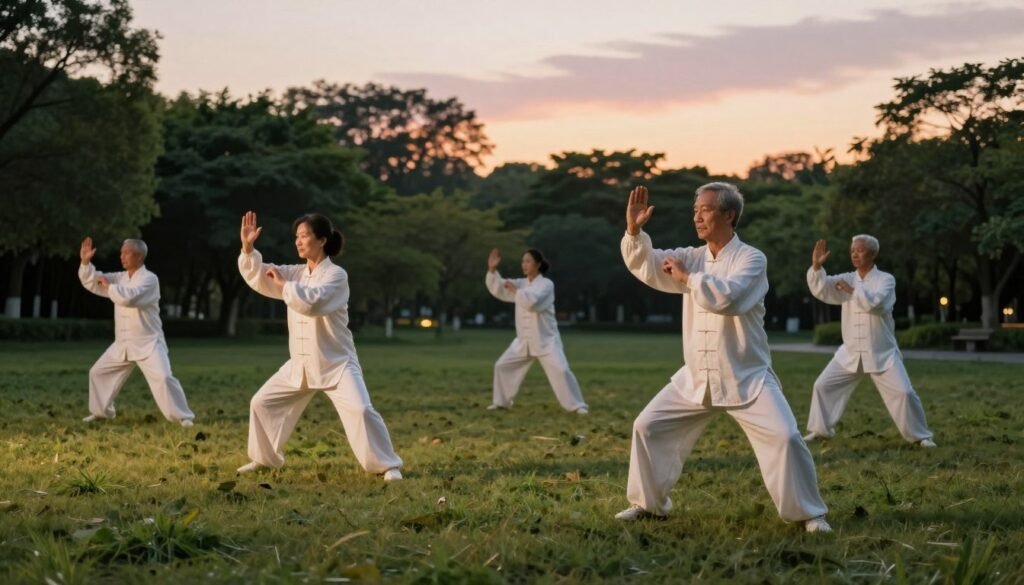
Transforming your evening into a time of restoration is easier when you anchor your movements to habits you already possess. By weaving evening tai chi into the fabric of your night, you move away from viewing it as a chore and toward seeing it as a natural part of your day.
Linking practice to an existing evening routine
The most effective way to build a new habit is to attach it to a trigger that is already firmly established. For example, you might choose to practice immediately after changing into your comfortable loungewear or right before you brush your teeth for the night.
These small, consistent cues act as a mental signal that it is time to shift gears. When you intentionally connect your movement to these existing actions, you remove the friction of deciding when to start.
Starting with manageable sessions instead of demanding daily goals
Many people struggle because they set overly ambitious goals that lead to burnout. Instead of committing to an hour every single night, start with just five or ten minutes of gentle movement.
Consistency is far more valuable than intensity when you are first building your foundation. If you miss a day, simply pick it back up the next evening without judgment or pressure.
Using reminders, class schedules, or a practice partner for accountability
External support can be a game-changer when you are trying to stay on track. Setting a gentle phone reminder or signing up for recurring tai chi classes can provide the structure you need to remain committed.
If you prefer a social approach, finding a practice partner can make the experience more enjoyable. Sharing your progress with a friend helps keep you motivated and accountable during those times when your energy feels low.
Creating a soothing post-practice ritual without relying on screens
The final step in your routine is to protect the calm state you have cultivated. Avoid the temptation to check your phone or turn on the television immediately after your session.
Instead, try to engage in a quiet, screen-free activity like reading a physical book, journaling, or simply enjoying a cup of herbal tea. This transition helps your nervous system stay settled as you prepare for a restful night of sleep.
Tracking Progress Without Losing the Relaxing Purpose
Monitoring your journey with a mindfulness workout helps you see the long-term value of your routine. Instead of focusing on technical perfection, try to observe how your body and mind respond to the practice over time.
Noticing changes in tension, mood, movement, and focus
Pay attention to the subtle shifts that occur after your evening sessions. You may notice that your shoulders feel less tight or that your mind settles more quickly as you prepare for sleep.
- Physical tension: Does your body feel more fluid after a session?
- Mood: Do you feel a greater sense of calm before heading to bed?
- Focus: Is it easier to let go of the day’s stressors?
Many practitioners find that keeping a simple journal helps them recognize these health benefits. Over a period of two to three weeks, you might observe a more consistent pattern in your sleep quality or general relaxation levels.
Recording consistency rather than judging physical performance
It is easy to fall into the trap of critiquing your posture or movement accuracy. However, the true goal of this practice is to cultivate a peaceful state of mind. Consistency is the most important metric for your long-term success.
Try marking a calendar each time you complete a session, regardless of how “perfect” the movements felt. This simple act reinforces the habit and keeps you motivated without the pressure of performance.
Adjusting duration and intensity according to daily energy
Your capacity for movement will naturally fluctuate from day to day. On days when you feel tired, a shorter session is perfectly acceptable and still provides meaningful health benefits.
When you have more energy, you can extend your practice to explore deeper movements or longer periods of stillness. Listen to your body and adjust your mindfulness workout to match your current needs, ensuring that your evening routine remains a source of comfort rather than another task on your to-do list.
Conclusion
Integrating a gentle mind-body practice into your evening routine offers a sustainable way to unwind after a long day. By focusing on slow movements and intentional breathing, you create a personal sanctuary that supports your natural transition toward rest.
Consistent movement helps you cultivate lasting stress relief that extends beyond the time spent on your mat. You will likely notice improvements in your mobility and emotional balance as you stay committed to these simple, flowing patterns.
The many health benefits of this practice become more apparent when you prioritize comfort over perfection. Listen to your body and honor your current energy levels each night. This approach ensures that your routine remains a source of joy rather than another task on your to-do list.
Please remember that this information serves as a guide for general wellness. Always consult with a qualified healthcare provider or a certified instructor before starting any new physical regimen. Your journey toward better sleep and improved body awareness starts with a single, mindful breath.