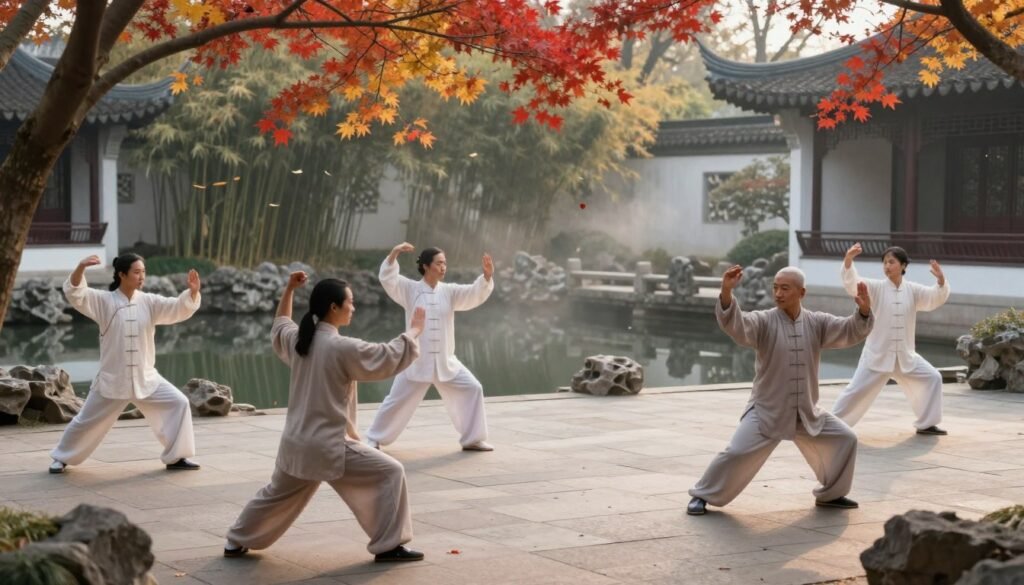
Did you know that over 300 million people practice this ancient movement art daily to improve their health? While many view it as a gentle exercise, its roots run deep into centuries-old martial traditions. Understanding the diverse paths of this practice reveals a fascinating blend of documented lineage and legendary folklore.
The narrative of these movements often centers on the mythical figure Zhang Sanfeng, who supposedly observed a fight between a bird and a snake. From these humble beginnings, five primary schools emerged to shape the modern landscape. Whether you are a beginner or a seasoned practitioner, exploring these distinctive methods provides a richer connection to the physical discipline.
We will examine how these traditions evolved from combat-focused systems into the global wellness phenomenon we recognize today. By tracing the development of each branch, you gain a clearer perspective on the foundational principles that define this graceful art form.
Key Takeaways
- Millions of people worldwide engage in this practice for its profound health benefits.
- The art form evolved from ancient combat traditions into a modern wellness discipline.
- Five major schools, including Chen and Yang, represent the core of the practice.
- Legends like Zhang Sanfeng add a layer of mystery to the documented lineage.
- Learning about different variations helps practitioners deepen their technical understanding.
What Tai Chi Is and Why Its History Matters
To truly appreciate this art, we must explore its identity as a sophisticated system of movement. While many recognize it for its graceful flow, the practice is rooted in a rich heritage that prioritizes mental clarity and physical efficiency. Understanding these origins allows practitioners to connect more deeply with the movements they perform every day.
Tai Chi as an Internal Martial Art
At its core, this discipline is classified among the internal martial arts. Unlike systems that rely primarily on brute muscular force, this approach emphasizes the coordination of intention, posture, and breath. By focusing on the body’s internal connectivity, students learn to generate power from the ground up rather than relying on external strength alone.
This method of training transforms how a person interacts with their environment. Practitioners develop a unique sensitivity that allows them to remain calm under pressure. By prioritizing relaxed strength, the body becomes more resilient and capable of handling physical stress with ease.
How Slow Movements Develop Balance, Coordination, and Awareness
The deliberate pace of tai chi movements is not merely for aesthetic appeal. These slow, controlled actions serve as a laboratory for the nervous system to refine motor control. By moving slowly, you force your brain to pay close attention to every shift in weight and alignment.
This heightened state of awareness helps improve balance and prevents common injuries. As you practice, you become more conscious of your center of gravity and how your limbs move in harmony. Over time, this mindful movement translates into better posture and coordination in your daily life.
The Relationship Between Tai Chi, Qi Gong Practice, and Meditation
Many newcomers often confuse the various branches of Chinese movement arts. While qi gong practice and meditation share common roots with this art, they serve slightly different functions. Meditation often focuses on stillness, whereas this martial art integrates that stillness into active, flowing motion.
Qi gong practice is frequently used as a foundational tool to cultivate energy and breath control. When combined with the complex sequences of this martial art, these elements create a holistic experience. The following table highlights the primary differences and overlaps between these three essential disciplines.
| Practice | Primary Focus | Movement Style | Main Goal |
|---|---|---|---|
| Tai Chi | Martial Application | Continuous Flow | Balance & Defense |
| Qi Gong | Energy Cultivation | Repetitive/Static | Health & Vitality |
| Meditation | Mental Stillness | Stationary | Focus & Clarity |
By understanding these distinctions, you can better tailor your training to meet your personal goals. Whether you seek the defensive utility of internal martial arts or the restorative benefits of qi gong practice, the journey remains deeply rewarding. Consistent engagement with these tai chi movements ensures that both your body and mind remain sharp and balanced.
Tai Chi Origins in Chinese Martial Arts and Philosophy
The history of this art is woven into the fabric of Chinese philosophy and martial tradition. Rather than emerging from a single moment, the practice evolved through centuries of cultural refinement. It reflects a deep understanding of how the human body interacts with the natural world.
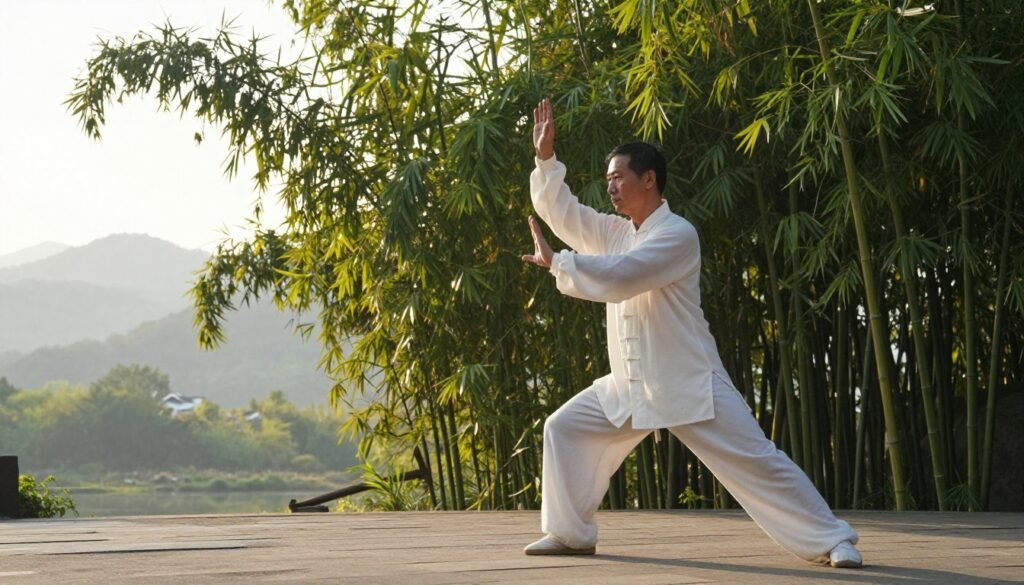
Early Influences from Daoist Thought and Traditional Chinese Culture
At its core, the practice draws heavily from Daoist philosophy, which emphasizes living in harmony with the flow of nature. This worldview suggests that health and strength come from softness rather than rigid force. Traditional Chinese culture provided the framework for these ideas, blending physical training with internal cultivation.
Practitioners often look to the Yijing, or Book of Changes, to understand the cycles of life. By observing the natural world, early masters developed movements that mirror the constant shifting of energy. This integration of mind and body remains a hallmark of the discipline today.
The Meaning of Taijiquan and the Concept of Yin and Yang
The term Taijiquan translates roughly to “Supreme Ultimate Fist.” It refers to the concept of Taiji, which represents the source of all movement and change in the universe. This philosophy is inseparable from the duality of Yin and Yang.
In practice, Yin represents the soft, yielding, and receptive aspects of movement. Yang represents the hard, active, and expansive forces. A skilled practitioner learns to balance these two energies, ensuring that every action remains fluid and efficient.
Historical Evidence Compared with Later Origin Legends
When researching tai chi origins, it is important to distinguish between documented history and folklore. Many popular stories attribute the creation of the art to the legendary monk Zhang Sanfeng. While these tales add a sense of mystery, they often lack verifiable evidence.
Modern scholars look toward the development of specific tai chi schools to trace the true history of the art. By examining the tai chi lineage of established families, we can see how the practice moved from rural villages into the public eye. This shift from secret family training to widespread education marks the most significant era in the art’s evolution.
| Concept | Philosophical Meaning | Martial Application |
|---|---|---|
| Yin | Yielding and Softness | Neutralizing incoming force |
| Yang | Active and Firm | Issuing power and striking |
| Taiji | The Supreme Ultimate | Balanced, whole-body movement |
The Chen Family and the Birth of Traditional Tai Chi
The development of traditional tai chi is inextricably linked to the martial heritage of Chen Village. While many stories surround the early days of this art, the Chen family stands out as a central pillar in its historical preservation. Their systematic approach to movement helped shape the foundation for what we recognize today.
Chen Wangting and the Development of Chen-Style Practice
Historical accounts often credit Chen Wangting, a military officer from the 17th century, with creating the foundational routines of this style. He integrated various martial techniques into a cohesive system that emphasized internal strength and fluid motion. This early work laid the groundwork for the tai chi origins that many practitioners study today.
His approach was not merely about health; it was a sophisticated combat system. By combining breathing techniques with complex physical movements, he ensured that the art remained effective for self-defense. This legacy of innovation continues to influence how students approach their training.
Chen Village as a Center of Tai Chi Lineage
For centuries, Chen Village has served as the heart of a dedicated tai chi lineage. The families living there maintained a rigorous training environment that kept the art alive through generations of social and political change. This concentrated focus allowed for the refinement of specific techniques that might have otherwise been lost.
The village environment fostered a unique culture of mastery. Students and family members practiced together, ensuring that the nuances of the forms were passed down with precision. This commitment to the tai chi lineage remains a hallmark of the Chen tradition.
Silk-Reeling Energy, Explosive Power, and Martial Applications
What truly sets this style apart is its focus on specific internal mechanics. Practitioners learn to cultivate “silk-reeling” energy, which involves a spiraling motion that connects the entire body. This technique is essential for generating power from the ground up.
The training also emphasizes the following core elements:
- Fajin: The ability to release explosive power in a sudden, focused burst.
- Alternating Tempos: The practice of shifting between slow, deliberate movements and fast, dynamic strikes.
- Martial Applications: Every movement is designed with a clear defensive or offensive purpose in mind.
By mastering these components, students gain a deeper understanding of tai chi origins and the practical utility of the art. This blend of grace and intensity defines the unique character of traditional tai chi.
Tai Chi Styles & History: How the Major Traditions Developed
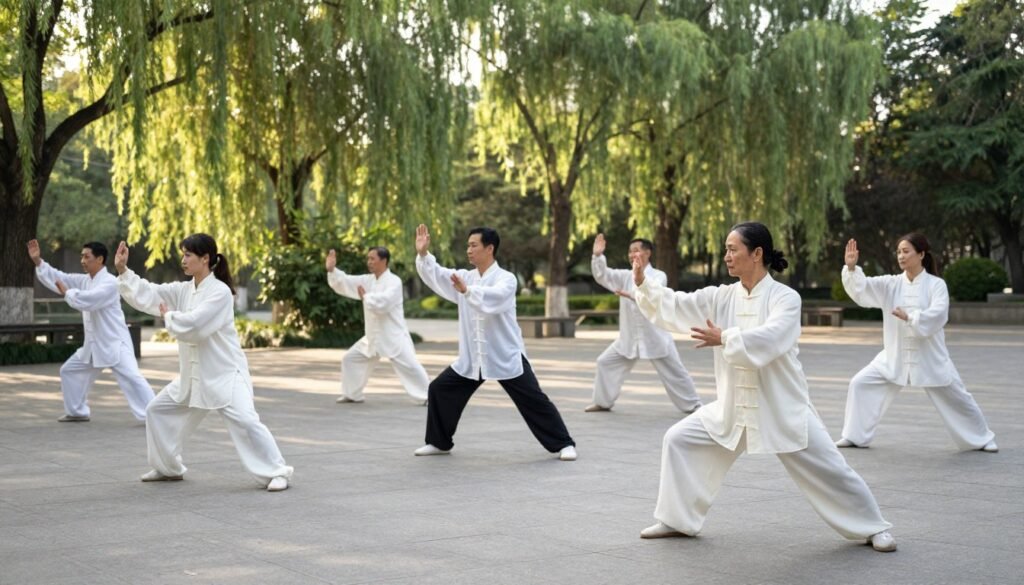
Exploring the development of major traditions reveals how individual teachers shaped the tai chi styles & history we recognize today. This art form did not emerge in a vacuum; it grew through the dedicated transmission of knowledge from masters to their chosen students. Over time, this tai chi evolution transformed local family practices into the diverse schools practiced globally.
How Teachers, Students, and Family Lineages Shaped the Styles
At the heart of every tradition lies a specific family lineage. Masters often adapted techniques to suit their own physical strengths or to address specific martial challenges. These personal refinements were then passed down, creating distinct branches that maintained the core essence of the original teachings.
Students played a vital role in this process by interpreting the movements through their own experiences. When a student became a teacher, they often added their own insights, ensuring the art remained a living, breathing practice. This cycle of innovation and preservation is what keeps the tradition vibrant.
Why Different Tai Chi Schools Share Core Principles
Despite their visual differences, most schools share a common foundation. You will find that concepts like relaxation, balance, and circularity remain central to almost every lineage. These principles are not accidental; they are the result of centuries of refinement aimed at maximizing internal power.
Whole-body coordination is another pillar that unites these diverse groups. Whether a school emphasizes a soft, flowing approach or a more grounded, explosive style, the goal is to move as a single, unified entity. This shared focus on internal mechanics is what truly defines the art.
The Role of Form Length, Training Methods, and Martial Goals
The appearance of a specific style often depends on its primary objectives. Some schools prioritize long, complex forms to build endurance and deep internal awareness. Others may favor shorter, more compact sequences designed for quick martial application or ease of daily practice.
Training methods also vary significantly between traditions. While some focus heavily on partner work and sensitivity drills, others emphasize solo meditation and slow-motion repetition. Ultimately, these variations reflect the specific martial goals and health philosophies that each lineage has championed throughout its history.
Yang-Style Tai Chi and Its Worldwide Popularity
If you have ever seen people practicing graceful, slow-motion exercises in a public park, you were likely witnessing Yang-style Tai Chi. This tradition has become the most recognizable form of the art, attracting millions of practitioners who seek both physical health and mental clarity. Many renowned tai chi masters have contributed to its growth, ensuring that the practice remains accessible to people of all ages and fitness levels.
Yang Luchan’s Training in the Chen Family Tradition
The roots of this style trace back to Yang Luchan, who traveled to Chen Village to study under the masters of that era. He spent years mastering the complex, explosive techniques of the Chen family before refining them into his own unique expression. His dedication allowed him to bridge the gap between traditional combat systems and a more fluid, internal approach.
By focusing on the core principles of relaxation and structural integrity, he gained a reputation as an invincible fighter. His success in Beijing helped spread the art beyond its original village, setting the stage for future generations of tai chi masters to share the practice with the public.
Yang Chengfu and the Expansion of a More Open, Gentle Form
The transition toward the modern, gentle version of the art is largely credited to Yang Chengfu. He recognized that the rigorous, high-impact training of the past was not suitable for everyone. Consequently, he modified the curriculum to emphasize health, longevity, and ease of movement.
His teaching style favored large, open postures that allowed for better circulation and relaxation. This shift made the practice much more inviting for beginners and those looking for a low-impact way to improve their well-being. His influence effectively transformed the art into a global phenomenon.
Common Features of Yang-Style Tai Chi Movements
The beauty of this style lies in its consistency and grace. Practitioners focus on maintaining an upright posture while executing continuous, flowing transitions. These tai chi movements are designed to be performed with a sense of effortless power, avoiding any unnecessary tension in the body.
Key characteristics include controlled weight shifting and a steady, rhythmic pace. By prioritizing smooth transitions, students learn to cultivate internal energy and balance. Mastering these tai chi movements provides a solid foundation for anyone interested in the deeper, meditative aspects of the practice.
Wu-Style Tai Chi Traditions and Their Distinctive Features
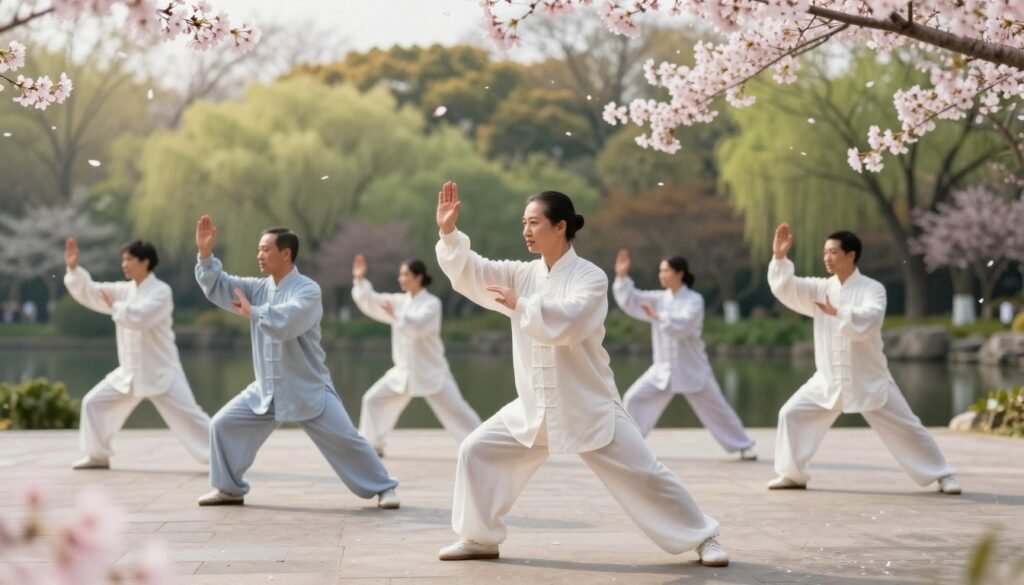
When exploring the history of martial arts, you might notice that two distinct styles often share the name “Wu.” While they sound identical in English, they are written with different Chinese characters and represent unique branches of traditional Tai Chi. Understanding these differences is vital for any student looking to deepen their knowledge of a specific tai chi lineage.
Wu Yuxiang and the Small-Frame Tradition
Wu Yuxiang developed his style in the 19th century, focusing on highly refined and compact movements. This approach is often referred to as the “Small-Frame” tradition because it emphasizes internal mechanics over large, expansive gestures. Practitioners of this style prioritize precision and subtle energy shifts within a very contained space.
The training requires a deep understanding of body alignment and mental focus. By keeping the movements small, students learn to cultivate internal power that is both efficient and highly effective. This traditional Tai Chi method remains a favorite for those who value technical detail and meditative depth.
Wu Jianquan and the Development of Wu-Style Tai Chi
The other prominent style was popularized by Wu Jianquan, whose family lineage stems from the Yang tradition. This version is famous for its distinctive leaning posture, which allows for unique angles in both defense and offense. It is a more open and flowing style compared to the compact nature of the Small-Frame tradition.
Wu Jianquan’s influence helped spread this art to a wider audience, making it one of the most practiced forms globally. The movements are designed to be soft yet firm, emphasizing a continuous, circular flow. Many students find this style accessible because it balances martial application with graceful, health-oriented motion.
Comparing the Two Wu Lineages Without Confusing Their Names
To avoid confusion, it helps to look at the specific characteristics that define each school. While both are respected parts of the tai chi lineage, their physical expressions differ significantly. The following table highlights the primary contrasts between these two important traditions.
| Feature | Wu Yuxiang (Hao) Style | Wu Jianquan Style |
|---|---|---|
| Primary Focus | Compact, Small-Frame | Open, Flowing, Leaning |
| Movement Style | Internal precision | Circular and soft |
| Stance Width | Very narrow/compact | Medium/Natural |
| Key Characteristic | Subtle energy | Leaning posture |
Sun-Style Tai Chi and Its Integrated Approach
The Sun-style tradition is widely recognized for its sophisticated integration of Xingyiquan, Bagua Zhang, and Tai Chi principles. This unique synthesis creates a distinct path within the world of internal martial arts, offering practitioners a comprehensive system for health and self-defense.
Sun Lutang’s Background in Xingyiquan and Bagua Zhang
Sun Lutang was a legendary martial artist who mastered several disciplines before developing his own style. He brought deep expertise in the explosive power of Xingyiquan and the fluid, circular nature of Bagua Zhang to his practice.
By combining these elements, he ensured that his system was not just a variation of existing forms, but a holistic evolution. His background allowed him to refine traditional tai chi movements into a more compact and efficient structure.
How Sun Style Blends Steps, Turning, and Opening-and-Closing Actions
One of the most recognizable features of this style is its unique footwork. Practitioners often use a “follow-step” method, where one foot follows the other, keeping the body stable and mobile at all times.
The system also emphasizes opening-and-closing actions that coordinate the breath with physical motion. These movements help to cultivate internal energy while maintaining a constant state of readiness and balance.
The Gentle, Mobile Quality of Sun-Style Training
Many students appreciate this style because it utilizes higher stances compared to other traditions. This makes it an excellent choice for older adults or those who want to avoid excessive strain on their knees.
The training remains highly effective despite its gentle appearance. It encourages a natural, upright posture that promotes better circulation and mental clarity throughout the entire body.
| Feature | Sun-Style | General Tai Chi |
|---|---|---|
| Stance Height | High/Natural | Low/Deep |
| Footwork | Follow-step | Weight-shifting |
| Primary Focus | Agility & Flow | Rooting & Power |
| Complexity | Integrated | Traditional |
Other Traditional Tai Chi Styles Worth Knowing
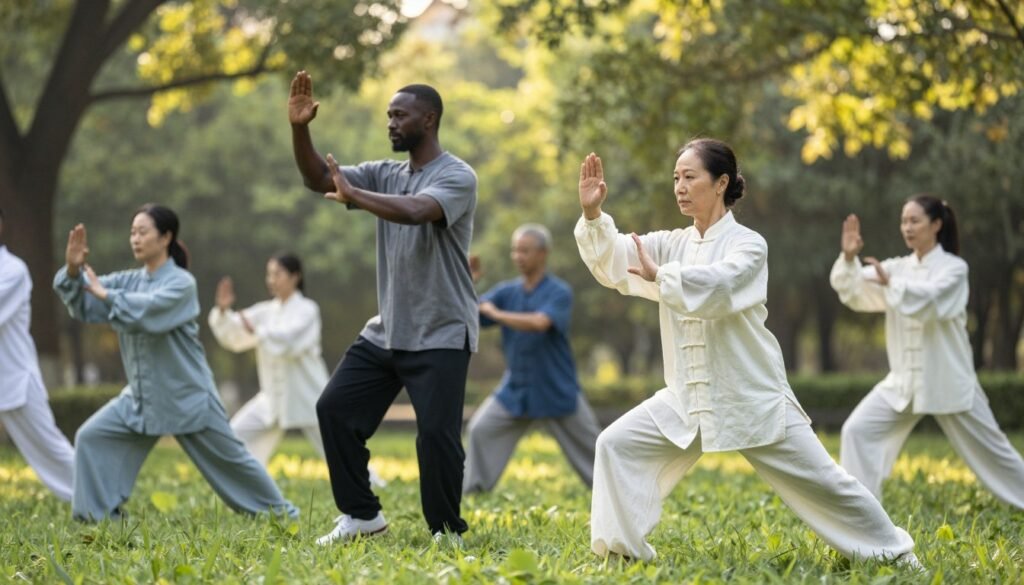
Exploring the landscape of traditional tai chi reveals a fascinating variety of smaller, specialized schools. While the most popular styles often dominate the conversation, these niche traditions provide deep insights into the art’s evolution. Many of these tai chi schools focus on specific mechanical refinements that distinguish them from the mainstream.
Hao-Style and Its Refined Internal Mechanics
The Hao-style is highly regarded for its emphasis on subtle, internal movement. Practitioners of this style prioritize minimal external exertion, focusing instead on the precise alignment of the body. This approach requires a high level of sensitivity to one’s own internal structure.
By keeping movements compact, the Hao-style allows for a rapid transition between defensive and offensive postures. It is a perfect example of how traditional tai chi can be both gentle and incredibly efficient in a martial context.
He-Style Tai Chi and Its Distinctive Lineage
He-style tai chi is often noted for its unique family lineage and specific training methods. It maintains a strong connection to the historical roots of the art while offering a distinct interpretation of classic forms. Students who study this style often appreciate the clear, structured approach to learning the movements.
Wudang and Chen-Related Schools in Contemporary Practice
When researching tai chi schools, you may encounter groups that claim a direct connection to Wudang Mountain. It is wise to investigate a teacher’s documented training history rather than assuming a name guarantees ancient continuity. Many legitimate schools exist that focus on the practical application of internal principles.
Other traditions, such as the Zhaobao or Fu-style, offer fascinating variations. For instance, the Fu-style is well-known for its specific emphasis on the flexibility of the spine and waist. These schools continue to enrich the global community by preserving specialized techniques that might otherwise be lost.
| Style Name | Primary Focus | Key Characteristic |
|---|---|---|
| Hao-Style | Internal Mechanics | Minimal external effort |
| Fu-Style | Spinal Mobility | Waist and spine rotation |
| Zhaobao | Small Frame | Connection to Chen roots |
How Tai Chi Lineage and Masters Preserve the Art
The preservation of movement arts relies heavily on the unbroken chain of knowledge passed down through generations. When you study traditional tai chi, you are stepping into a historical narrative that spans centuries. This connection ensures that the core mechanics of the practice remain intact despite the passage of time.
What a Tai Chi Lineage Can Tell You About Training
A formal tai chi lineage acts as a roadmap for your development. It provides essential context regarding the specific forms, partner exercises, and martial applications you will encounter. By knowing the history of your school, you gain insight into the primary goals of your training, whether they lean toward health, meditation, or self-defense.
Different schools often emphasize unique physical qualities. For instance, one lineage might focus on explosive power, while another prioritizes soft, flowing movements. Understanding your roots helps you set realistic expectations for your progress.
The Responsibilities of Traditional Tai Chi Masters
The role of tai chi masters extends far beyond simply teaching a sequence of movements. These instructors serve as guardians of the art, ensuring that fundamental principles are not lost or diluted over time. They must balance the need for strict adherence to tradition with the necessity of making the practice accessible to modern students.
A skilled teacher adapts their instruction to meet the needs of their community. They recognize that every student learns differently and requires personalized guidance. True mastery involves knowing when to push a student and when to offer support, fostering a deep, lasting connection to the practice.
How Forms, Principles, and Applications Pass Between Generations
Knowledge is rarely transferred through books alone. Instead, it flows through direct, hands-on correction and personal mentorship. This is why two practitioners from the same tai chi lineage may move with subtle differences; each teacher interprets the principles through their own physical experience.
These tai chi masters pass down the “internal” aspects of the art—the feeling of the movement—that cannot be captured in writing. By focusing on the intent behind each posture, they ensure that the essence of the art survives. This living transmission is what keeps the practice vibrant and relevant for every new generation of students.
Core Tai Chi Movements Shared Across Different Styles
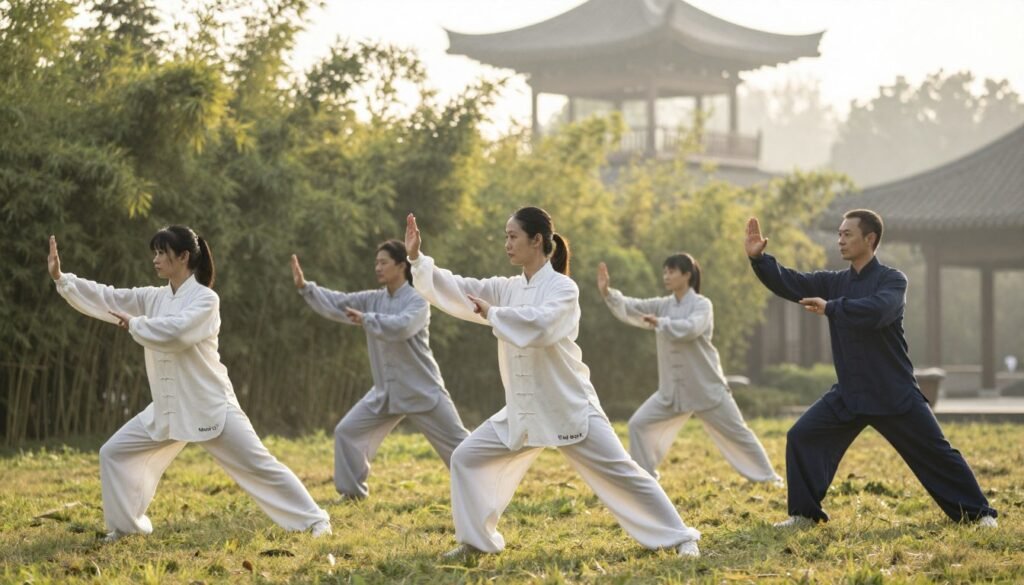
Beneath the surface of diverse forms, you will find a consistent foundation of movement that defines the practice. While different schools may emphasize unique aesthetics, the underlying mechanics of traditional tai chi remain remarkably uniform. These shared principles ensure that every practitioner develops the same internal quality, regardless of their specific lineage.
Rooting, Centering, and Maintaining Whole-Body Alignment
At the heart of every practice is the concept of rooting. This involves sinking your weight into the ground to create a stable base, which allows for greater power and balance. By maintaining a centered posture, you ensure that your spine remains upright and relaxed throughout your tai chi movements.
Proper alignment is essential for the flow of energy. When your body is correctly stacked, you avoid unnecessary tension that can block your progress. Consider these key elements of alignment:
- Relaxed Shoulders: Keeping the shoulders down prevents tightness in the chest.
- Suspended Crown: Imagine a string pulling the top of your head upward to lengthen the spine.
- Pelvic Alignment: A neutral pelvis supports the lower back and improves stability.
Weight Shifting, Spiraling, and Coordinated Footwork
Movement in this art is never static; it relies on the constant transition of weight. By shifting your center of gravity smoothly from one leg to the other, you create a fluid motion that is both graceful and functional. This transition is the engine behind all traditional tai chi sequences.
Spiraling energy, often called silk-reeling, adds a layer of complexity to these movements. It involves rotating the joints in a coordinated fashion to generate power from the ground up. When your footwork is synchronized with this rotation, your entire body moves as a single, unified unit.
Peng, Lu, Ji, An, and Other Fundamental Energies
To understand the martial application of these forms, one must grasp the four primary energies. These qualities are not just physical actions but functional intentions that guide how you interact with a partner. They provide a framework for yielding, redirecting, and issuing force effectively.
These four energies are essential for mastering tai chi movements:
- Peng (Ward-off): An expansive, upward energy that protects your center.
- Lu (Roll-back): A yielding energy used to neutralize incoming force by redirecting it.
- Ji (Press): A focused, forward-moving energy that applies pressure to an opponent.
- An (Push): A downward or forward force that utilizes the whole body to issue power.
By integrating these energies into your daily practice, you move beyond simple choreography. You begin to embody the true essence of traditional tai chi, transforming your movements into a sophisticated system of balance and internal strength.
Tai Chi Weapons, Push Hands, and Martial Training
Beyond the gentle solo forms, there is a vast world of traditional weaponry and partner drills waiting to be explored. While many students focus on health, these advanced components provide a deeper understanding of the internal martial arts tradition. Engaging with these tools helps practitioners refine their focus and physical control.
Single Sword, Straight Sword, Spear, and Saber Training
Weapons training serves as an extension of the body, teaching students how to project energy beyond their fingertips. The straight sword (jian) emphasizes agility and precision, while the saber (dao) focuses on powerful, sweeping cuts. Meanwhile, the spear is often considered the king of weapons, demanding perfect alignment and footwork.
These tools require the same core principles found in empty-hand practice. By training with a weapon, you learn to maintain your center while managing the weight and reach of an external object. This process significantly improves your coordination and spatial awareness.
Push Hands as Partner Practice for Sensitivity and Timing
Push hands, or Tui Shou, is a vital partner exercise that tests your ability to remain relaxed under pressure. It is not about winning or losing, but about developing the sensitivity to feel an opponent’s intent. Through this practice, you learn to neutralize incoming force rather than meeting it with resistance.
This interactive training is essential for mastering the timing of tai chi movements. It forces you to stay grounded and connected to your partner at all times. Over time, this builds a unique type of listening skill that is highly valued in all internal martial arts.
How Martial Applications Clarify the Shape of Empty-Hand Forms
Many students find that studying the combat application of a movement changes how they perform it. When you understand the purpose behind a specific posture, your intent becomes clearer and more focused. This realization often transforms a simple exercise into a powerful, functional skill.
Martial applications provide the “why” behind the choreography. They explain why certain angles, shifts, and rotations are necessary for balance and leverage. By exploring these practical uses, you gain a deeper appreciation for the logic embedded in traditional tai chi movements.
| Training Tool | Primary Focus | Skill Developed |
|---|---|---|
| Straight Sword | Agility & Precision | Extended Intent |
| Saber | Power & Momentum | Force Projection |
| Spear | Alignment & Reach | Whole-Body Unity |
| Push Hands | Sensitivity & Timing | Neutralization |
How Tai Chi Evolved from Combat System to Health Practice
The journey of tai chi evolution from a battlefield necessity to a global wellness phenomenon is a fascinating study in cultural adaptation. While the art originated as a sophisticated method for self-defense, the needs of the Chinese population shifted dramatically over the last century. This transition turned a guarded martial secret into a widely accessible practice for longevity and stress relief.
Changes in Training Goals During the Late Qing and Republican Eras
During the late Qing and early Republican eras, the focus of martial arts began to move away from pure combat application. As firearms and modern military tactics became more prevalent, the practical need for hand-to-hand combat skills declined. Masters began to emphasize the internal health benefits of their training to ensure the survival of their lineages.
This shift allowed practitioners to prioritize physical conditioning and mental clarity over lethal strikes. By highlighting the restorative nature of the movements, teachers could share their knowledge with a broader audience. This period marked the beginning of a new chapter where the art served the community’s well-being rather than just the individual fighter.
The Influence of Public Demonstrations, Schools, and Physical Education
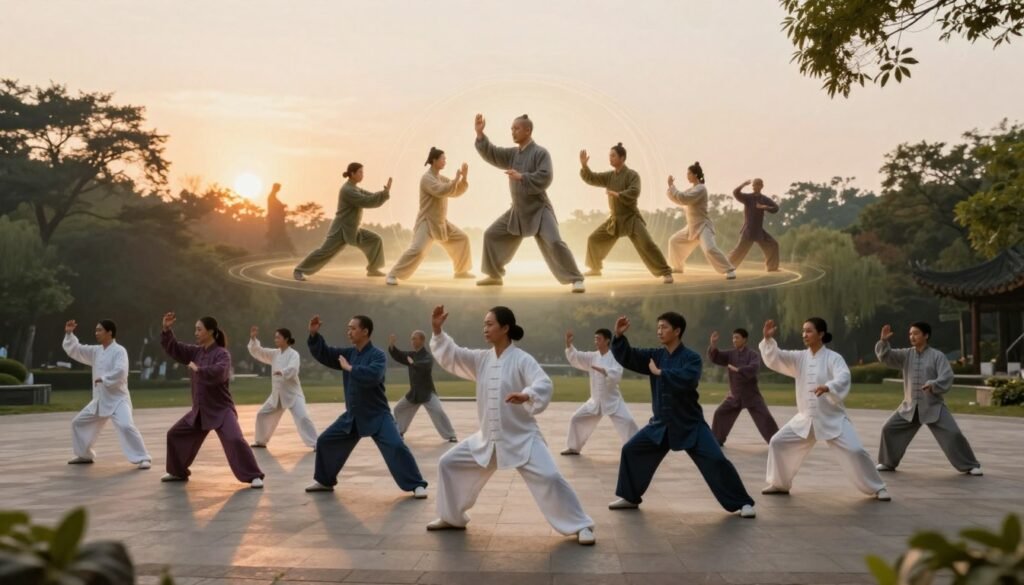
Public demonstrations played a vital role in demystifying the art for the general public. By showcasing the grace and fluidity of the movements in open spaces, masters successfully attracted students from all walks of life. These events helped transform the perception of the practice from a secretive martial system into a respected form of physical education.
Government-backed programs also integrated these movements into school curricula to promote national health. This institutional support helped standardize the teaching methods across different regions. Consequently, the art became a staple of daily exercise routines for millions of people seeking a balanced lifestyle.
Standardized Forms and the Rise of Simplified Tai Chi
The introduction of simplified routines, such as the 24-posture form in 1956, significantly broadened access to the practice. These shorter sequences were designed to be easier to learn, making them perfect for beginners and those with limited time. While these forms differ from the long, complex sequences of traditional lineages, they remain deeply rooted in the same core principles.
It is important to note that these simplified versions are distinct from qi gong practice, which often focuses on static postures and breath control. While both disciplines share a focus on energy flow, the standardized forms provide a more dynamic, movement-based experience. By balancing accessibility with tradition, these modern routines ensure that the legacy of the art continues to thrive in the modern world.
Tai Chi Schools in the United States and Around the World
The journey of Tai Chi from ancient Chinese villages to the bustling streets of America is a fascinating tale of cultural exchange. Over the last several decades, this practice has evolved from a guarded family secret into a widely accessible form of movement. Today, practitioners across the globe benefit from the dedication of those who brought these traditions across the ocean.
How Tai Chi Reached American Communities
The arrival of the art in the United States was largely driven by immigration and the desire of early tai chi masters to share their heritage. During the mid-20th century, teachers began opening small, informal classes in urban centers with large Chinese populations. These early pioneers often taught in basements or community halls, focusing on preserving the integrity of their specific family styles.
As interest grew, these teachers began to reach beyond their immediate cultural circles. Public demonstrations in parks and cultural festivals helped demystify the practice for the general public. This period marked the beginning of a transition where the art became a bridge between Eastern philosophy and Western wellness needs.
Community Centers, Parks, Martial Arts Studios, and Wellness Programs
Today, you can find instruction in a variety of settings, each offering a different atmosphere for your practice. Many people start their journey in local community centers or public parks, where the focus is often on social connection and gentle movement. These environments are perfect for those who want to enjoy the calming benefits of the practice without the intensity of a competitive martial arts school.
Conversely, dedicated martial arts studios provide a more structured environment for those interested in the deeper mechanics of the art. These tai chi schools often emphasize:
- Detailed posture correction and alignment.
- Partner-based sensitivity training, such as Push Hands.
- The study of traditional weapons like the straight sword or saber.
- A clear progression through a formal curriculum.
Differences Between Traditional Lineage Schools and Health-Focused Classes
When choosing where to train, it is helpful to understand the distinction between a lineage-based school and a general health-focused class. A traditional lineage school is usually connected to a specific family or master, ensuring that the techniques are passed down with high fidelity. These schools often require a longer commitment but offer a profound understanding of the art’s martial roots.
“The true value of the practice lies not just in the movement, but in the lineage of wisdom that connects the student to the past.”
Health-focused classes, while excellent for physical well-being, may prioritize accessibility over technical depth. They are ideal for individuals seeking stress relief or improved balance. When evaluating potential tai chi masters, consider these factors:
| Feature | Lineage School | Health-Focused Class |
|---|---|---|
| Primary Goal | Martial & Internal Mastery | Wellness & Relaxation |
| Curriculum | Rigorous & Traditional | Simplified & Flexible |
| Instructor | Certified Lineage Holder | Fitness or Wellness Coach |
Ultimately, the best choice depends on your personal goals. Whether you seek the discipline of a traditional school or the gentle pace of a wellness program, the most important step is finding a teacher who resonates with your needs. Always look for tai chi schools that encourage questions and provide a clear path for your development.
Choosing a Tai Chi Style for Your Goals
Your journey into the world of tai chi styles & history begins by matching your personal interests with the right training method. With so many tai chi schools available today, it is helpful to identify what you want to achieve before you sign up for your first class.
Styles for Beginners Seeking Gentle, Structured Practice
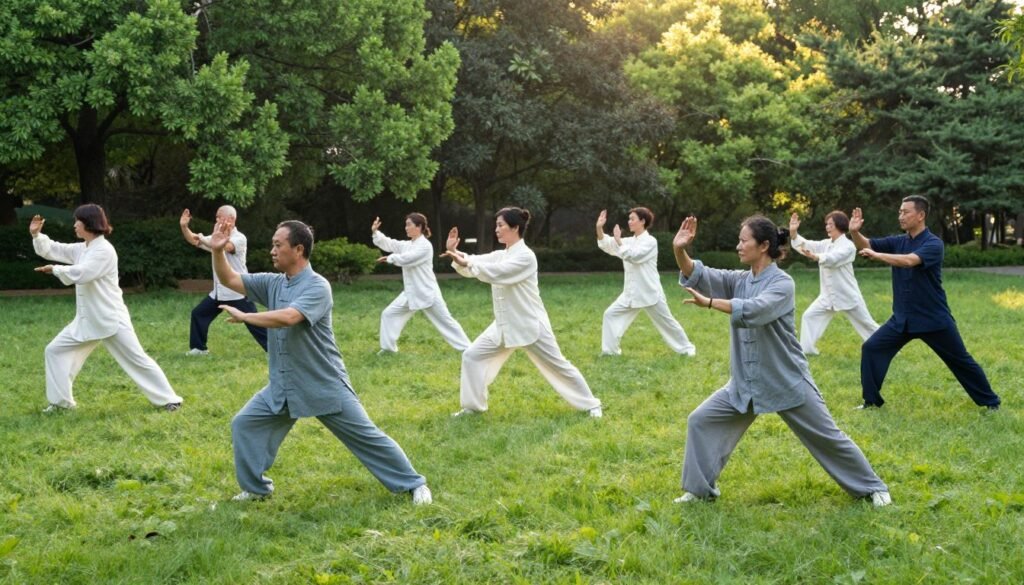
If your primary goal is stress relief and improved physical health, look for programs that focus on standardized, gentle movements. The Yang style is widely considered the most accessible for newcomers due to its open, flowing, and rhythmic nature.
Many community centers and wellness programs offer simplified versions of these traditional forms. These classes prioritize balance, coordination, and relaxation, making them perfect for those who want a structured yet low-impact exercise routine.
Styles for Students Interested in Martial Applications
Students who are drawn to the martial roots of the art should investigate Chen-style instruction. This tradition is famous for its use of silk-reeling energy and sudden, explosive power.
Training in this style requires a higher level of physical conditioning and a willingness to study complex mechanics. Finding a qualified teacher who understands the martial applications behind the movements is essential for mastering this demanding discipline.
Styles That Emphasize Mobility, Compact Forms, or Internal Detail
For those interested in mobility and unique footwork, the Sun style offers a highly effective approach. It combines the fluid movements of tai chi with the agile stepping patterns found in other internal arts, making it very gentle on the joints.
Alternatively, if you prefer precision and deep internal detail, the Wu or Hao styles provide a more compact, refined experience. These traditions emphasize subtle body alignment and internal focus, which can be incredibly rewarding for dedicated practitioners.
Ultimately, the quality of your instructor often matters more than the specific style name. A great teacher will help you adapt any tradition to meet your personal fitness goals and long-term health needs.
Common Misunderstandings About Traditional Tai Chi
Exploring the depths of this ancient art reveals that it is far more than a simple series of slow movements. While many newcomers are drawn to the gentle pace, traditional tai chi is a sophisticated system with deep roots in combat and physical conditioning.
Tai Chi Is More Than Slow Exercise
It is a common mistake to view these movements only as a form of light relaxation. In reality, the practice includes rigorous partner work, weapon training, and complex martial applications that require significant physical coordination.
When you look closer, you will find that the slow speed is actually a training tool. It allows practitioners to develop internal awareness and precise body mechanics that are essential for effective movement. Consider these elements that define the martial side of the practice:
- Push Hands: A partner exercise designed to develop sensitivity and timing.
- Weaponry: Training with the straight sword, saber, or spear to extend the body’s reach.
- Martial Applications: Every movement contains a functional purpose for self-defense.
Internal Martial Arts Do Not Depend on Magic or Unverifiable Claims
Some people mistakenly associate internal martial arts with supernatural abilities or mystical energy. However, the true power of these arts comes from biomechanics, structural alignment, and the efficient use of the entire body.
You should evaluate any instruction based on observable skills rather than vague promises. A qualified teacher will focus on how your joints, muscles, and posture work together to create force. Transparency in training methods is a hallmark of a legitimate lineage.
Health Benefits Require Consistent Practice and Realistic Expectations
While the health benefits are well-documented, they do not appear overnight. Achieving better balance, flexibility, and stress reduction requires a commitment to regular, steady practice.
It is important to approach your training with patience. Avoid the trap of expecting instant healing or extraordinary physical changes. Instead, focus on these core principles for long-term success:
- Consistency: Short, daily sessions are often more effective than one long, infrequent class.
- Gradual Learning: Master the basics of posture before attempting complex sequences.
- Safety: Listen to your body and avoid pushing through sharp pain or discomfort.
By maintaining a grounded perspective, you can enjoy the genuine rewards of this practice for years to come. Remember that the journey is just as important as the final result.
Conclusion
Your path into the world of internal movement begins with understanding the rich tapestry of tai chi styles & history. This ancient practice remains a living tradition that adapts to the needs of every generation.
The fascinating tai chi evolution reflects a shift from rigorous combat training to a holistic approach for modern wellness. Whether you choose the explosive power of Chen or the gentle, flowing movements of Yang, you tap into a shared foundation of balance and mindfulness.
Diverse lineages like Wu, Sun, and Hao demonstrate that different forms often lead to the same goal of physical and mental harmony. These variations exist to serve different body types and personal objectives.
Take time to observe classes and speak with experienced instructors to find a lineage that resonates with your lifestyle. Consistent practice is the key to unlocking the benefits of this art form. Start your journey today and discover how these movements can improve your daily life.