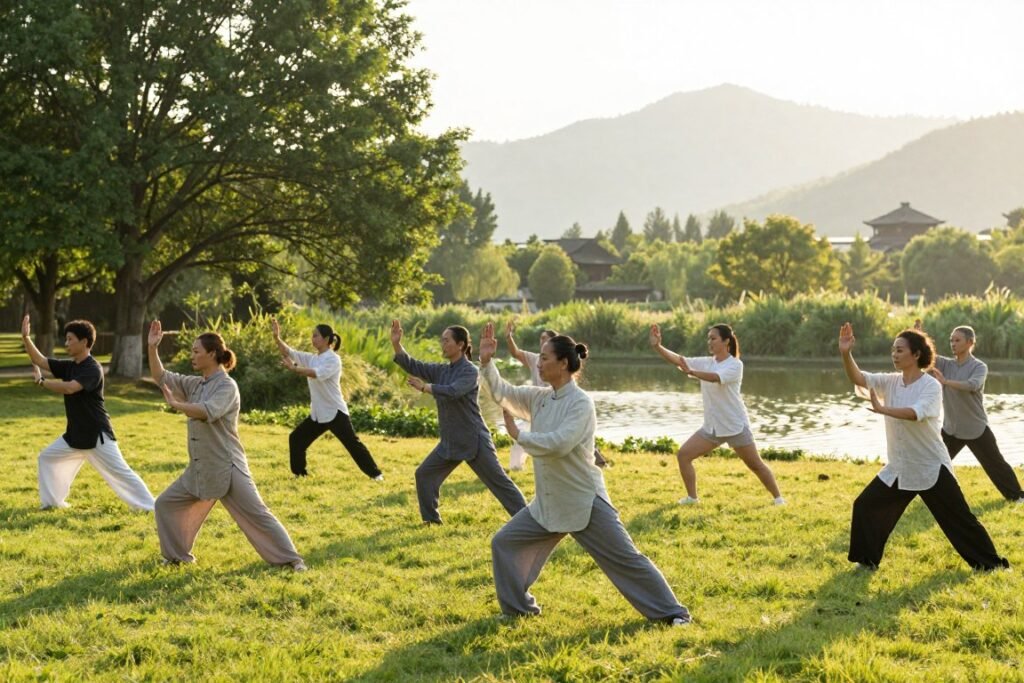
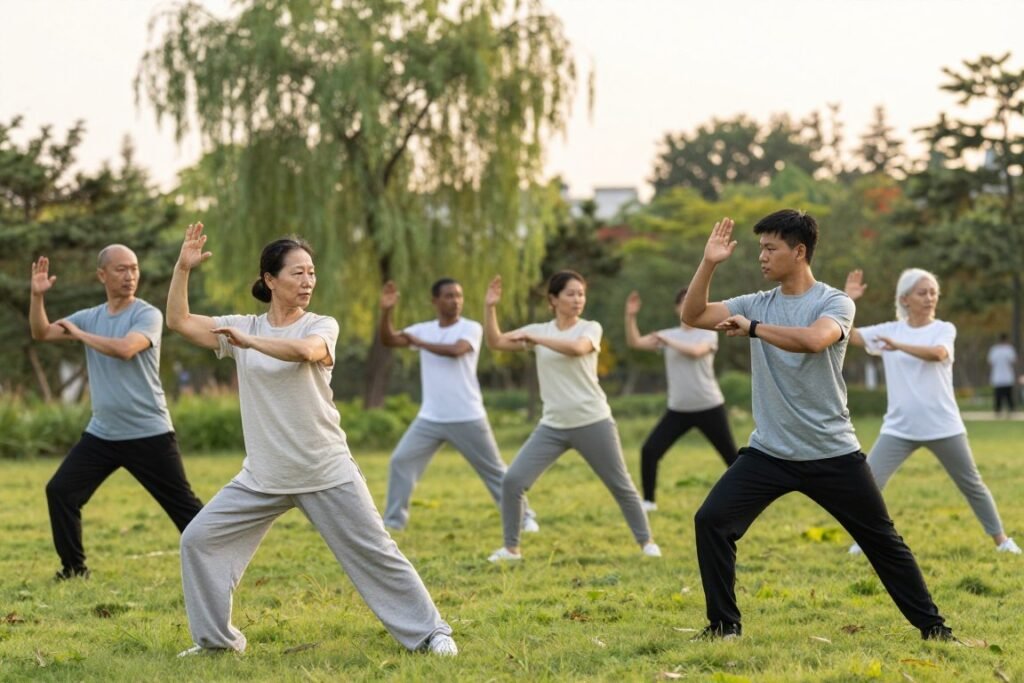
What is Tai Chi? Tai Chi is a traditional Chinese mind-body practice that combines slow, controlled movement, balanced posture, focused attention and comfortable breathing. Originally developed as a martial art, it is now widely practised to support balance, mobility, relaxation and general well-being.
Wondering what Tai Chi is and whether it is suitable for beginners? Tai Chi is a traditional Chinese mind-body practice that combines slow, controlled movements, comfortable physical postures, focused attention and steady breathing. Originally developed as a martial art, it is now widely practised for balance, mobility, relaxation and general well-being.
You do not need special equipment, exceptional flexibility or previous martial-arts experience to begin. In this guide, you will learn how Tai Chi works, where it originated, its principal styles and benefits, and how to start practising safely.
Did you know that millions of people across the globe start their day with a practice that combines deep breathing with slow, deliberate movements? This ancient discipline, often called meditation in motion, offers a unique way to calm the mind while strengthening the body.
Many people wonder what is tai chi and if they need to be athletes to participate. The beauty of this practice is that it welcomes individuals of all fitness levels. You do not need special equipment or peak physical condition to begin your journey toward better health.
By focusing on balance and fluid motion, this traditional Chinese art serves as both a powerful martial art and a therapeutic tool for modern life. Whether you seek stress relief or improved mobility, this gentle activity provides a sustainable path to wellness.
Key Takeaways
- Tai chi is widely recognized as a form of meditation in motion.
- The practice is accessible to people of all ages and fitness levels.
- It functions as both a martial art and a therapeutic health practice.
- Participants do not need to be in top physical shape to start.
- Regular sessions help improve balance, flexibility, and mental clarity.
Defining What Is Tai Chi and Its Core Essence
You might be surprised to learn that this gentle exercise is actually a sophisticated form of moving meditation. When people ask what-is-tai-chi, they often discover a practice that transcends simple physical movement. It is a holistic approach that unites the body and mind through slow, deliberate actions.
This practice does not require you to adopt specific philosophical beliefs to experience its benefits. Instead, it invites you to focus entirely on your present state. By grounding yourself in the moment, you can effectively reduce the noise of a busy life.
The Concept of Moving Meditation
The term tai chi meditation is frequently used because the practice demands your full attention. As you transition between postures, you must remain aware of your weight distribution and breath. This deep focus on bodily sensations helps quiet the mind and fosters a sense of inner peace.
“The ultimate purpose of this art is to find stillness within motion, allowing the practitioner to remain calm regardless of external circumstances.”
Unlike static meditation, this method keeps you active and engaged. It is perfect for those who find it difficult to sit still for long periods. The following table highlights how the practice balances different aspects of your well-being:
| Focus Area | Physical Benefit | Mental Benefit |
|---|---|---|
| Movement | Improved Balance | Enhanced Focus |
| Breathing | Better Circulation | Reduced Anxiety |
| Posture | Joint Stability | Mindful Awareness |
Understanding Qi and Internal Energy
A central pillar of what Tai Chi is involves the cultivation of Qi, or internal energy. In traditional Chinese thought, Qi is the vital life force that flows through the body. Practitioners learn to guide this energy through specific movements and rhythmic breathing patterns.
By focusing on this internal flow, you can improve your overall vitality and sense of harmony. You do not need to be an expert to start feeling these subtle shifts in your body. With consistent practice, tai chi meditation becomes a natural way to recharge your energy and maintain a healthy, balanced lifestyle.
The Rich History and Origins of Tai Chi
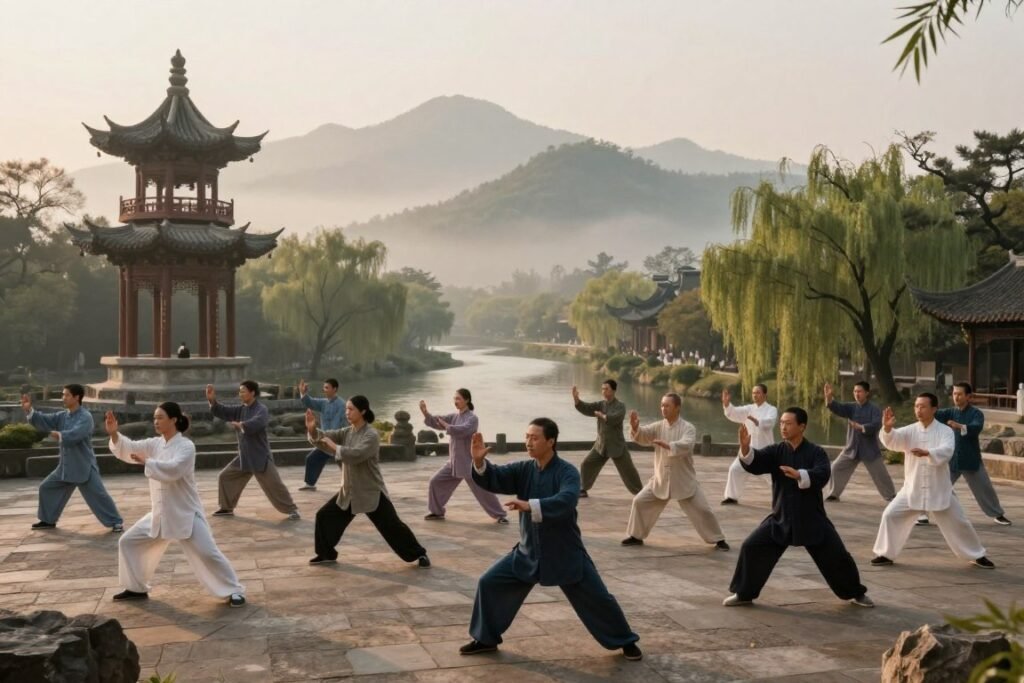
The story of this ancient art is as deep and flowing as the movements themselves. While many people today view it as a gentle exercise, the tai chi history is rooted in a much more intense past. Understanding these origins helps practitioners connect more deeply with the discipline.
Ancient Roots in Chinese Martial Arts
Centuries ago, this practice emerged in China as a sophisticated system of self-defense. It was designed to help individuals protect themselves while maintaining internal balance and focus. Early masters developed these movements to harness energy for combat efficiency.
The martial foundations are still visible in the way practitioners shift their weight and maintain a grounded stance. Key historical milestones include:
- Development of early internal martial arts in rural Chinese villages.
- Refinement of techniques by legendary figures to improve combat effectiveness.
- Integration of philosophical concepts that emphasized fluid, circular motions.
Evolution from Combat to Wellness Practice
Over time, the focus of the practice shifted significantly. As society changed, the need for battlefield combat decreased, and the value of holistic health became more prominent. This transition in tai chi history allowed the art to reach a wider audience seeking peace and longevity.
Modern practitioners now prioritize the meditative aspects of the movements over self-defense. This evolution has turned a once-secret martial art into a global phenomenon for stress relief and physical fitness. By focusing on mindful movement, students today can enjoy the same benefits that masters sought centuries ago.
Core Philosophy and Principles of Tai Chi
Beyond the physical postures, there lies a profound system of thought that shapes every motion. Engaging with tai chi philosophy allows you to transform simple movements into a meditative experience that connects your mind and body.
This ancient practice is not merely about physical fitness. It is a holistic approach to life that encourages you to find stillness within movement.
The Balance of Yin and Yang
At the heart of this discipline is the concept of yin and yang, which represents the opposing yet complementary forces of the universe. In your practice, you learn to shift your weight and energy to maintain a perfect state of equilibrium.
Think of these forces as a dance between light and dark, or soft and hard. By balancing these elements, you cultivate a sense of internal harmony that helps you navigate the stresses of daily life.
When you move, you are constantly transitioning between these states. This tai chi philosophy teaches you that strength is not found in rigid force, but in the ability to adapt and remain balanced.
Wu Wei and the Art of Effortless Action
Another pillar of this practice is the principle of Wu Wei, often translated as the art of effortless action. This does not mean doing nothing; rather, it means acting without unnecessary tension or struggle.
When you perform a movement, you should aim to let your body flow naturally, like water moving around a stone. By releasing physical and mental resistance, you allow your energy to circulate freely.
Embracing this tai chi philosophy helps you achieve a state of relaxed focus. You will find that when you stop forcing your progress, your movements become more fluid, graceful, and effective.
Common Tai Chi Styles and Variations
If you are just starting your journey, the variety of available tai chi forms might seem a bit overwhelming at first. It is important to remember that the specific name of the style is often less important than finding an approach that suits your individual needs. Each branch of this ancient practice carries the unique signature of the masters who developed it over many generations.
Chen Style: The Original Foundation
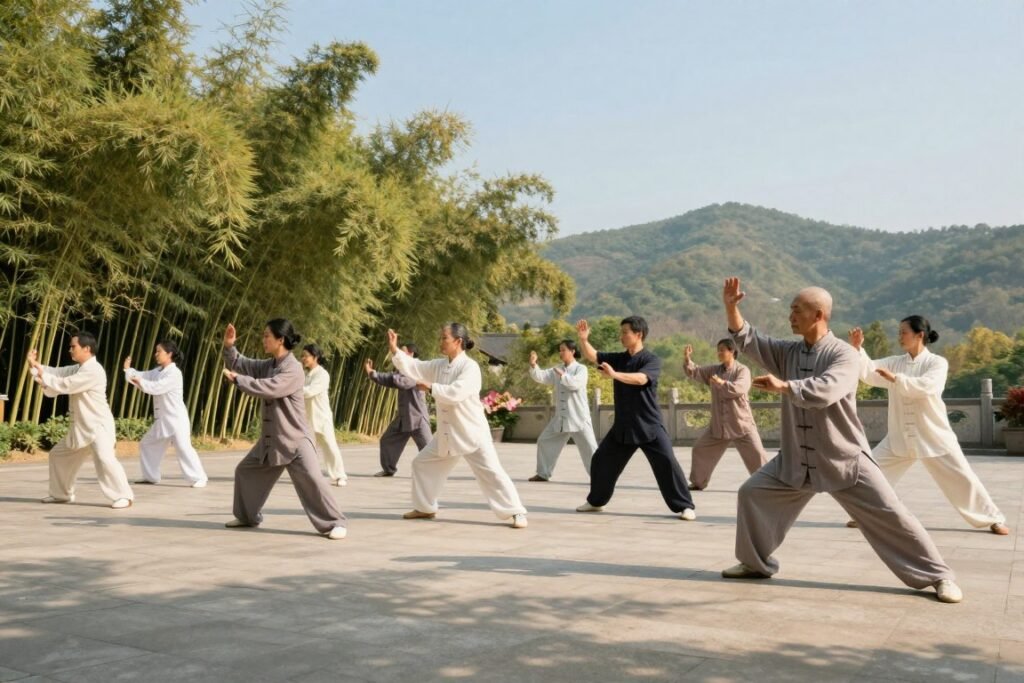
The Chen style is widely recognized as the original foundation from which other schools evolved. It is characterized by a mix of slow, fluid movements and sudden, explosive bursts of energy known as fa jin. This style requires a higher level of physical conditioning, making it a great choice for those who enjoy a more dynamic workout.
Yang Style: The Most Popular Global Form
The Yang style is currently the most popular version of these tai chi forms practiced across the globe. It is famous for its large, expansive movements and a consistent, gentle pace that is easy for beginners to follow. Because it emphasizes relaxation and smooth transitions, it is an excellent starting point for anyone focused on stress reduction.
Wu and Sun Styles: Specialized Approaches
The Wu and Sun styles offer more specialized approaches for practitioners with specific health goals. Wu style is known for its compact, small-frame movements, which are highly effective for improving balance and internal alignment. Meanwhile, the Sun style incorporates agile footwork and higher stances, making it very accessible for those who may have limited mobility or joint discomfort.
| Style | Primary Focus | Movement Intensity |
|---|---|---|
| Chen | Power and Flow | High |
| Yang | Relaxation and Health | Low to Moderate |
| Wu | Internal Alignment | Low |
| Sun | Agility and Healing | Moderate |
Ultimately, choosing between these tai chi forms comes down to your personal preference and physical condition. Whether you prefer the intensity of Chen or the gentle flow of Yang, the most important step is simply to begin your practice. Consistency will always be the key to unlocking the full benefits of any style you choose.
Essential Tai Chi Movements for Beginners
Every journey into this ancient art begins with understanding how to move your body with intention. The core of these tai chi movements lies in circular, fluid patterns that are never forced. By keeping your muscles relaxed, you allow your body to flow naturally through each sequence.
The Importance of Proper Posture and Alignment
Good posture serves as the foundation for your entire practice. When you stand with your spine elongated and your shoulders relaxed, you create a clear path for energy to circulate throughout your body. Proper alignment is not just about aesthetics; it is essential for maintaining balance and preventing unnecessary strain.
Think of your body as a vertical pillar that remains upright even as your limbs move. By keeping your head gently lifted as if suspended by a string, you naturally align your vertebrae. This simple adjustment improves your stability and helps you master various tai chi techniques with greater ease.
Weight Shifting and Grounding Techniques
Mastering the art of weight shifting is vital for moving safely during your practice. You must learn to transition your weight fully from one leg to the other without leaning or losing your center. This deliberate movement builds leg strength and improves your overall coordination over time.
Grounding is the practice of feeling a deep connection to the earth through your feet. By keeping your knees slightly bent and your feet rooted, you create a stable base that supports every motion. These fundamental tai chi techniques ensure that you remain steady and centered, regardless of the complexity of the sequence you are performing.
The Physical Health Benefits of Tai Chi
Scientific research consistently highlights the impressive physical health benefits of this practice. By focusing on slow, deliberate movements, practitioners can achieve a higher level of physical fitness. These tai chi benefits extend to various systems within the body, making it a holistic approach to wellness.
Improving Balance and Fall Prevention
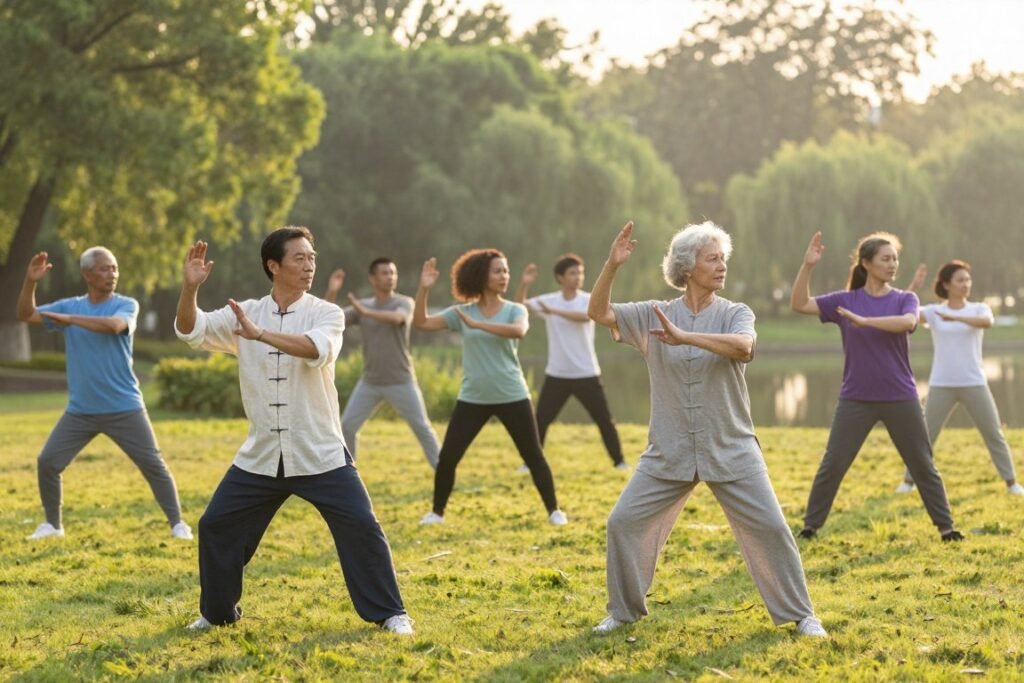
One of the most significant advantages of this practice is its ability to stabilize the body. There is excellent evidence that it consistently improves balance and reduces the risk of falls in older adults. By strengthening the core and lower body, you gain greater confidence in your daily movements.
Enhancing Cardiovascular Health and Circulation
Beyond stability, this practice supports your heart and blood vessels. Regular sessions help improve circulation, which allows oxygen to flow more efficiently throughout your system. Many people find that these tai chi health benefits contribute to a healthier cardiovascular profile over time.
Increasing Flexibility and Joint Mobility
The gentle, flowing nature of the movements encourages a full range of motion in your joints. This practice is a safe and effective way to address key components of physical fitness without putting undue stress on the body. By improving proprioception, or your body’s ability to sense its position in space, you can maintain better posture and fluid movement as you age.
Mental and Emotional Wellness Advantages
Beyond the physical movements, this practice offers a profound sanctuary for your mental and emotional health. Many practitioners find that the gentle, flowing nature of the movements helps to clear the mind of daily clutter. By focusing on the present moment, you can create a peaceful space that supports long-term psychological resilience.
Reducing Stress and Cortisol Levels
Tai Chi may support stress reduction by combining gentle movement, controlled breathing and focused attention. Research suggests possible psychological benefits, although results vary between studies and should not be interpreted as guaranteed medical outcomes. When you engage in these slow, deliberate motions, your nervous system shifts from a “fight or flight” state into a state of rest and recovery. This physiological change helps reduce cellular inflammatory markers, which are often elevated during periods of chronic stress.
Managing Anxiety and Improving Mood
Regular practice serves as a powerful tool for managing anxiety and lifting your overall mood. The rhythmic breathing required during sessions encourages a sense of calm that carries over into your daily life. Furthermore, studies suggest that consistent engagement leads to improved sleep quality, which is essential for emotional regulation and mental clarity.
Cultivating Mindfulness in Daily Life
At its core, tai chi meditation teaches you to remain grounded regardless of external circumstances. By training your focus on the subtle shifts in weight and breath, you develop a heightened sense of awareness. This mindful approach allows you to navigate life’s challenges with greater patience and composure.
| Mental Health Aspect | Impact of Practice | Key Outcome |
|---|---|---|
| Stress Levels | Significant Reduction | Lower Cortisol |
| Sleep Quality | Enhanced Depth | Better Recovery |
| Emotional State | Increased Stability | Improved Mood |
| Mindfulness | Heightened Awareness | Mental Clarity |
Tai Chi Forms and Sequences Explained
When you begin your journey, you will quickly encounter the structured patterns known as tai chi forms. These sequences are essentially choreographed sets of movements designed to mobilize your body’s internal energy. By following a specific path, you learn to connect your physical actions with your breath and mental focus.
Understanding the Structure of a Form
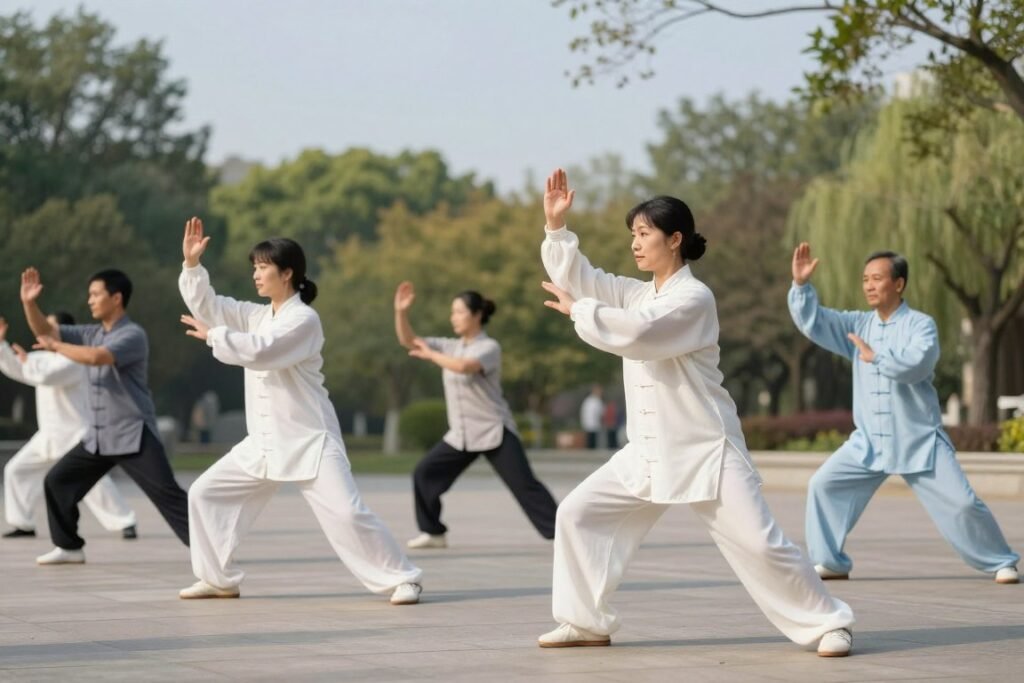
A form is not just a random collection of gestures; it is a logical progression of postures. Each movement flows naturally into the next, creating a continuous loop of motion. This structure helps you maintain balance while transitioning between different stances and weight shifts.
The Role of Repetition in Mastery
Repetition is the secret to internalizing these tai chi movements. By practicing the same sequence repeatedly, you build muscle memory that allows your body to move with grace and ease. This consistency is vital for improving your overall coordination and deepening your connection to the practice.
As you repeat these patterns, you will notice that your movements become more fluid. You stop thinking about where your hands or feet should go and start feeling the flow of energy. This shift from conscious effort to intuitive action is a major milestone in your development.
Short Forms Versus Long Forms
When choosing a path, you will find that tai chi forms vary significantly in length. Short forms may include a dozen or fewer movements, making them ideal for beginners who want to learn the basics without feeling overwhelmed. These shorter sequences provide a solid foundation for understanding the core principles of the practice.
In contrast, long forms can consist of hundreds of distinct tai chi movements. These extended sequences are often reserved for more experienced practitioners who have already mastered the fundamentals. While they offer a more complex challenge, they also provide a deeper, more meditative experience for those who are ready to commit the time.
Integrating Tai Chi into Your Daily Routine
Building a sustainable habit is the secret to unlocking the long-term benefits of Tai Chi. Medical research indicates that most programs require at least 12 weeks of regular practice to show significant positive changes in health. By viewing this practice as a long-term commitment rather than a quick fix, you set yourself up for lasting success.
Finding the Right Time for Practice
Many people struggle to find a dedicated hour in their busy schedules. You do not need a large block of time to experience the benefits of these movements. Even ten minutes in the morning can help you set a calm intention for the rest of your day.
Consider practicing during natural transitions, such as right after waking up or before you head to bed. If your schedule is unpredictable, keep your movements flexible. The goal is to find a time where you can focus without feeling rushed or distracted.
Creating a Dedicated Space at Home
You do not need a professional studio to practice effectively. A small, quiet corner of your living room or bedroom is often enough to create a peaceful sanctuary. Ensure the floor is level and clear of any tripping hazards to maintain your safety.
Try to keep your space free from clutter to help your mind stay focused. If possible, choose a spot with good natural light or fresh air. Having a consistent place to stand can act as a visual cue that helps you transition into your practice mode more quickly.
Consistency Over Intensity
It is far better to practice for fifteen minutes every day than to attempt a two-hour session once a week. Consistency is the engine that drives progress in your physical and mental health. Short, daily sessions allow your body to integrate the movements more naturally.
Do not worry about the intensity of your workout. Focus instead on the quality of your breath and the fluidity of your posture. Over time, these small, steady efforts will compound into significant improvements in your overall well-being.
Selecting the Right Tai Chi Class or Instructor
Embarking on your journey into this ancient practice requires finding a guide who aligns with your personal goals. Because there is no universal licensing board for instructors, you must rely on your own intuition and careful research to find a quality mentor. Feeling comfortable with your teacher is just as important as their technical expertise.
What to Look for in a Qualified Teacher
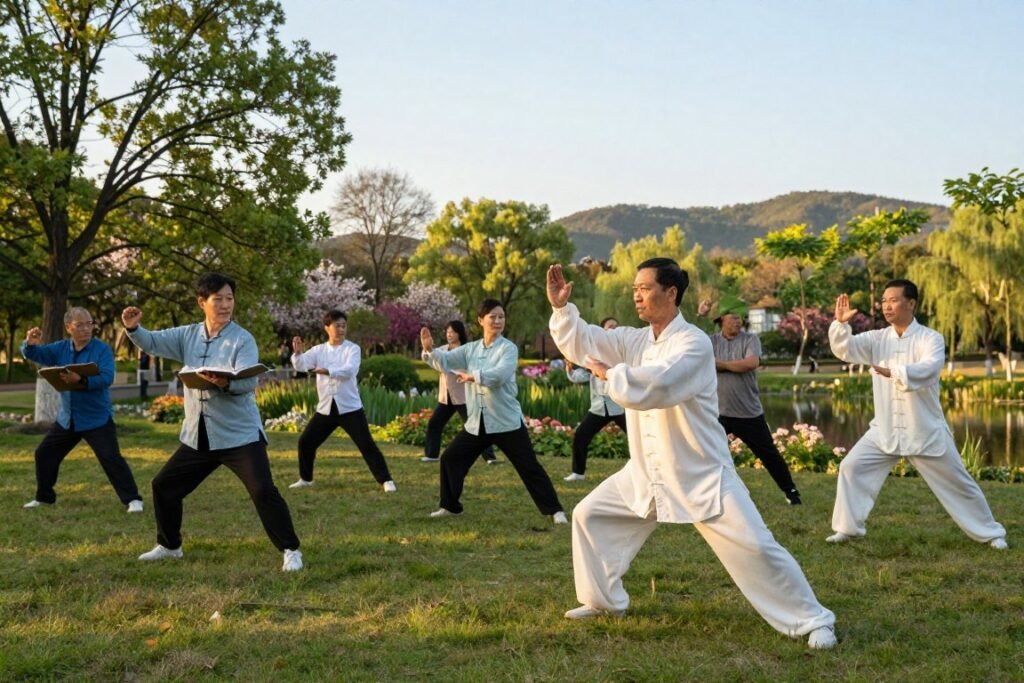
A great instructor should prioritize your safety and well-being above all else. Look for someone who asks about your health history and is willing to modify movements to accommodate any physical limitations you may have. A qualified teacher will emphasize proper alignment and relaxation rather than just rushing through complex forms.
Observe how the instructor interacts with other students during a trial session. They should be patient, clear in their explanations, and able to provide individual feedback. If the atmosphere feels supportive and welcoming, you have likely found a good match for your learning style.
Group Classes Versus Private Instruction
Deciding between a group setting and one-on-one coaching depends on your specific needs and budget. Group classes offer a sense of community and the motivation that comes from practicing alongside others. This social aspect can make the learning process more enjoyable and consistent.
Private instruction, on the other hand, provides a tailored experience focused entirely on your progress. This is often the best choice if you have specific health concerns or if you prefer a faster, more personalized pace. Consider the following comparison to help you decide:
| Feature | Group Class | Private Instruction |
|---|---|---|
| Cost | More affordable | Higher investment |
| Attention | Shared feedback | Individualized focus |
| Socializing | High interaction | Minimal interaction |
Online Resources and Digital Learning
Digital platforms have made it easier than ever to practice from the comfort of your own home. Many reputable masters now offer high-quality video courses that break down sequences into manageable steps. This is a flexible option for those with busy schedules or limited access to local studios.
However, remember that digital learning lacks the real-time correction of a live instructor. If you choose this route, try to record yourself practicing so you can compare your form to the video. Using a mirror or a camera can help you maintain the proper posture and alignment necessary for a safe and effective practice.
Tai Chi Equipment and Attire Requirements
You might be surprised to learn how little equipment is actually required to begin your Tai Chi journey. Because this practice focuses on internal flow and natural movement, you do not need to invest in expensive gear or specialized technology. Simplicity is a core value, allowing you to focus entirely on your form and breath.
Choosing Comfortable Clothing for Movement
When selecting your Tai Chi attire, the primary goal is to ensure your body can move without restriction. You should choose loose-fitting clothes that allow for a full range of motion during your practice. Tight fabrics or stiff materials can hinder your ability to perform deep stances or fluid transitions.
Many practitioners prefer natural fibers like cotton or bamboo, which are breathable and soft against the skin. Avoid clothing with heavy zippers, large buttons, or abrasive textures that might distract you during your meditation. Ultimately, your outfit should feel like a second skin, allowing you to focus on your internal energy rather than your wardrobe.
Selecting Appropriate Footwear for Stability
Proper Tai Chi footwear is essential for maintaining your balance and grounding. While many people assume standard running shoes are ideal, they are often unsuitable because of their thick, cushioned heels. These heels can tilt your posture forward, which disrupts the natural alignment required for stable movement.
Instead, look for flat-soled shoes that provide a direct connection to the ground. Thin-soled martial arts slippers or minimalist sneakers are excellent choices for beginners. These options allow you to feel the floor beneath you, which is vital for developing proper weight shifting and balance.
Using Props and Training Aids
While most sessions require no equipment, some individuals may benefit from using props for extra support. If you have limited mobility or are recovering from an injury, a sturdy chair can serve as a helpful aid for balance during standing exercises. Some practitioners also use wooden dowels or fans to help visualize the path of their movements.
These tools are not mandatory, but they can be incredibly useful for those who need a little extra stability. Always consult with your instructor before introducing new props into your routine. They can provide guidance on how to use these aids safely to enhance your progress.
| Equipment Category | Recommended Feature | What to Avoid |
|---|---|---|
| Clothing | Loose, breathable cotton | Restrictive denim or heavy zippers |
| Footwear | Flat, thin-soled shoes | High-cushion running sneakers |
| Training Aids | Sturdy chair for balance | Heavy or complex gym equipment |
Common Mistakes Beginners Make in Tai Chi
Learning the gentle art of movement requires patience, yet many beginners accidentally create hurdles for themselves. It is completely normal to feel a bit uncoordinated when you first explore various tai chi techniques. By recognizing these common pitfalls early, you can refine your practice and enjoy a much smoother experience.
Overthinking the Complex Movements
Many students fall into the trap of trying to memorize every single angle of a posture with their minds. Instead of letting the body move naturally, they become stiff and rigid. True progress happens when you stop analyzing and start feeling the flow of your own energy.
Focusing too hard on the mechanics often leads to tension in the shoulders and neck. Try to soften your approach and allow your body to learn through repetition rather than intellectual strain. When you let go of the need for perfection, you will find that your tai chi techniques become much more fluid.
Neglecting the Breath and Relaxation
A common oversight for newcomers is holding their breath while trying to balance or shift weight. Your breath is the anchor that connects your mind to your physical form. If you forget to breathe deeply, your muscles will naturally tighten, which prevents you from achieving a state of deep relaxation.
Always remember to keep your breathing slow, steady, and rhythmic throughout your session. This simple shift in focus helps you maintain a calm heart rate and improves the effectiveness of your tai chi techniques. Relaxation is not just a goal; it is a vital part of the process.
Rushing Through the Sequences
It is tempting to move quickly through a sequence to feel like you are accomplishing more. However, the essence of this practice lies in the slow, deliberate pace of every movement. Rushing prevents you from grounding yourself and feeling the subtle shifts in your weight.
By slowing down, you give your nervous system time to adjust and your muscles time to find their proper alignment. Patience is your greatest ally when you are learning new tai chi techniques. Take your time to savor each transition, as this is where the real benefits are cultivated.
| Common Mistake | Impact on Practice | Recommended Correction |
|---|---|---|
| Overthinking | Causes physical rigidity | Focus on natural flow |
| Holding Breath | Increases muscle tension | Practice deep, rhythmic breathing |
| Rushing | Loss of balance and focus | Move at a slow, steady pace |
Safety Considerations and Medical Precautions
Understanding how to practice safely is the best way to enjoy the long-term tai chi health benefits. While this ancient art is widely considered a low-impact activity, maintaining a mindful approach ensures your sessions remain productive and injury-free.
Consulting with Healthcare Professionals
If you have pre-existing medical conditions, it is wise to speak with your doctor before starting a new exercise program. A medical professional can provide personalized advice based on your specific health history. This step is especially important if you have concerns regarding joint stability or cardiovascular health.
Listening to Your Body and Avoiding Pain
Adverse events related to this practice are typically minor and primarily musculoskeletal in nature. You should always listen to your body and stop if you feel sharp or unusual pain. True progress in your tai chi health benefits comes from consistent, comfortable movement rather than pushing through physical discomfort.
Modifying Movements for Physical Limitations
You do not need to perform every movement exactly as shown to gain value from the practice. Instructors often encourage students to modify stances or reduce the range of motion to accommodate individual physical limitations. Adapting the sequence to your current fitness level helps you stay consistent and prevents unnecessary strain.
| Safety Factor | Action Required | Goal |
|---|---|---|
| Medical History | Consult a physician | Ensure readiness |
| Physical Pain | Stop immediately | Prevent injury |
| Range of Motion | Modify as needed | Maintain comfort |
| Consistency | Practice regularly | Maximize tai chi health benefits |
According to the National Center for Complementary and Integrative Health, Tai Chi combines gentle movements, physical postures, controlled breathing and a meditative state of mind.
Conclusion
Is Tai Chi Right for You?
Tai Chi is a traditional Chinese mind-body practice that connects slow movement, posture, breathing and focused awareness. Its adaptability makes it approachable for beginners, older adults and people who prefer a gentle form of physical activity.
Start with five to ten comfortable minutes, concentrate on posture and weight shifting, and increase your practice gradually. Consistency matters more than performing every movement perfectly.
Ready to begin? Visit our Start Here guide or explore the free Tai Chi resources for your next step.
If you have an injury, balance disorder, chronic medical condition or other health concern, consult a qualified healthcare professional before beginning a new exercise programme.