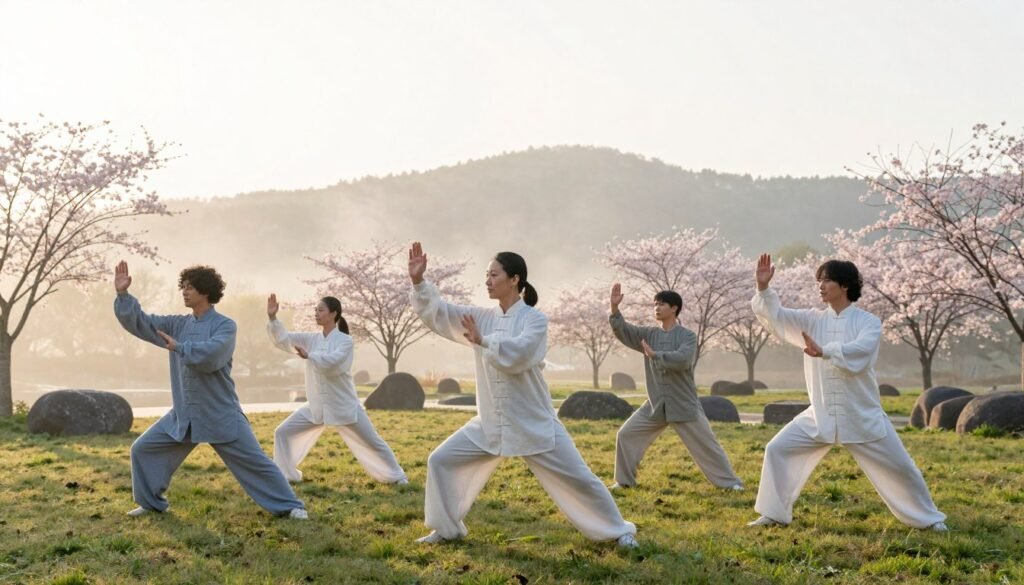
Did you know that consistent, low-impact movement can reduce stress levels by nearly 40% in just a few weeks? Many people search for a way to balance their busy lives, and this ancient discipline offers a perfect solution. Embarking on your first tai chi practice is a transformative journey that blends gentle motion with deep mental focus.
This guide helps you navigate the initial steps of this art form with confidence and ease. By understanding the foundational elements, you can begin to cultivate a healthier lifestyle through consistent, mindful activity. It serves as a powerful gateway to improved physical and emotional well-being for people of all ages.
Key Takeaways
- Discover how gentle movement lowers daily stress levels effectively.
- Learn the foundational steps to begin your wellness journey today.
- Improve your physical balance and emotional clarity through mindfulness.
- Understand why this ancient art is suitable for all fitness levels.
- Gain the confidence needed to maintain a consistent healthy routine.
Understanding the Philosophy Behind Tai Chi
To truly appreciate your first tai chi practice, you must look beyond the physical motions and explore the philosophy that anchors them. This ancient discipline is often described as meditation in motion, providing a unique way to harmonize your body and mind. By grasping these foundational concepts, you turn a simple exercise routine into a meaningful path toward long-term wellness.
The Origins of Internal Martial Arts
Tai chi originated in China centuries ago as a sophisticated martial art designed for self-defense. Unlike external styles that rely on brute force, this practice focuses on internal power and the cultivation of energy. Over time, it evolved into a widely recognized method for improving health and reducing daily stress.
When you begin your first tai chi practice, you are stepping into a tradition that values softness over hardness. This shift in perspective allows you to move with grace while building functional strength. It is a beautiful way to connect with history while focusing on your personal growth.
Core Principles of Yin and Yang in Movement
At the heart of this practice lies the concept of yin and yang, which represents the balance of opposing forces in the universe. You learn to harmonize your movements by understanding how these energies interact within your own body. This balance is essential for achieving true fluidity and grace in every motion.
To integrate these principles into your first tai chi practice, consider the following core elements:
- Balance: Maintaining stability through weight distribution.
- Harmony: Coordinating your breath with physical movement.
- Flow: Allowing energy to move without interruption or tension.
- Stillness: Finding a calm center even while the body is in motion.
By focusing on these elements, you create a sustainable routine that supports both physical health and mental clarity. Embracing the philosophy of yin and yang helps you navigate the challenges of learning new forms with patience and ease.
Preparing for Your First Tai Chi Practice
Preparing your gear and environment is the first step in your beginner tai chi practice. Taking a few moments to organize your surroundings helps you transition from the busyness of daily life into a state of calm focus.
Selecting Comfortable Attire and Footwear
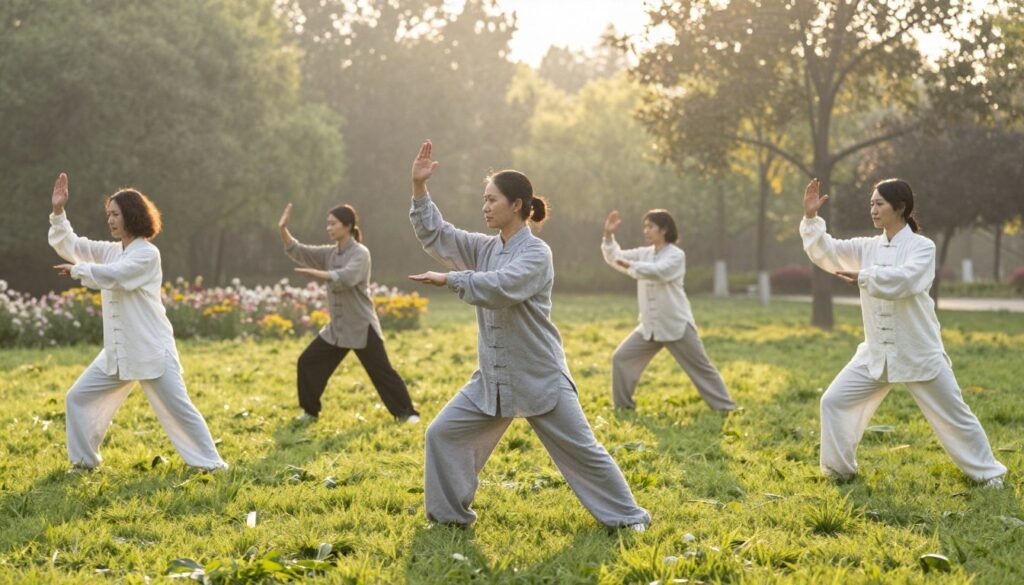
When you begin this practice, comfort is your top priority. You should choose loose-fitting clothing that allows your body to move without any restriction during slow, fluid sequences.
Avoid stiff fabrics like heavy denim or tight synthetic materials. Instead, opt for breathable cotton or performance fabrics that offer a full range of motion.
Regarding footwear, you do not need expensive gear. Any flexible, flat-soled shoe that allows you to feel the ground beneath your feet will work perfectly. This connection to the floor is essential for maintaining your balance and stability.
Creating a Dedicated Space for Daily Training
Establishing a specific area for your sessions helps you build a consistent habit. You do not need a large studio; a quiet corner in your living room or a small patch of grass in your backyard is often enough.
Try to keep this space free from clutter and distractions. When you step into this designated zone, your mind will naturally begin to settle, signaling that it is time for your beginner tai chi routine.
Consistency is the key to progress. By returning to the same spot every day, you create a mental anchor that makes it easier to stay committed to your wellness goals.
Essential Warm-up Exercises for Beginners
Starting your journey with beginner tai chi requires a gentle approach to physical preparation. Every session should begin with movements designed to wake up your muscles and prepare your joints for the fluid transitions ahead. By dedicating a few minutes to these initial steps, you ensure a safer and more effective practice every time you step onto the mat.
Joint Loosening Techniques
Stiffness often accumulates in the body after a long day of sitting or inactivity. To combat this, start by performing slow, controlled shoulder circles to release tension in the upper back and neck. These movements help to lubricate the joints and improve your overall range of motion.
Next, incorporate side-to-side rocking to engage your lower body and improve your stability. Gently shift your weight from one foot to the other while keeping your knees soft and your spine upright. This simple beginner tai chi exercise helps you find your center and prepares your legs for the more complex stances that follow.
Deep Breathing and Centering Methods
Physical movement is only half of the equation; the other half is your internal state. As you perform your warm-ups, focus on deep, rhythmic breathing to calm your nervous system. Inhale slowly through your nose, allowing your abdomen to expand, and exhale gently to release any lingering stress.
Pairing your breath with these physical motions is a core component of beginner tai chi. This practice helps you cultivate mental clarity and focus, allowing you to move with intention rather than just habit. By centering your mind before you begin your main routine, you create a harmonious connection between your body and your breath.
Mastering Basic Tai Chi Stances
Mastering basic stances serves as the essential starting point for every student of this art. When you begin your journey, these positions act as the foundation for all future movements. By focusing on your physical structure early on, you ensure that your practice remains safe and effective.
The Importance of Proper Posture and Alignment
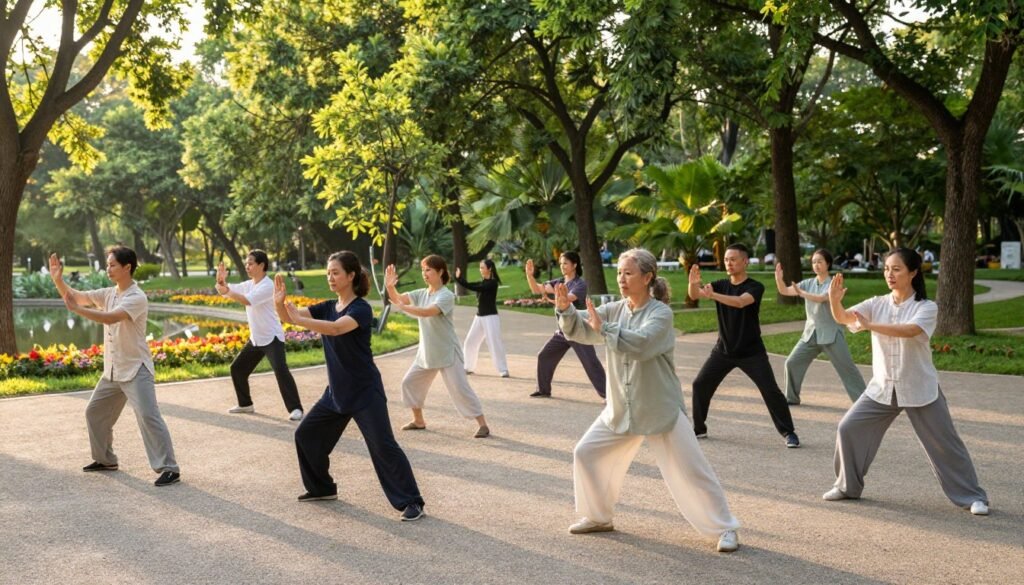
Proper posture is the key to unlocking the full potential of tai chi for beginners. You should keep your knees soft and slightly bent, ensuring they never lock, which helps maintain a healthy flow of energy. Your feet should be placed at hip-width apart to provide a stable base for your body.
Maintaining a straight spine is equally vital for your alignment. Imagine a string pulling the crown of your head toward the sky, which naturally lengthens your neck and relaxes your shoulders. This upright posture allows you to move with greater ease and prevents unnecessary strain on your joints.
Weight Distribution and Grounding Techniques
Learning how to shift your weight is a fundamental skill that defines your stability. You should visualize your legs as the sturdy trunk of a tree, rooting you firmly into the ground. This grounding technique helps you feel centered and balanced, even when you begin to transition between more complex movements.
When practicing, try to distribute your weight evenly across the soles of your feet. This awareness prevents you from leaning too far forward or backward, which is a common challenge for those new to the practice. By mastering these basics, you build the confidence needed to progress in your training.
| Stance Element | Common Mistake | Corrective Action |
|---|---|---|
| Knee Position | Locked or rigid knees | Keep knees soft and flexible |
| Foot Width | Feet too close together | Maintain hip-width distance |
| Spinal Alignment | Slouching or leaning | Lengthen the spine upward |
| Weight Shift | Heels lifting off ground | Keep feet flat and grounded |
Consistent practice of these stances will eventually make your movements feel natural and fluid. Remember that patience is your best tool as you refine your alignment. Every small adjustment you make today contributes to a stronger, more balanced practice for the long term.
Exploring Fundamental Tai Chi Techniques
When you start your journey, you will find that the beauty of this practice lies in its gentle, circular motions. These movements are designed to be non-forced, prioritizing deep relaxation over physical tension. For those exploring tai chi for beginners, the goal is to move with a sense of ease that allows your energy to circulate freely.
Hand Movements and Fluidity
Your hands act as an extension of your internal focus during every sequence. Instead of rigid or sharp gestures, aim for a soft, flowing quality that mimics the movement of water. By keeping your wrists and fingers relaxed, you prevent energy blockages and maintain a smooth, continuous rhythm.
Intentionality is the secret to mastering these hand patterns. Every reach or turn should feel purposeful, as if you are gently guiding the air around you. This mindful approach is a cornerstone for tai chi for beginners who wish to develop grace and poise.
Coordinating Breath with Physical Motion
The true magic of the practice happens when you synchronize your inhalation and exhalation with your physical steps. Breathe deeply and naturally, allowing your lungs to expand fully without strain. As you focus on your bodily sensations, you will notice that your movements become more rhythmic and grounded.
This synchronization helps you enter a meditative state that is highly beneficial for mental clarity. By anchoring your breath to your motion, you create a stable foundation for your practice. Consistent effort in this area will help tai chi for beginners achieve a deeper connection between mind and body.
| Movement Quality | Description | Benefit |
|---|---|---|
| Circular | Curved, non-linear paths | Reduces joint stress |
| Fluid | Continuous, flowing speed | Enhances circulation |
| Intentional | Focused, mindful direction | Improves mental clarity |
Navigating Common Tai Chi Forms
Embarking on your path to wellness involves understanding how to structure your practice through specific movement sequences. While the variety of patterns can seem vast, focusing on foundational tai chi techniques is the best way to ensure a smooth start. By choosing a structured approach, you avoid the common pitfall of trying to learn too much at once.
The Significance of the Yang Style Short Form
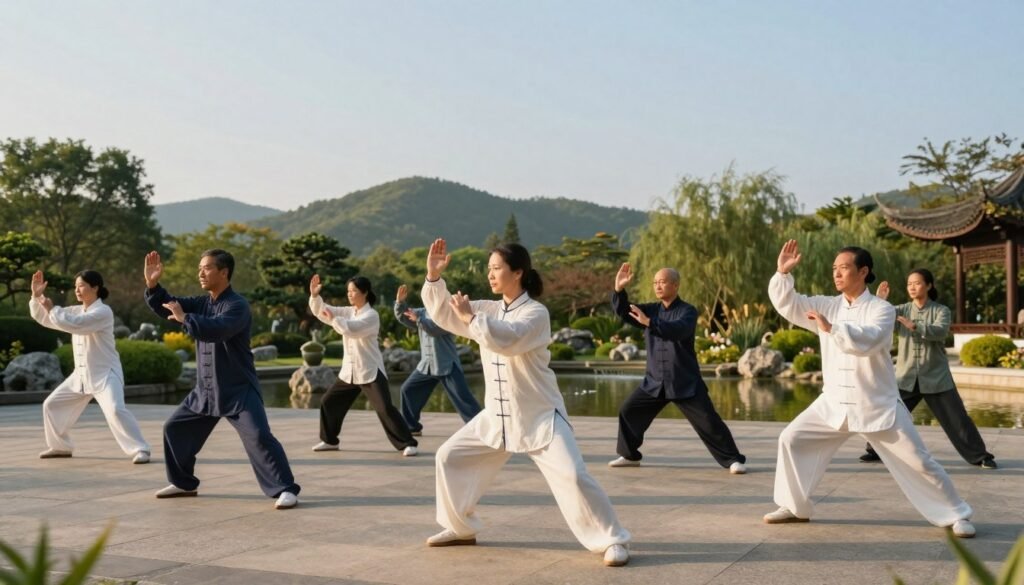
The Yang style is widely recognized for its gentle, flowing nature, making it an ideal choice for those new to the practice. These short forms typically consist of a dozen or fewer movements, which helps you master the basics without feeling overwhelmed. Consistency is key when you are learning these specific tai chi techniques to promote long-term healing and relaxation.
Practicing these shorter sequences offers several distinct advantages for your daily routine:
- Accessibility: The movements are designed to be low-impact and easy on the joints.
- Mental Clarity: Shorter forms allow you to focus deeply on your breath and internal state.
- Time Efficiency: You can complete a full session in just a few minutes, making it easier to stay consistent.
Breaking Down Simple Sequences for Beginners
Breaking complex movements into smaller, manageable parts is a proven strategy for success. When you isolate individual steps, you can pay closer attention to your posture and weight distribution. This methodical approach ensures that you are performing your tai chi techniques safely and effectively as you build your skills.
Start by practicing just one or two movements until they feel natural and fluid. Once you feel comfortable, you can slowly link them together to form a continuous, graceful flow. Remember that patience with yourself is just as important as the physical movements themselves.
Tai Chi for Beginners: Building a Sustainable Routine
Building a sustainable routine is the most effective way to turn your interest into a lasting wellness habit. When you commit to a regular schedule, you allow your body and mind to adapt to the gentle flow of tai chi techniques. This consistency is essential for experiencing the long-term advantages of your training.
Setting Realistic Goals for Your First Month
It is easy to feel overwhelmed when starting a new discipline, so keeping your initial goals manageable is vital. We recommend an ideal practice schedule of one hour, three times per week, for the first 12 weeks. This frequency helps you maintain momentum without feeling pressured or exhausted.
By focusing on quality over quantity, you ensure that each session remains enjoyable. You will find that mastering specific tai chi techniques becomes much easier when you approach your practice with a calm and steady mindset.
Tracking Progress and Consistency
Monitoring your journey over the first 12 to 16 weeks allows you to observe tangible improvements in your mood and physical ability. Keeping a simple log can help you stay accountable and motivated as you refine your movements. You will soon notice how these small, daily efforts transform into a lifelong habit that supports your overall health.
| Practice Frequency | Weekly Commitment | Expected Outcome |
|---|---|---|
| Beginner Level | 1 Hour, 3x Weekly | Improved coordination |
| Intermediate Level | 1 Hour, 4x Weekly | Enhanced fluid motion |
| Advanced Level | 1 Hour, 5x Weekly | Deep internal awareness |
Consistency is the bridge between learning basic movements and achieving true mastery. By tracking your growth, you celebrate the small wins that keep you engaged with your tai chi techniques. Remember that every session is a step toward a healthier, more balanced version of yourself.
The Physical Health Benefits of Tai Chi
Many people who are researching how to start tai chi are often surprised by the depth of physical rewards this practice provides. It is far more than just a series of slow, graceful motions; it is a comprehensive system for maintaining long-term vitality. By engaging in these movements, you invite a sense of harmony into your body that supports overall wellness.
Improving Balance and Fall Prevention
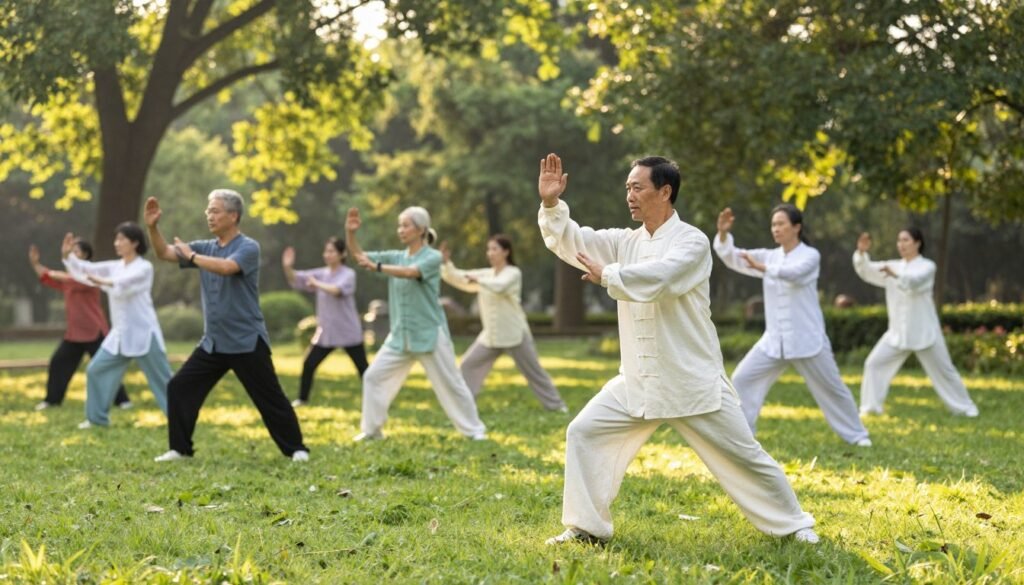
One of the most significant advantages of this practice is its ability to enhance your stability. Research indicates that regular training can reduce the risk of falls by up to 30% in older adults. This is achieved by sharpening your proprioception, which is your body’s ability to sense its position in space.
As you move through the forms, you naturally strengthen the core muscles that keep you upright. This intentional focus on weight distribution helps you feel more grounded and secure in your daily life. You will find that simple movements become much easier to manage with confidence.
Enhancing Cardiovascular Health and Flexibility
Beyond stability, this practice serves as an excellent low-impact cardiovascular workout. It gently elevates your heart rate while keeping the movements fluid and rhythmic. This approach is particularly beneficial because it remains gentle on your joints, making it a sustainable choice for people of all fitness levels.
Increased flexibility is another core benefit you will notice as you continue your training. The slow, controlled stretches help to lengthen muscles and improve your range of motion over time. Understanding these physical perks is a powerful motivator when you are learning how to start tai chi as part of your personal health journey.
Mental and Emotional Advantages of Regular Practice
Beyond the physical movements, your practice serves as a gateway to profound mental tranquility. When you learn how to start tai chi, you are not just exercising your body; you are engaging in a meditative process that helps unblock and encourage the proper flow of qi throughout your system.
This internal energy flow is essential for maintaining emotional equilibrium in a fast-paced world. By focusing on the present moment, you create a peaceful sanctuary within yourself that remains accessible long after your session ends.
Reducing Stress and Anxiety Through Mindfulness
Mindfulness is the cornerstone of this practice, acting as a natural buffer against the pressures of daily life. As you move through the forms, your nervous system begins to shift from a state of high alert to one of deep, restorative rest.
Many practitioners find that this gentle approach is the best way to manage tension. Consider these primary emotional benefits:
- Lowered cortisol levels through rhythmic, controlled breathing.
- Enhanced ability to detach from racing thoughts and worries.
- A greater sense of emotional stability during challenging situations.
Understanding how to start tai chi with a focus on mindfulness allows you to tap into these emotional benefits from your very first class. You will soon notice that the quietude you cultivate on the mat begins to influence your reactions to external stressors.
Cultivating Mental Clarity and Focus
Regular practice sharpens your cognitive faculties, leading to a unique combination of deep relaxation and heightened alertness. This state of relaxed awareness is highly beneficial for maintaining productivity and mental sharpness throughout your day.
When you commit to a consistent routine, you train your brain to filter out distractions more effectively. This improved focus is a direct result of coordinating your breath with physical motion, which anchors your mind in the present.
By learning how to start tai chi, you gain a practical tool for clearing mental fog. Whether you are at work or home, the clarity gained from your practice helps you approach tasks with a calm, steady, and focused mindset.
Tai Chi Training Tips for Longevity
Longevity in your movement journey is built upon a foundation of self-awareness. When you engage in consistent tai chi training, the goal is to create a practice that supports your well-being for years to come. By prioritizing your health over intensity, you ensure that your body remains resilient and energized.
Listening to Your Body and Avoiding Overexertion
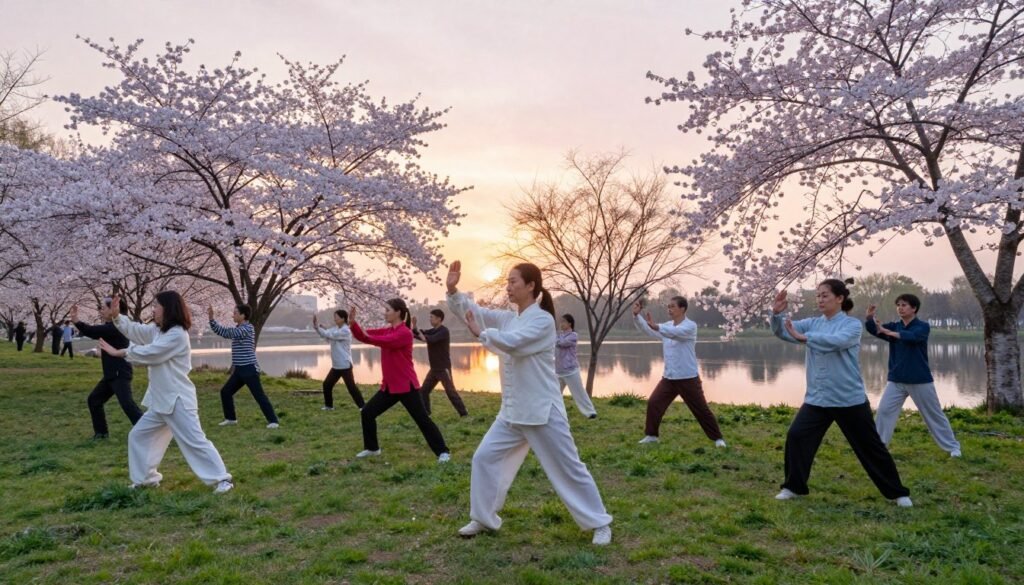
It is vital to recognize that your physical state changes from day to day. If you feel fatigue or discomfort, always prioritize rest over pushing through the pain. Your tai chi training should never feel like a competition against yourself or others.
Taking a break when your body signals a need for recovery is a sign of wisdom, not weakness. By honoring these signals, you prevent injury and maintain a positive relationship with your movement practice. Remember that true progress is found in consistency rather than intensity.
“The journey of a thousand miles begins with a single step.”
The Role of Patience in Skill Development
Mastering the subtle nuances of this ancient art requires a significant amount of time and dedication. Many beginners feel the urge to rush through sequences, but tai chi training rewards those who embrace a slower pace. Developing deep internal awareness is a gradual process that cannot be forced.
Patience allows you to refine your posture and breath without the pressure of immediate perfection. When you let go of the need for quick results, you open yourself up to the deeper benefits of the practice. Staying patient ensures that you continue to find joy and discovery in every session you complete.
Finding the Right Instructor or Community
Choosing a mentor is a pivotal moment in your path toward mastering this ancient art. Whether you are just starting or looking to refine your skills, the environment you select plays a massive role in your long-term success. Quality tai chi training provides the foundation needed to move with grace and intention.
Evaluating Local Classes Versus Online Programs
Deciding between a physical studio and a digital platform depends on your personal lifestyle and learning style. Local classes offer the benefit of in-person camaraderie and immediate physical adjustments from a teacher. Conversely, online programs provide the flexibility to practice whenever your schedule allows.
| Feature | Local Classes | Online Programs |
|---|---|---|
| Feedback | Real-time correction | Self-paced review |
| Community | High social interaction | Limited peer contact |
| Flexibility | Fixed schedule | High convenience |
What to Look for in a Qualified Teacher
Because there is no universal licensing board for instructors, you must be diligent in your search. Relying on personal recommendations from friends, local clinicians, or wellness centers is often the safest route. A truly skilled teacher will prioritize your unique physical needs over rigid adherence to a specific style.
“The teacher is the bridge between the student and the wisdom of the past; choose one who walks the path with humility and patience.”
Look for an instructor who offers individualized feedback during your tai chi training sessions. A great mentor will observe your posture and help you adjust your alignment to prevent injury. When you find a teacher who listens to your concerns, you are well on your way to a sustainable and rewarding practice.
Common Mistakes to Avoid During Early Training
Refining your approach to tai chi exercises early on will save you from frustration and help you build a solid foundation. It is natural to feel a bit clumsy when you first begin, but identifying these small habits now ensures a much smoother path forward. Remember that this practice is about the process rather than achieving immediate perfection.
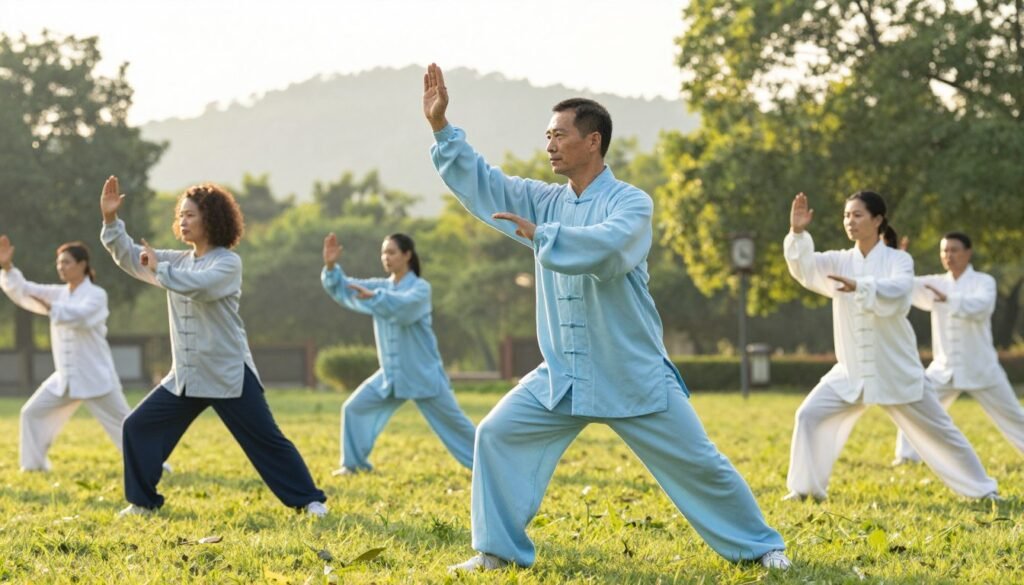
Correcting Tension in the Shoulders and Neck
Many beginners unknowingly carry stress in their upper body, which disrupts the flow of energy. You might find your shoulders creeping up toward your ears during complex tai chi exercises. To fix this, consciously drop your shoulders and imagine your neck lengthening toward the sky.
Proper grounding is also essential for releasing this tension. Avoid wearing running shoes, as they are designed to propel you forward and often have thick, unstable heels. Instead, choose flat-soled footwear that allows you to feel the floor, which helps you stay relaxed and centered.
Avoiding Rushed Movements and Lack of Intent
A common error is moving through sequences too quickly, which strips the practice of its meditative quality. When you rush, you lose the connection between your breath and your physical motion. Focus on performing your tai chi exercises with deliberate, slow movements that reflect your internal focus.
Intent, or yi, is the mental direction you give to your body. Without this focus, the movements become empty shells rather than a holistic practice. By slowing down, you allow your mind to guide your limbs, creating a more rewarding and sustainable experience.
| Common Mistake | Impact on Practice | Corrective Action |
|---|---|---|
| Raised Shoulders | Restricts energy flow | Drop shoulders and relax neck |
| Running Shoes | Prevents proper grounding | Use flat-soled, stable footwear |
| Rushed Pacing | Loss of mindfulness | Slow down to match your breath |
| Lack of Intent | Movements feel mechanical | Focus on internal awareness |
Integrating Tai Chi into Your Daily Lifestyle
Bringing balance into a hectic schedule is the secret to long-term vitality and peace. You do not need a dedicated studio or hours of free time to enjoy the benefits of tai chi exercises. By making small, intentional adjustments to your routine, you can maintain a sense of calm regardless of your environment.
Practicing Mindful Movement at Work
You can easily incorporate movement into your workday without drawing unwanted attention. Take ten minutes during a break to stand in a comfortable hip-width position. Focus on keeping your chest lifted while you gently shift your weight forward and backward.
This simple practice helps you empty your head and stay present during stressful meetings or long desk sessions. Consistent, small efforts are often more effective than sporadic, intense workouts. By grounding yourself through these movements, you improve your focus and physical comfort throughout the afternoon.
Combining Tai Chi with Other Wellness Habits
Creating a holistic approach to your health involves layering different wellness practices together. You might pair your tai chi exercises with a short morning meditation or a series of gentle stretches. This combination reinforces your commitment to self-care and helps you transition smoothly into your daily tasks.
When you view these movements as a natural part of your day, they become a sustainable habit rather than a chore. The following table outlines how you can structure these brief sessions to maximize your results.
| Time of Day | Activity | Focus Area |
|---|---|---|
| Morning | Deep Breathing | Mental Clarity |
| Mid-Day | Weight Shifting | Physical Grounding |
| Evening | Gentle Stretching | Muscle Recovery |
By staying consistent with these tai chi exercises, you build a foundation for lasting health. Remember that the goal is to remain present and attentive to your body’s needs. Small, daily actions lead to significant improvements in your overall well-being over time.
Advanced Concepts for Future Growth
Your journey with movement evolves significantly as you begin to explore the subtle layers of your practice. While you may have started by focusing on the physical choreography, you will soon find that the true depth of this discipline lies beneath the surface. Moving past basic tai chi forms allows you to unlock a more profound connection between your mind and body.
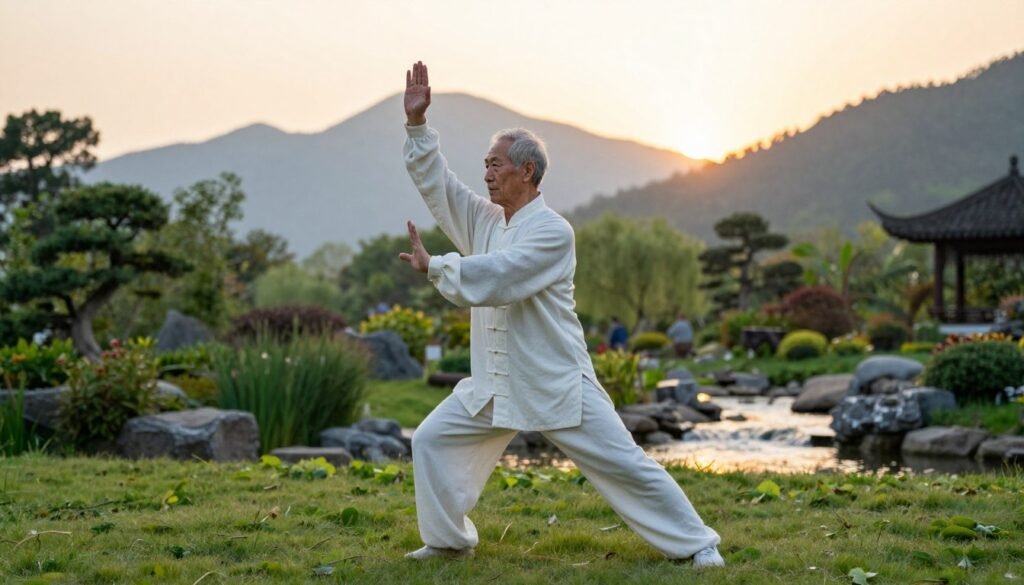
Understanding Qi and Energy Flow
At the heart of advanced practice is the concept of Qi, which is often described as the vital energy force flowing through the body. Learning to cultivate this energy is a central theme for those who wish to deepen their experience. By focusing on your breath and intention, you can learn to unblock stagnant areas and encourage a smooth, harmonious flow of energy throughout your entire system.
This process is not about force, but rather about gentle guidance. As you become more sensitive to these internal sensations, you will notice how your movements become lighter and more efficient. This shift is essential for anyone looking to move beyond the mechanical aspects of their training.
Transitioning from External Form to Internal Awareness
As you gain experience, your focus will naturally shift from the external shape of your limbs to the internal sensations within your muscles and joints. This transition marks a major milestone in your development. You are no longer just performing tai chi forms; you are actively engaging in a meditative dialogue with your own body.
Developing this internal awareness requires patience and consistent observation. Instead of worrying about whether your hand is in the perfect position, you begin to notice how the movement feels from the inside out. This heightened state of mindfulness helps you grow beyond the basics and allows you to access the full potential of this ancient mind-body discipline.
Safety Precautions and Medical Considerations
Your journey toward wellness should always start with a foundation of safety and professional guidance. While this practice is gentle, it is still a form of physical activity that requires awareness of your body’s unique needs. By taking a proactive approach, you can enjoy various tai chi forms with complete peace of mind.
Consulting with Healthcare Professionals
Before you begin any new exercise program, it is essential to speak with your primary care physician or a physical therapist. This is especially important if you have pre-existing medical conditions or a history of musculoskeletal problems. A medical professional can provide personalized advice on which movements are safe for your specific joints and muscles.
Being transparent with your healthcare team helps you establish a baseline for your physical capabilities. They may offer specific recommendations to ensure your training remains supportive rather than strenuous. This simple step allows you to engage in tai chi forms while minimizing the risk of injury.
Modifying Movements for Physical Limitations
One of the greatest strengths of this practice is its inherent adaptability. If you are recovering from surgery or dealing with limited mobility, you can easily adjust the intensity of your session. You do not need to perform every movement exactly as shown to reap the mental and physical rewards of the practice.
Always communicate openly with your instructor about any health concerns you may have. A qualified teacher will know how to modify specific tai chi forms to accommodate your needs, such as reducing the depth of a stance or shortening the duration of a sequence. This collaborative effort ensures that your routine remains both safe and effective for your long-term health.
| Condition | Safety Focus | Recommended Adjustment |
|---|---|---|
| Joint Sensitivity | Range of Motion | Keep movements smaller and fluid |
| Balance Issues | Stability | Use a chair for support during practice |
| Post-Surgery | Recovery Speed | Consult doctor for clearance first |
| General Fatigue | Energy Levels | Focus on breathing over physical depth |
Conclusion
Starting your personal practice marks a significant shift toward a balanced life. You now possess the tools to integrate mindful movement into your daily schedule with ease.
Consistent training allows you to experience the full range of tai chi benefits. These advantages extend far beyond simple physical exercise, touching every aspect of your mental well-being.
Focus on your breathing and stay present during each session. Small, steady efforts lead to lasting improvements in your overall health and vitality.
Observe how your body responds to these gentle, flowing motions over time. You will likely notice increased energy and a deeper sense of calm in your daily interactions.
Share your experiences with local groups or online communities to stay motivated. Your commitment to this ancient art creates a foundation for long-term wellness and personal growth.
Begin your journey today and enjoy the rewards of a disciplined, mindful lifestyle. Your path to better health starts with a single, intentional movement.