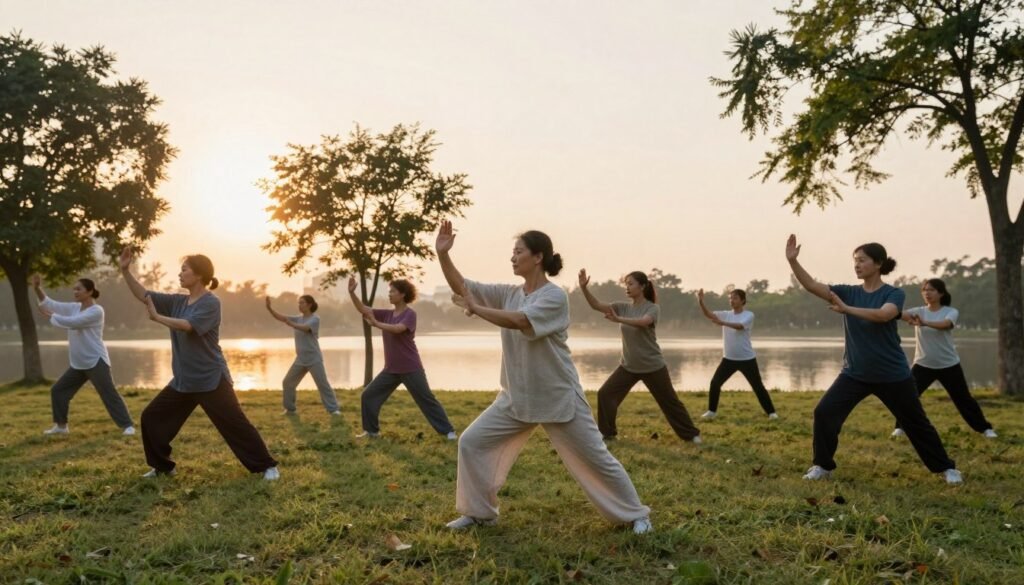
Did you know that a practice originating from ancient Chinese martial arts is now used by millions to reduce stress and improve physical health? This gentle discipline has evolved into a powerful tool for holistic wellness that fits perfectly into a modern lifestyle.
By focusing on slow, deliberate movements, you can cultivate mindfulness in your daily routine. This approach helps you connect your physical form with a calm, centered state of being. Whether you are a beginner or an experienced athlete, this practice offers a path to better balance and flexibility.
Engaging in mindfulness through tai chi allows you to find mental clarity while strengthening your body. It is a wonderful way to ground yourself and find peace amidst the chaos of everyday life.
Key Takeaways
- Learn how ancient martial arts evolved into a modern meditative practice.
- Improve your physical balance and flexibility with gentle, low-impact movements.
- Discover how to achieve mental clarity and reduce daily stress levels.
- Understand the connection between physical motion and internal focus.
- Explore a versatile routine suitable for all ages and fitness levels.
Mindfulness, Breath & Energy through Tai Chi
Tai Chi offers a unique path to wellness by harmonizing your internal energy with deliberate physical action. Rather than relying on muscular force or high-speed intensity, this practice invites you to explore the subtle connection between your thoughts and your physical form.
How Tai Chi Unites Attention, Movement, and Breath
At its core, this practice is about coordination. You learn to link your breath with every shift in weight and every extension of your limbs. This synchronization helps quiet the mental chatter that often fills our busy days.
By focusing your attention on the present moment, you create a state of mindfulness that naturally reduces stress. You are not just moving your body; you are guiding your awareness through a sequence of fluid, intentional actions.
Why Slow, Intentional Practice Supports Inner Balance
Slow movement is a hallmark of tai chi for inner balance. When you move at a measured pace, you gain the ability to notice tension in your muscles and release it consciously. This deliberate approach provides several key benefits:
- Improved body awareness and posture.
- A deeper sense of calm and emotional stability.
- Enhanced focus that carries over into your daily life.
This steady rhythm allows your nervous system to shift from a state of “fight or flight” into a more restorative mode. It is a gentle way to cultivate resilience and poise in an often chaotic world.
What to Expect from a Mindful Tai Chi Session
A typical session usually begins with gentle warm-ups to loosen the joints and prepare the body for movement. You will likely transition into practicing specific forms, which are sequences of postures performed with grace and precision.
Many instructors also incorporate Qigong-style breath work to help you circulate your energy more effectively. Throughout the session, the goal remains the same: to maintain a relaxed, centered state that supports your overall well-being.
Understanding the Mind-Body Connection in Tai Chi
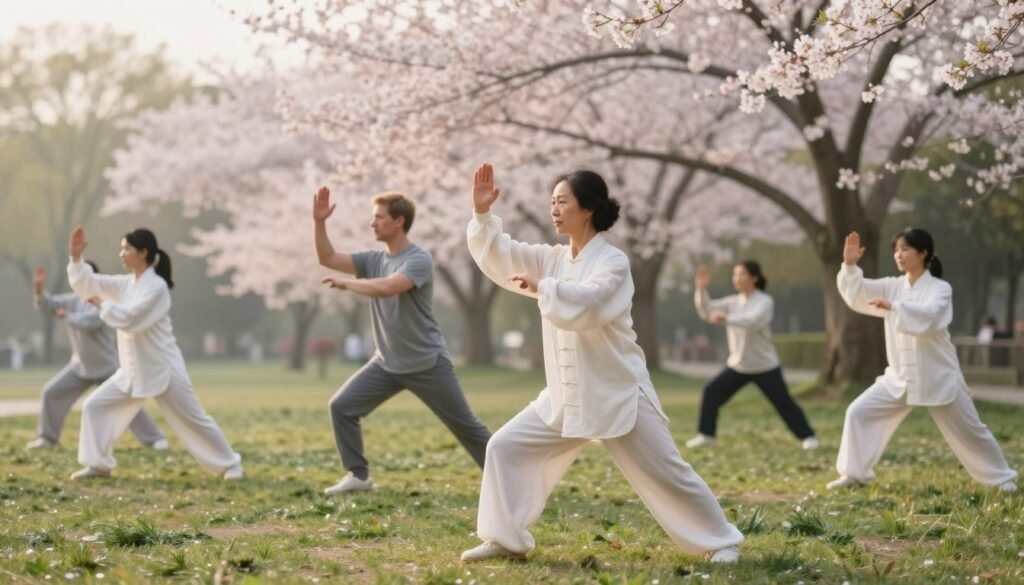
Exploring the mind-body connection through tai chi reveals how simple, deliberate motions can transform your daily awareness. Rather than viewing exercise as a chore, this practice invites you to listen to the subtle signals your body sends throughout the day.
How Gentle Movement Brings Awareness into the Present Moment
When you slow your movements down, you naturally pull your attention away from the clutter of a busy mind. This intentional pace acts as an anchor, keeping you firmly rooted in the here and now.
By focusing on the rhythm of your limbs, you stop worrying about the past or future. This shift allows you to experience a state of calm that is both refreshing and deeply restorative.
The Role of Posture, Weight Shifting, and Physical Sensation
Your physical posture serves as the foundation for your mental clarity. As you shift your weight from one foot to the other, you develop a heightened sense of proprioception, or your body’s ability to sense its position in space.
“The body is the instrument of the mind, and through movement, we learn to play it with grace and intention.”
Noticing the subtle transfer of gravity helps you stay balanced and grounded. These small physical sensations are the building blocks of a strong mind-body connection through tai chi.
Moving Beyond Performance to Embodied Awareness
Many people mistakenly believe that they must master complex choreography to benefit from this practice. In reality, the true value lies in your internal experience rather than how your movements look to an outside observer.
You are encouraged to let go of the need for perfection or competition. Instead, focus on the feeling of your muscles relaxing and your breath deepening. This shift toward embodied awareness turns every session into a personal journey of self-discovery and peace.
Preparing Your Body and Mind for Tai Chi Practice
Before you begin your movements, taking time to prepare your space and mindset is essential. A thoughtful approach to your environment helps you transition from the busyness of daily life into a state of calm focus. By setting the stage properly, you ensure that your tai chi practice remains a restorative experience.
Choosing a Comfortable, Quiet Practice Space
Your environment plays a significant role in how well you can concentrate. Select a location where you feel undisturbed and have enough room to move your arms and legs freely without hitting furniture.
- Ensure the floor is level and provides a firm, stable surface.
- Minimize distractions by turning off notifications or closing doors.
- Choose a spot with good ventilation and natural light if possible.
Wearing Supportive Clothing and Stable Footwear
Comfort is key when engaging in a regular tai chi practice. You should wear loose-fitting clothing that allows for a full range of motion without binding or restriction. Natural fabrics often feel best against the skin during gentle movement.
Footwear is equally important for your safety and balance. Look for shoes that offer the following features:
- Flat soles to help you feel the ground beneath you.
- Non-slip material to prevent sliding during weight shifts.
- Lightweight construction that does not fatigue your feet.
Releasing Tension with a Short Centering Exercise
Once you are settled, take a few moments to align your body and mind. This simple centering exercise helps you prepare for your tai chi practice by clearing away mental clutter.
Stand with your feet shoulder-width apart and let your arms hang naturally at your sides. Close your eyes gently and take several deep, slow breaths, focusing on the sensation of air entering and leaving your lungs.
As you breathe, perform a quick mental scan of your body. If you notice any tightness in your shoulders, jaw, or lower back, consciously release that tension with each exhale. This grounding process allows you to enter your session with a clear, present, and relaxed state of mind.
Building a Foundation with Tai Chi Posture and Alignment
Your journey into movement begins with how you hold your body in space. A successful tai chi practice relies on finding a neutral, balanced state that feels both organized and effortless. By focusing on your physical structure, you create the necessary conditions for energy to move freely throughout your limbs.
Relaxing the Neck, Shoulders, Spine, and Hips
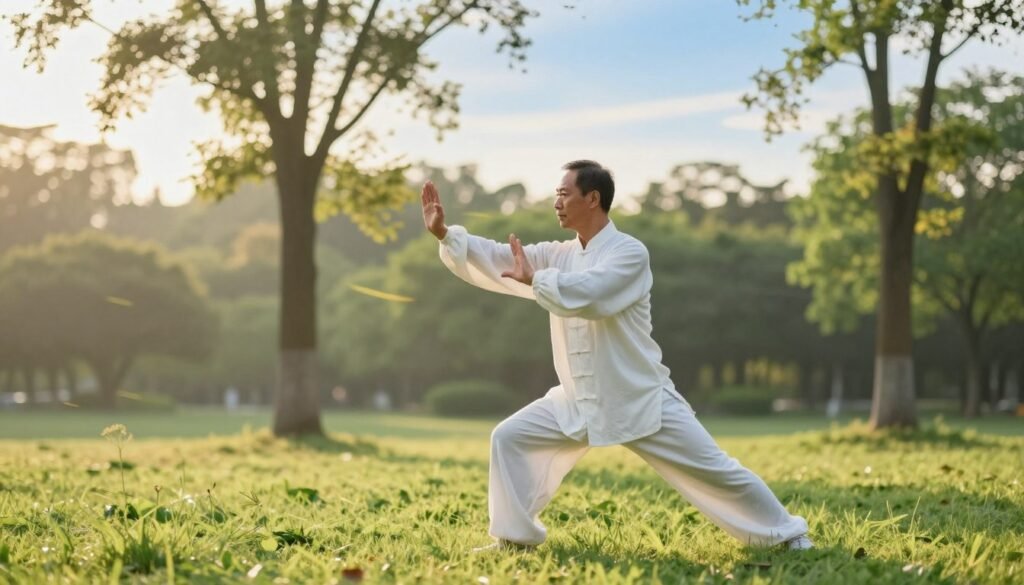
Begin by scanning your body for hidden tension. Many people carry stress in the neck and shoulders, which restricts natural movement. Gently release these areas by letting your shoulders drop away from your ears, allowing your spine to lengthen as if a soft string is pulling the crown of your head toward the sky.
Your hips should remain loose and open, acting as the pivot point for your entire frame. When you soften the hip joints, you allow your weight to sink comfortably into the ground. This intentional relaxation prevents stiffness and helps you maintain a fluid, connected posture during your routine.
Creating a Stable Base Without Locking the Knees
A solid foundation starts with your feet, which should be placed at a comfortable width to support your weight. Keep your knees soft and slightly bent at all times to ensure your joints remain flexible. Never lock your knees, as this creates tension and blocks the natural flow of energy through your legs.
By keeping your base wide and stable, you improve your balance and confidence. This approach to your tai chi practice ensures that you feel grounded, even when moving through complex transitions. Think of your feet as roots that anchor you firmly to the earth.
Keeping the Head, Chest, and Pelvis Naturally Aligned
Alignment is not about rigid posture, but rather about finding a natural, vertical stack. Your head should float lightly above your shoulders, while your chest remains soft and slightly concave. This prevents the common habit of puffing out the chest, which can lead to shallow breathing.
Your pelvis should remain neutral, tucked just enough to support the lower back without strain. When these three centers—head, chest, and pelvis—are aligned, your body functions as a single, unified whole. This harmonious alignment is the key to moving with grace and ease.
| Body Part | Common Mistake | Correct Alignment |
|---|---|---|
| Shoulders | Raised and tense | Dropped and relaxed |
| Knees | Locked or rigid | Soft and flexible |
| Spine | Slumped or arched | Lengthened and neutral |
| Pelvis | Tilted forward | Centered and balanced |
Using Mindful Breathing to Guide Every Movement
Your breath serves as the silent conductor for every movement you make in Tai Chi. By focusing on your internal rhythm, you transform simple physical actions into a fluid, meditative experience. This practice helps you stay grounded while you navigate through various postures.
Breathing Naturally Without Forcing a Rhythm
Many beginners worry about finding the “perfect” way to inhale or exhale. However, the most effective approach is to keep your mindful breathing as natural as possible. You should never hold your breath or force your lungs to match a rigid, artificial pace.
If you feel strain or tension, simply return to your ordinary, comfortable breathing pattern. Your body knows how to breathe best when it is not being micromanaged. Relaxation is the primary goal, and forcing your breath often creates unnecessary resistance.
Coordinating Inhalation, Exhalation, and Weight Shifts
As you progress, you can begin to pair your movements with the natural cycle of your lungs. This coordination creates a sense of harmony between your physical body and your internal state.
- Inhalation: Often accompanies the preparation phase or movements that expand the chest.
- Exhalation: Naturally aligns with settling into a posture or shifting weight downward.
- Transitions: Use a smooth, continuous flow to bridge the gap between each breath cycle.
Using the Breath to Slow Down and Refine Movement
The speed of your breath dictates the speed of your practice. When you consciously lengthen your inhalations and exhalations, your movements naturally become slower and more deliberate. This intentional slowing allows you to notice subtle sensations in your muscles and joints.
By using mindful breathing as an anchor, you can refine your technique and improve your balance. Whenever your mind wanders, let the sound and feeling of your air intake bring you back to the present moment. This simple focus turns every session into a restorative experience for both body and mind.
Exploring Energy Through Tai Chi Sensations
Many practitioners find that Tai Chi opens the door to a unique awareness of their own internal vitality. As you move through your practice, you may begin to notice subtle shifts in your internal state that go beyond simple muscle engagement.
Understanding Qi as a Traditional Tai Chi Concept
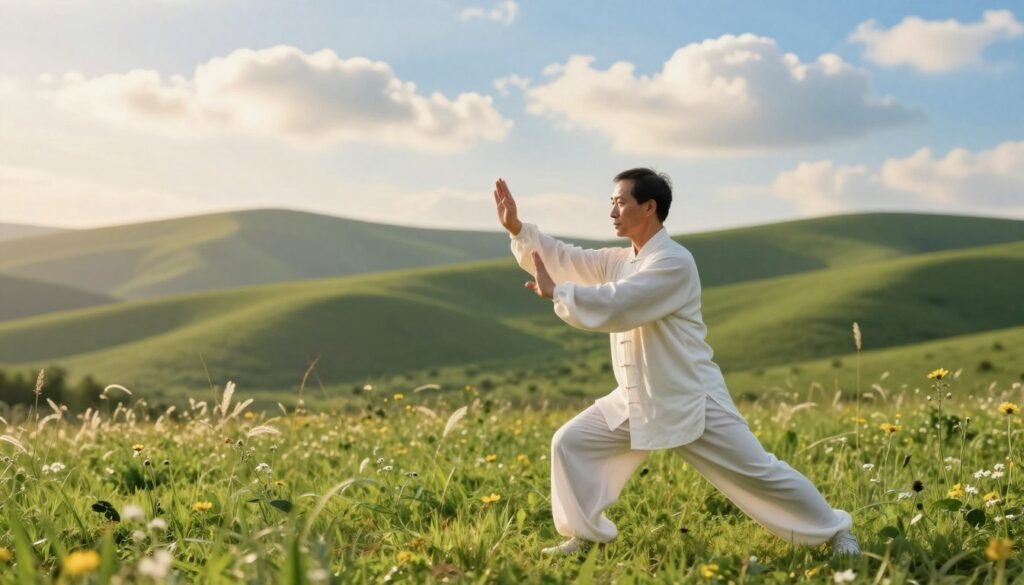
In the context of traditional Chinese medicine and martial arts, this internal vitality is often referred to as Qi. It is best understood as a conceptual framework for describing the life force that animates the body rather than a scientifically measured physical substance.
While some researchers have attempted to develop devices to measure this phenomenon, these tools currently lack broad scientific validation. It is most helpful to view this concept as a subjective guide for your personal practice rather than a rigid scientific fact.
Noticing Warmth, Lightness, Grounding, and Flow
During your sessions, you might experience specific physical sensations that feel distinct from your usual daily activities. You may notice a gentle warmth spreading through your limbs or a surprising sense of lightness in your movements.
Others often describe a deep feeling of being grounded, as if their connection to the earth has become more solid. These sensations of flow are common indicators that you are successfully tuning into your body’s natural rhythm and energy.
Connecting Physical Relaxation with a Sense of Energy
True progress in this practice often stems from the ability to release unnecessary tension. When you soften your muscles and allow your breath to deepen, you create the space necessary for these subtle sensations to emerge.
By focusing on ease rather than force, you allow your internal energy to circulate more freely. This connection between physical relaxation and mental clarity is the hallmark of a mindful approach to movement, helping you feel more vibrant and centered throughout your day.
A Mindfulness Meditation with Tai Chi Movement
Integrating movement into your daily meditation practice can transform how you experience your own body. By focusing on the mind-body connection through tai chi, you create a space where physical activity becomes a gateway to inner peace. This approach allows you to release tension while staying fully present in the current moment.
Beginning with Stillness and Focused Attention
Start your practice by standing in a quiet space with your feet shoulder-width apart. Close your eyes or soften your gaze to help anchor your awareness within your physical frame. Take several deep, natural breaths, feeling the weight of your body sinking into the floor.
This initial stillness serves as the foundation for your entire session. By observing your breath without trying to change it, you cultivate a sense of calm observation. This quiet start prepares your nervous system for the gentle movements that follow.
Blending Walking, Reaching, and Circular Movements with Meditation
Once you feel centered, begin to introduce slow, deliberate motions. Imagine your limbs moving through water, maintaining a smooth and continuous flow as you reach outward. Incorporate gentle, rhythmic walking to connect your steps with your breath.
Circular gestures help to keep the energy moving freely throughout your body. Focus on the sensation of your muscles lengthening and contracting rather than the visual appearance of the movement. This mindfulness meditation with tai chi encourages you to prioritize internal feeling over external performance.
Returning Attention to the Body When the Mind Wanders
It is perfectly natural for your thoughts to drift away during your practice. When you notice your mind wandering, simply acknowledge the distraction without any self-criticism. Gently guide your focus back to the physical sensations of your feet touching the ground or the rhythm of your lungs.
The true value of this practice lies in the act of returning to the present. By practicing non-judgmental awareness, you strengthen your ability to remain grounded in daily life. Every time you bring your attention back, you deepen your mind-body connection through tai chi and build lasting mental resilience.
Simple Tai Chi Exercises for Breath and Inner Balance
Discover how small, deliberate motions can transform your daily routine into a practice of mindfulness. By focusing on gentle ranges of motion, you can effectively use tai chi for inner balance to settle your nervous system. These exercises are designed to be accessible, allowing you to cultivate deep awareness without needing complex choreography.
Opening and Closing the Hands with Calm Awareness
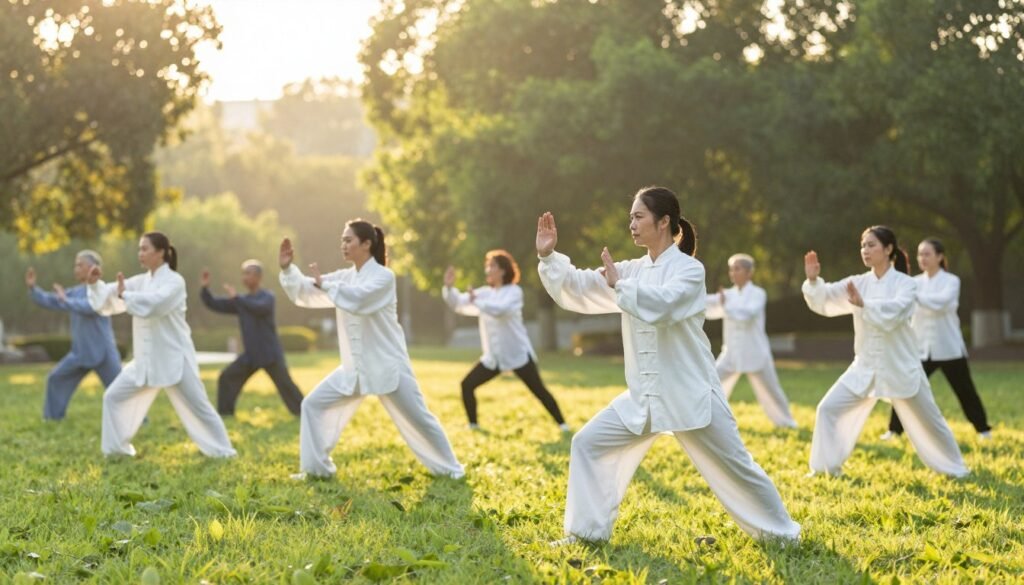
Begin by standing with your feet shoulder-width apart and your arms relaxed at your sides. As you inhale, slowly raise your hands in front of you, palms facing inward, as if you are gently expanding a soft ball of energy. This simple movement helps you synchronize your breath with your physical presence.
When you exhale, slowly bring your hands back toward each other without touching. Focus your full attention on the sensation of the air between your palms. This practice encourages a quiet mind and prepares you for more fluid movements.
Waving Hands Like Clouds to Develop Flow
This classic movement invites you to move your arms in a smooth, circular motion across your torso. Imagine your hands are drifting like clouds across a clear, blue sky. The goal is to maintain a continuous, rhythmic flow that connects your upper body to your center.
Keep your shoulders relaxed and your elbows soft throughout the motion. By letting your arms follow the rotation of your waist, you create a sense of effortless grace. This exercise is excellent for releasing tension held in the chest and upper back.
Shifting Weight Slowly to Strengthen Grounding
Grounding is a fundamental aspect of using tai chi for inner balance. Start by shifting your weight slowly from one leg to the other, keeping your knees slightly bent and flexible. Feel the connection between your feet and the floor as you move with deliberate intention.
Avoid rushing the transition; instead, savor the feeling of stability as you settle into each side. This practice builds physical strength and improves your overall balance. Staying within a comfortable range of motion ensures that you remain centered and secure throughout your entire session.
Supporting Mental Well-Being Through Regular Practice
Regular practice offers a unique pathway to emotional balance in our fast-paced world. By engaging in tai chi for mental well-being, you create a dedicated space to nurture your inner state. This gentle discipline helps you navigate life’s challenges with greater ease and clarity.
How Tai Chi Can Encourage Stress Relief and Emotional Regulation
Research suggests that consistent movement and breathwork can significantly lower stress levels. Many practitioners find that these sessions help them manage symptoms of anxiety and depression more effectively. Please note that while this practice supports psychological health, it is not a substitute for professional medical care.
The rhythmic nature of the movements helps soothe the nervous system. By focusing on the body, you allow your mind to shift away from persistent worries. This process fosters a sense of calm that often lingers long after your session ends.
Using Practice to Create a Pause During a Busy Day
Life often feels like a constant stream of reactions to external demands. Integrating a short session into your schedule provides a deliberate pause between stress and your response. This brief window of time allows you to reset your perspective.
Even ten minutes of movement can change your entire afternoon. It serves as a physical reminder that you have the power to choose your state of mind. You are essentially building a sanctuary of peace within your own daily routine.
Developing Patience, Focus, and Self-Compassion
You will naturally develop patience as you learn to slow down your movements. Each time your mind wanders, you practice the gentle art of returning your focus to the present. This repetition is a powerful exercise in self-compassion, as you learn to let go of judgment.
Softening your effort is a key skill that translates into your personal life. By noticing physical sensations without trying to force a result, you cultivate a deeper sense of inner balance. This approach helps you become more resilient when facing difficult situations.
| Mental Benefit | How It Develops | Impact on Daily Life |
|---|---|---|
| Patience | Slow, deliberate movement | Reduced frustration |
| Focus | Mindful breath awareness | Improved concentration |
| Self-Compassion | Softening physical tension | Greater emotional kindness |
| Stress Relief | Consistent daily practice | Enhanced emotional stability |
Creating a Sustainable Tai Chi Practice at Home
Building a lasting habit requires more than just willpower; it demands a realistic approach that fits into your unique lifestyle. Many people find that the secret to a successful tai chi practice lies in simplicity rather than intensity. By focusing on small, manageable steps, you can cultivate a sense of calm that grows alongside your skills.
Starting with Short, Consistent Sessions
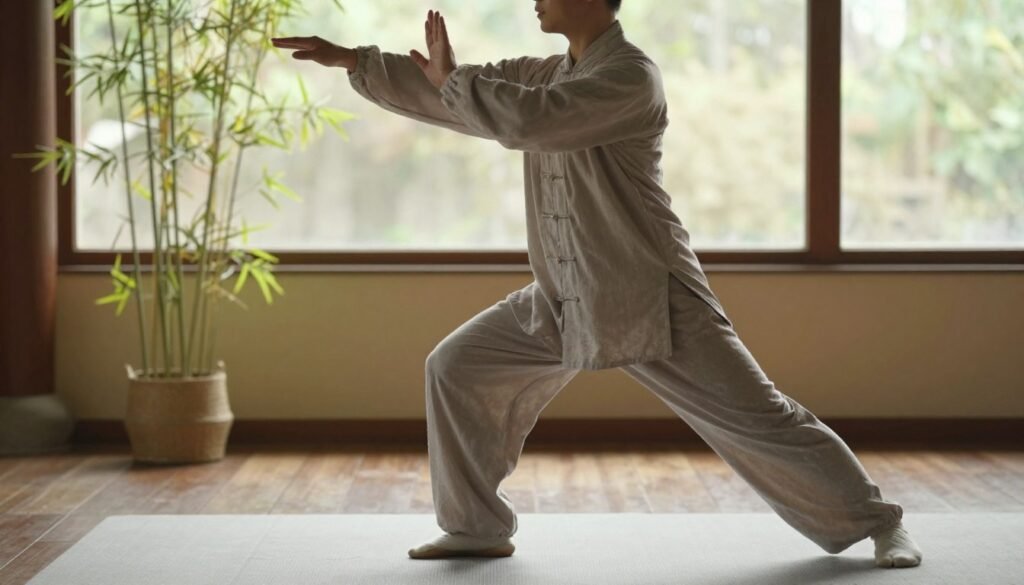
You do not need an hour of free time to reap the benefits of this ancient art. Beginning with short sessions of 10 to 20 minutes is often more effective than attempting a long, exhausting workout once a week. Consistency helps your body and mind internalize the movements, making them feel natural over time.
- Set a timer to keep your initial sessions focused and brief.
- Prioritize showing up on your mat every day, even if only for a few minutes.
- Remember that regularity builds muscle memory and mental clarity faster than sporadic, long sessions.
Building a Weekly Routine Around Energy and Availability
Your energy levels naturally fluctuate throughout the week, and your routine should reflect those changes. It is perfectly acceptable to adjust your tai chi practice based on how you feel or how much time you have available. Flexibility ensures that you stay motivated instead of feeling pressured by a rigid schedule.
Consider the following approach to manage your weekly goals:
| Day Type | Recommended Focus | Duration |
|---|---|---|
| High Energy | Full sequence flow | 20-30 minutes |
| Low Energy | Gentle breathing/posture | 5-10 minutes |
| Busy Schedule | Mindful standing/centering | 3-5 minutes |
Using Guided Classes, Videos, or In-Person Instruction Wisely
Choosing the right resources can significantly enhance your learning journey. Online videos and books are excellent for quick reminders or learning basic movements at your own pace. However, they lack the personalized feedback that an experienced teacher provides during in-person sessions.
If you are working on complex sequences, seeking professional guidance is highly recommended to ensure your alignment remains safe and effective. A teacher can spot subtle errors in your posture that you might miss on your own. Balancing independent study with occasional workshops or classes creates a well-rounded foundation for your long-term progress.
Common Challenges When Learning Mindful Tai Chi
Embarking on a journey into Tai Chi often reveals unexpected hurdles that every practitioner faces. It is completely normal to feel a bit lost or frustrated as you begin to integrate mindfulness into your daily routine. Recognizing these obstacles is the first step toward overcoming them and deepening your practice.
Staying Present When Thoughts Keep Interrupting
It is very common for the mind to wander during your practice. When you notice your thoughts drifting toward your to-do list or past events, try not to judge yourself harshly. Instead, gently acknowledge the distraction and return your focus to your natural breath or a specific physical sensation.
Using a simple anchor, such as the feeling of your feet touching the floor, can help you maintain mindfulness throughout your session. By consistently bringing your attention back to the present, you train your brain to remain calm and centered. Over time, these moments of clarity will become much easier to sustain.
Managing Impatience with Slow Progress
Many beginners feel a strong desire to master complex sequences quickly. However, the true beauty of this practice lies in the slow, deliberate pace of every movement. If you find yourself feeling impatient, remind yourself that mindfulness is a lifelong skill rather than a race to the finish line.
Focusing on the quality of your movement rather than the quantity of forms you learn will yield better results. Celebrate the small victories, such as feeling more grounded or noticing a deeper sense of relaxation. Patience is a vital component of your growth and will ultimately enhance your overall experience.
Adjusting Practice When Fatigue, Pain, or Dizziness Appears
Your body is your best teacher, and it is important to listen to its signals during your practice. If you experience sharp pain, persistent fatigue, or sudden dizziness, you should stop or modify your movements immediately. Pushing through physical discomfort is never the goal of mindfulness-based exercise.
If these symptoms continue, it is wise to consult with a healthcare professional to ensure your movements are safe for your specific needs. Self-compassion means knowing when to rest and when to seek guidance. By prioritizing your physical well-being, you create a sustainable foundation for your long-term health and inner balance.
Turning Tai Chi Principles into Everyday Mindfulness
Your path toward inner peace does not end when you step off the practice mat. The true value of mindfulness through tai chi lies in your ability to carry these lessons into the busiest parts of your day. By shifting your perspective, you can turn routine chores into opportunities for growth.
You do not need to perform a full form to reap the rewards of your training. Small, intentional adjustments to your posture and focus can create a sense of calm in any environment. This approach helps you maintain a steady center regardless of external pressures.
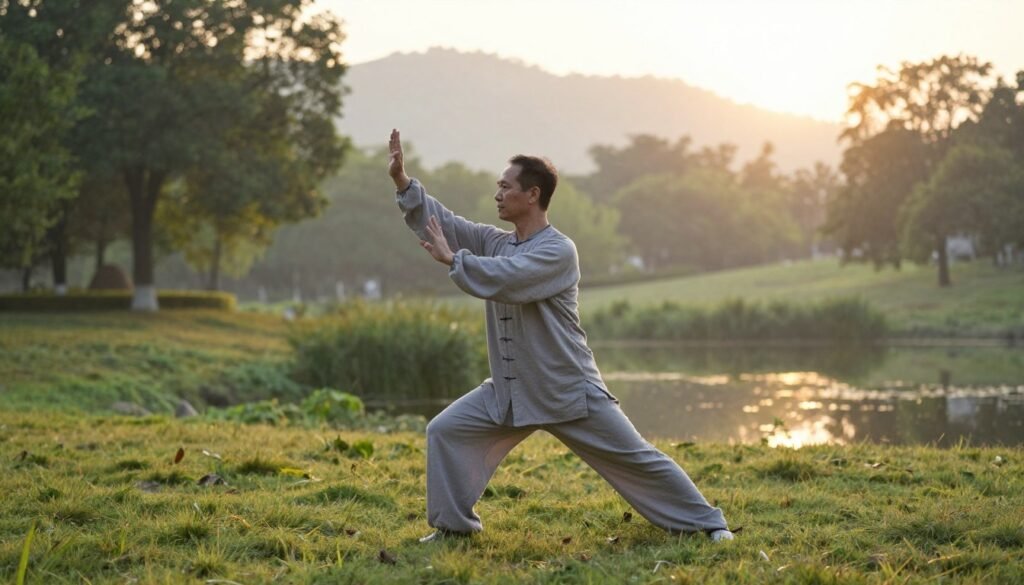
Applying Tai Chi Breathing During Work and Daily Tasks
Mindful breathing is a portable tool that you can use anywhere. Whether you are sitting at a desk or waiting in line, take a moment to notice the natural rise and fall of your abdomen. This simple act anchors your attention in the present moment.
Try to synchronize your breath with simple tasks like typing an email or washing dishes. By focusing on the rhythm of your inhale and exhale, you reduce mental clutter. This practice mirrors the mindfulness meditation with tai chi you perform during formal sessions.
Using Grounding and Relaxed Posture in Stressful Moments
Stress often causes us to hold tension in our shoulders and chest. When you feel overwhelmed, consciously soften these areas and imagine your weight sinking into your feet. This physical grounding provides an immediate sense of stability.
Maintain a relaxed, upright spine even while sitting. By keeping your head aligned and your hips open, you allow energy to flow freely. This intentional posture acts as a buffer against the chaotic pace of modern life.
Carrying Slow, Deliberate Movement into Ordinary Activities
You can transform mundane movements into a form of moving meditation. When walking to your car or reaching for a glass, move with a sense of purpose and grace. This deliberate pace prevents you from rushing through life on autopilot.
Consider how your daily habits compare to your formal practice sessions. The following table highlights how you can bridge the gap between the two:
| Activity Type | Formal Practice | Everyday Application |
|---|---|---|
| Breathing | Deep, rhythmic cycles | Soft, natural awareness |
| Movement | Structured, slow forms | Graceful, intentional actions |
| Focus | Total mental stillness | Present-moment attention |
| Posture | Perfect alignment | Relaxed, upright spine |
By integrating these principles, you ensure that mindfulness meditation with tai chi remains a constant companion. Consistent mindful breathing and gentle movement will eventually become second nature. Embrace these small changes to cultivate lasting balance in your life.
Conclusion
Tai chi offers a gentle path to integrate mindful attention with natural movement. This low-impact practice combines relaxed physical alignment and traditional energy concepts to support your overall health. You gain strength, flexibility, and a sense of calm through consistent, deliberate motion.
Many people find that tai chi for mental well-being provides a necessary anchor in a fast-paced world. Regular sessions help you cultivate patience and self-compassion while managing daily stress. Scientific studies continue to explore how these movements influence physical health and emotional regulation over time.
You can start your own practice today with a short, comfortable session in a quiet space. Seek out reputable instruction from local community centers or trusted digital platforms like the Tai Chi for Health Institute to ensure proper form. Developing tai chi for inner balance happens best when you move at a sustainable, personal pace.
Commit to small, daily habits that honor your body and mind. Your dedication to this ancient art will reveal new layers of clarity and physical ease. Enjoy the process of discovery as you weave these mindful principles into your life.