
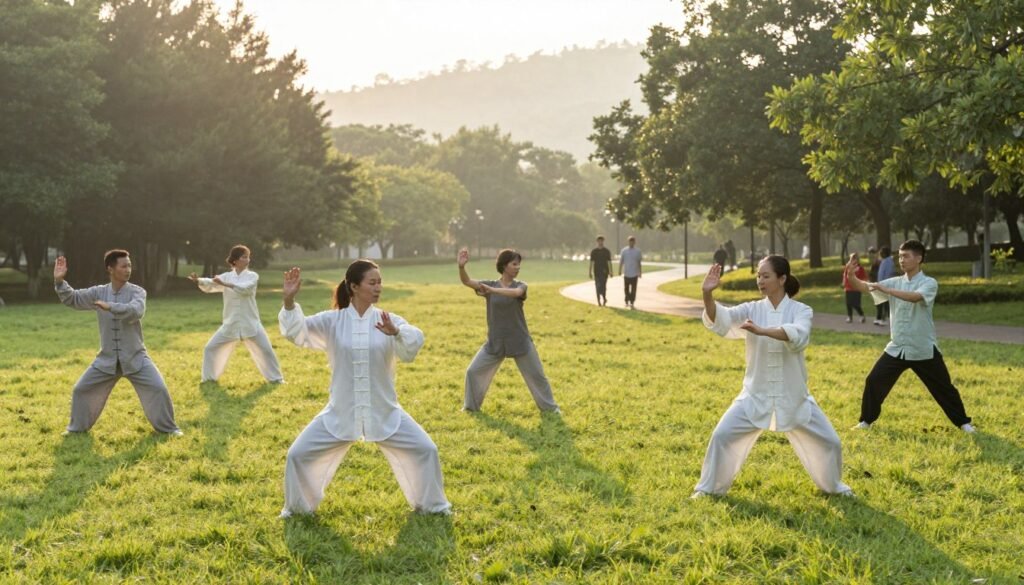
Did you know that adding just ten minutes of mindful movement can lower your daily stress levels by nearly 20%? Many people believe that finding balance requires hours at a gym, but the truth is far simpler. Integrating a taichi & lifestyle approach allows you to reclaim your calm without needing special equipment or a massive time commitment.
You can easily master short taichi routines right in your living room or office. By focusing on intentional movement, you build taichi habits that support better mobility and mental clarity. These taichi lifestyle tips help you turn mundane moments into opportunities for growth. Whether you are taking a quick break or enjoying a quiet morning, these gentle movements fit naturally into your busy schedule.
Key Takeaways
- Mindful movement significantly reduces stress and cortisol levels.
- You do not need expensive gear to begin your journey.
- Consistency matters more than the duration of your session.
- Small movements can be integrated into your existing daily schedule.
- Focusing on breath and posture improves overall physical mobility.
Building a Tai Chi Lifestyle Around Daily Movement
A true Tai Chi lifestyle goes far beyond the walls of a classroom. It is not just about memorizing long sequences or performing complex patterns perfectly. Instead, it is about weaving intentional awareness into the fabric of your everyday life.
By focusing on how you move, breathe, and stand, you can turn ordinary moments into opportunities for growth. This shift in perspective is the foundation of a sustainable practice that fits your unique needs.
What a holistic Tai Chi approach includes beyond formal practice
A holistic taichi approach encompasses much more than just the time you spend on a mat. It integrates several key elements that influence your overall well-being throughout the day:
- Posture awareness: Maintaining a neutral spine while sitting or standing.
- Conscious breathing: Using natural, relaxed breaths to lower stress.
- Mindful walking: Paying attention to how your feet connect with the ground.
- Recovery habits: Allowing your body to rest and reset between tasks.
When you adopt this mindset, you stop viewing exercise as a chore. You begin to see it as a continuous flow of energy and attention that supports your health.
How mindful Tai Chi movements support balance, mobility, and calm
Incorporating mindful taichi movements into your routine helps you cultivate a sense of stability. These gentle, controlled actions encourage you to distribute your weight evenly, which naturally improves your balance over time.
While these practices are not a substitute for medical treatment, they offer a wonderful way to maintain joint mobility and flexibility. By moving slowly, you allow your muscles to release tension that often builds up during a busy day.
This practice also serves as a powerful tool for finding inner calm. Focusing on the rhythm of your body helps quiet the mental chatter that often accompanies a hectic schedule.
Choosing realistic practice times for an American daily schedule
We understand that the modern American lifestyle is often fast-paced and demanding. A successful taichi & lifestyle integration does not require hours of free time. You can achieve significant results by breaking your practice into small, manageable segments.
Think of your day as a series of transitions. You might practice for five minutes before your morning coffee or during a short break at the office. The goal is to make your taichi & lifestyle habits feel like a natural part of your day rather than an extra burden.
Consistency is far more valuable than duration. By choosing realistic times that fit your current routine, you ensure that your practice remains a source of joy and lasting vitality.
Preparing Safely for Short Tai Chi Routines
Before you begin your movement, take a moment to set the stage for success. Proper preparation ensures that your daily taichi practice remains a source of relaxation rather than a cause for concern. By organizing your environment, you allow your mind to focus entirely on the flow of your body.
Creating enough space for slow, controlled movement
You do not need a large studio to enjoy the benefits of movement. A small, clear area in your living room or office is perfectly sufficient for short taichi routines. Simply push aside any loose rugs, cords, or furniture that might obstruct your path.
Having a stable, flat surface is the most important factor for your safety. Whether you are indoors or outside, ensure the ground is level and free of debris. A clear space helps you maintain your focus without worrying about tripping or bumping into objects.
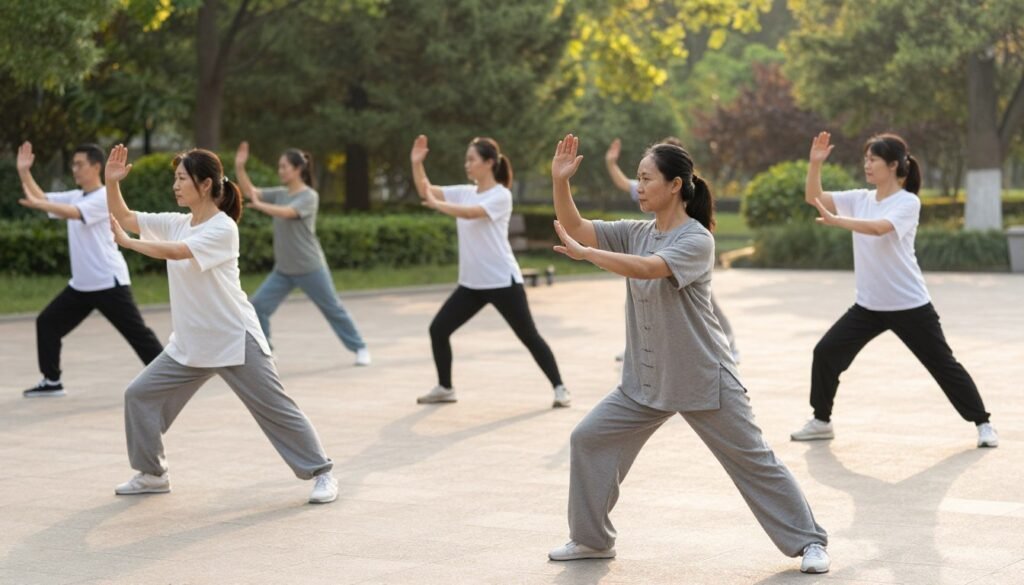
Wearing supportive clothing and stable footwear
Comfort is key when you engage in any form of mindful movement. Choose clothing that allows for a full range of motion without being overly baggy or restrictive. Breathable fabrics are often the best choice to keep you comfortable throughout your session.
Your choice of footwear also plays a vital role in your stability. Wear shoes that provide good arch support and have a flat, non-slip sole. If you prefer to practice barefoot, ensure the floor surface provides enough grip to prevent sliding during your daily taichi practice.
Adjusting practice for age, fitness level, and mobility limitations
TaiChi is a highly adaptable discipline that meets you exactly where you are today. If you have limited mobility, you can perform many movements while seated in a sturdy chair. This approach allows you to enjoy the benefits of short taichi routines while keeping your body fully supported.
Always listen to your body and avoid pushing into pain. If a specific movement feels uncomfortable, simply reduce the range of motion or pause to catch your breath. Remember that consistency is far more valuable than intensity when building a sustainable habit.
Finding Balance, Posture, and Breath Before Movement
Mastering the basics of balance and alignment will make your mindful taichi movements feel natural and effortless. Before you begin any sequence, taking a moment to settle your body creates a stable base for success. This preparation ensures that your energy flows freely throughout your entire session.
Aligning the head, shoulders, spine, hips, and feet
Start by standing with your feet hip-width apart, keeping your knees soft and unlocked. Imagine a gentle string pulling the crown of your head toward the sky, which naturally lengthens your spine. Allow your shoulders to drop away from your ears, releasing any tension held in your upper back.
Your hips should remain neutral, neither tucked too far forward nor pushed back. This vertical alignment connects your body from the top of your head down to your feet. When your joints are stacked correctly, you create a structure that supports effortless movement.
Using relaxed breathing without forcing deep inhalations
Many beginners mistakenly believe they must take exaggerated, deep breaths during their daily taichi practice. Instead, focus on allowing your breath to be natural and rhythmic. Let your belly expand gently as you inhale and soften as you exhale.
Avoid holding your breath or straining your lungs to reach a specific depth. By keeping your breathing relaxed, you signal to your nervous system that it is safe to let go of stress. This calm approach helps you maintain focus throughout your routine.
Practicing rooted standing and gentle weight shifting
Rooted standing involves feeling the connection between your feet and the ground beneath you. Imagine your feet spreading wide, gripping the floor like the roots of a tree. This sensation provides a sense of stability that prevents you from feeling off-balance.
Once you feel grounded, begin to shift your weight slowly from one leg to the other. Keep your torso upright as you move, ensuring that your weight transfer is smooth and deliberate. This practice builds the core strength necessary for more complex forms.
| Body Part | Common Mistake | Correct Alignment |
|---|---|---|
| Shoulders | Hunched or tense | Relaxed and dropped |
| Knees | Locked or rigid | Soft and flexible |
| Spine | Slumped or arched | Long and neutral |
| Weight | Leaning forward | Centered over feet |
Short Tai Chi Routines for Busy Days
You do not need an hour to experience the benefits of a balanced taichi & lifestyle. Many people believe that progress requires long, grueling sessions, but consistency is actually the true key to success. By focusing on short taichi routines, you can easily weave mindfulness into the busiest of schedules.
Designing a five-minute routine for consistency
A five-minute window is often all you need to reset your nervous system and improve your focus. The goal is to create a habit that feels attainable and rewarding rather than like another chore on your to-do list. When you keep your practice brief, you are much more likely to show up for yourself every single day.
- Set a specific time, such as right after your morning coffee or during a lunch break.
- Keep your movements simple to avoid mental fatigue.
- Focus on the quality of your breath rather than the complexity of the forms.
Combining opening, flowing, and closing movements
Every effective session should follow a natural arc to help your body transition into a state of calm. Start with an opening movement to ground your energy and signal to your brain that it is time to shift gears. Follow this with a few minutes of flowing, repetitive motions that encourage fluidity and relaxation.
Finally, always include a closing period to seal your practice and return to your day with intention. This structure ensures that you move from a state of activity into stillness and back again with grace. Consistency in this flow helps build a deeper connection between your mind and body over time.
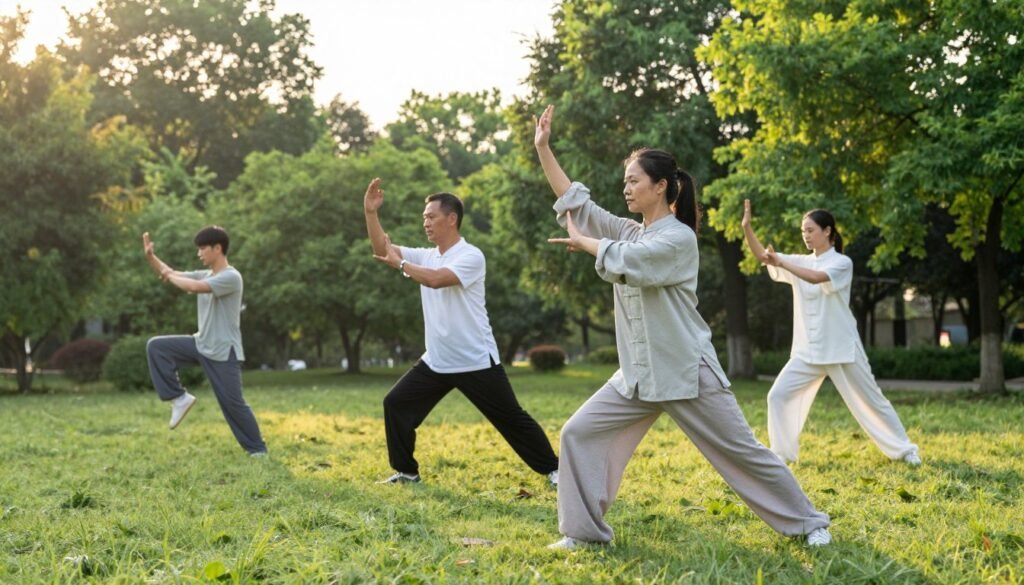
Adapting short routines for home, office, or outdoor spaces
One of the greatest advantages of this practice is its incredible versatility. You do not need a studio or special equipment to find your center. Whether you are standing in a quiet corner of your office or enjoying a moment in your backyard, the principles remain the same.
If you are at a desk, focus on subtle weight shifts and gentle arm movements that release tension. At home, you might use a bit more space to incorporate wider stances and deeper reaches. Embracing this flexible taichi & lifestyle allows you to find peace wherever you happen to be.
Creating a Calm Morning Tai Chi Practice
Morning TaiChi offers a peaceful way to transition from sleep to the demands of your day. By dedicating just a few minutes to intentional movement, you set a positive tone that carries through your afternoon and evening. This daily taichi practice helps you move away from the rush of a busy schedule and toward a state of centered awareness.
Waking the body with gentle joint and spine movements
Start your morning by gently mobilizing your joints to release any stiffness accumulated during sleep. Focus on slow, circular motions for your wrists, ankles, and neck to encourage blood flow. Gentle spinal twists and soft reaches help wake up your nervous system without causing unnecessary strain.
These movements act as a bridge between deep rest and active alertness. By keeping your motions fluid, you prepare your muscles for the day ahead. This approach is essential for building sustainable taichi habits that feel restorative rather than like a chore.
Using standing forms to establish focus for the day
Once your joints feel loose, transition into a simple standing form to anchor your attention. Stand with your feet shoulder-width apart and feel the weight evenly distributed through your soles. This rooted posture provides a sense of stability that helps you maintain focus when life becomes chaotic.
Hold your position for a few breaths, allowing your mind to settle into the present moment. You do not need complex sequences to achieve this clarity. Simple, repetitive movements are often the most effective way to cultivate a calm, observant mindset.
Pairing morning Tai Chi with hydration, light stretching, or journaling
Integrating your movement with other healthy rituals can significantly boost your consistency. Many practitioners find that drinking a glass of water before starting helps hydrate the body after a long night. You might also consider adding a brief session of journaling or light stretching to your routine.
The following table outlines how these simple additions can enhance your morning flow:
| Activity | Primary Benefit | Time Investment |
|---|---|---|
| Hydration | Replenishes body fluids | 1 Minute |
| Joint Mobilization | Reduces morning stiffness | 3 Minutes |
| Standing Forms | Improves mental focus | 5 Minutes |
| Journaling | Clarifies daily intentions | 5 Minutes |
By keeping your sessions short and manageable, you ensure that your taichi habits remain a permanent part of your lifestyle. Consistency is far more valuable than intensity when you are just starting out. Remember that even five minutes of mindful movement can make a profound difference in your overall well-being.
Using Tai Chi During Work Breaks and Daily Transitions
Small, intentional movements can turn a stressful workday into a balanced experience. You do not need a dedicated studio or hours of free time to enjoy the benefits of these practices. By incorporating taichi lifestyle tips into your daily routine, you can maintain focus and physical comfort even during the busiest hours.
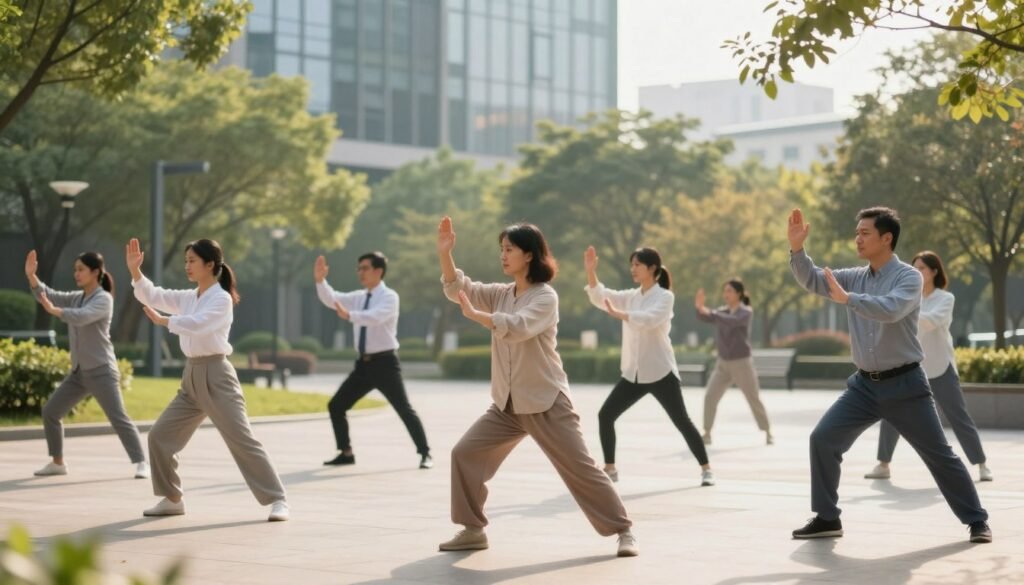
Releasing neck, shoulder, and wrist tension at a desk
Office work often leads to stiffness in the upper body. You can use gentle rotations to release tension in your neck and shoulders without leaving your chair. Simply drop your chin toward your chest and slowly roll your head from side to side.
For your wrists, try slow, circular motions while keeping your fingers relaxed. These short taichi routines help improve circulation and prevent the fatigue that comes from long hours of typing. Taking just sixty seconds to breathe and move can reset your posture effectively.
Practicing discreet weight shifts during short breaks
When you stand up to grab a glass of water or walk to the printer, you have a perfect opportunity to practice. Focus on shifting your weight slowly from one foot to the other while keeping your spine tall and your knees soft.
This subtle movement helps you stay grounded and centered. Because these shifts are discreet, you can perform them anywhere without drawing attention. It is a simple way to integrate short taichi routines into your environment while staying productive.
Turning transitions such as commuting, waiting, and cooking into mindful pauses
Daily life is full of transition moments that often go to waste. Whether you are waiting for the coffee to brew or standing on a train, you can turn these gaps into mindful pauses. Use these times to check your alignment and release unnecessary tension in your jaw or shoulders.
Applying these taichi lifestyle tips during your commute or while cooking helps you stay present. By viewing these moments as opportunities for movement, you build a habit of calm that lasts throughout the entire day. Consistency is the key to feeling better, one small step at a time.
Tai Chi & Lifestyle with short routines, walking practices, challenges and habits
A true taichi & lifestyle approach turns your daily commute into a moving meditation. By blending formal exercises with your natural movements, you create a seamless flow of energy throughout your day. This method ensures that your practice is not just a scheduled event, but a constant companion in your busy life.
Connecting short Tai Chi routines with everyday walking
You can easily bridge the gap between your mat and the sidewalk by incorporating mindful movement into your strolls. When you finish a short routine, try to carry that same sense of ease into your walk to the car or the office. This transition helps you maintain a holistic taichi approach even when you are on the move.
Think of your daily walk as an extension of your formal practice. Instead of rushing to your destination, focus on the rhythm of your steps. This simple shift turns ordinary errands into opportunities for growth and relaxation.
Using breath, posture, and foot awareness while walking
Effective taichi walking practices rely on three core elements: breath, posture, and foot placement. Keep your spine tall and your shoulders relaxed as you move through your neighborhood. Allow your breath to remain natural rather than forced, letting it sync with your stride.
Pay close attention to how your feet touch the ground. Feel the heel-to-toe transition as you shift your weight forward. This grounded awareness helps you stay stable and centered, regardless of the terrain you are navigating.
Building a practical rhythm between formal practice and active living
Consistency is the secret to a successful taichi & lifestyle. You do not need hours of free time to see the benefits of this holistic taichi approach. By alternating between focused routines and mindful walking, you create a sustainable rhythm that fits your schedule.
| Practice Type | Primary Focus | Best Environment |
|---|---|---|
| Formal Routine | Structure & Form | Quiet Home Space |
| Mindful Walking | Flow & Awareness | Parks or Sidewalks |
| Micro-Breaks | Tension Release | Office or Desk |
Use these taichi walking practices to stay connected to your body during transitions. Whether you are walking to the mailbox or heading to a meeting, these moments of mindfulness reinforce your progress. Over time, this rhythm becomes second nature, supporting your health and well-being every single day.
Practicing Tai Chi Walking on Different Terrains
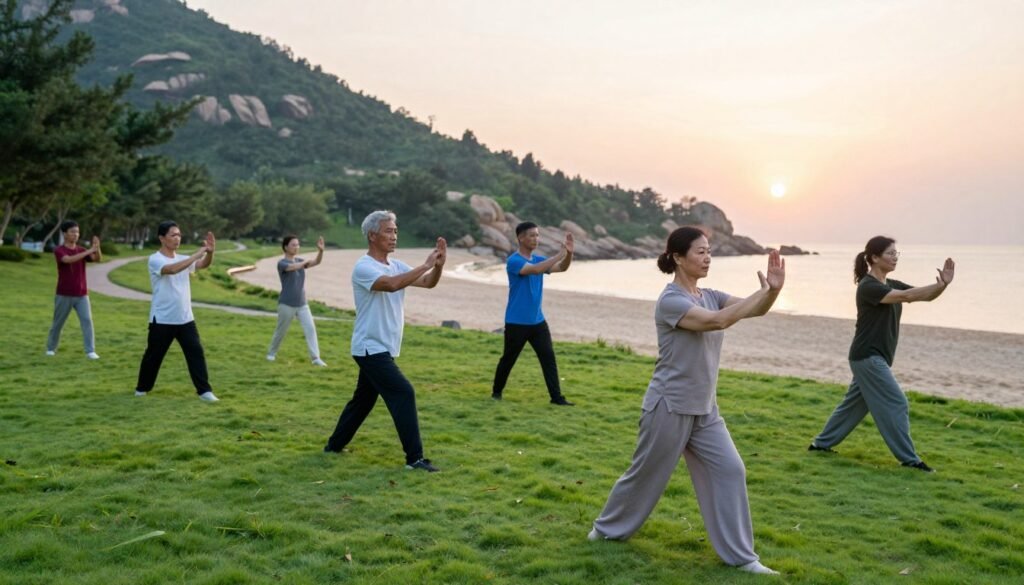
Exploring different terrains helps you refine your balance and focus in real-world settings. By moving your taichi walking practices outside, you invite a sense of flow into your daily routine that goes beyond the confines of a room.
Starting with safe, level surfaces indoors or outdoors
Before you head to the park, begin by practicing on flat, predictable surfaces. A smooth hardwood floor or a paved driveway provides the stability needed to master your weight shifts. Consistency is key here, as it allows your body to memorize the feeling of being rooted before you face any external challenges.
Applying Tai Chi walking practices to sidewalks, parks, and trails
Once you feel steady, you can bring these movements to your local neighborhood. Sidewalks offer a great transition, while parks provide softer grass that challenges your stability in a gentle way. These taichi lifestyle tips suggest that you treat every walk as a moving meditation, keeping your gaze soft and your posture upright.
Adjusting stride length, pace, and weight transfer on uneven ground
When you encounter uneven ground, such as a hiking trail or a gravel path, you must adapt your technique. Shorten your stride to keep your center of gravity low and stable. By slowing your pace, you give your brain more time to process the terrain, ensuring that each step is intentional and secure.
Focus on your weight transfer by keeping your knees slightly bent and flexible. This mindful approach helps you absorb the irregularities of the ground without losing your composure. Remember that these taichi lifestyle tips are meant to support your comfort, not to create stress or pressure.
| Terrain Type | Stride Length | Pace | Focus Area |
|---|---|---|---|
| Indoor Floor | Natural | Steady | Posture |
| Paved Sidewalk | Slightly Shortened | Moderate | Weight Shift |
| Grass/Park | Short | Slow | Rooting |
| Uneven Trail | Very Short | Very Slow | Stability |
Building Motivation Through Tai Chi Challenges
Many people find that the secret to consistency lies in gamifying their progress through simple, structured taichi challenges. Instead of aiming for perfection, focus on creating small, manageable wins that keep you coming back to the mat. This approach helps you build momentum without the weight of high expectations.
Setting a seven-day consistency challenge
A seven-day sprint is an excellent way to test your commitment without feeling overwhelmed. By focusing on just one week, you can establish taichi habits that feel natural rather than forced. Consistency is far more important than duration when you are first starting out.
Try to commit to a specific time each day, even if it is only for a few minutes. When you complete your seven-day goal, you will likely feel a sense of accomplishment that encourages you to keep going. This short-term focus turns a daunting task into a fun, achievable experiment.
Using a walking and short-routine challenge to increase daily movement
You can boost your activity levels by combining mindful walking with short taichi routines. For example, try performing a few gentle movements before you head out for your daily walk. This combination helps you transition from a busy mindset into a state of calm awareness.
Integrating these movements into your day ensures that you stay active even when your schedule is tight. You might choose to practice a few forms during your lunch break or right after you finish your walk. This variety keeps your practice fresh and prevents boredom from setting in.
Tracking practice without turning mindfulness into pressure
While tracking your progress is helpful, it should never become a source of stress. Whether you use a simple paper calendar, a digital app, or a notebook, the goal is to celebrate your effort rather than judge your performance. If you miss a day, simply pick up where you left off the next morning.
Modern tools like 21-day programs or visual graphs can provide helpful insights into your journey. However, remember that the true value of your practice lies in the peace you cultivate, not in the number of checkmarks on a page. Keep your tracking light and supportive to ensure your practice remains a joyful part of your life.
Turning Tai Chi Practice Into Lasting Habits
You can easily turn your wellness goals into reality by anchoring them to your existing daily rhythms. Building taichi habits does not require a complete overhaul of your schedule or massive amounts of willpower. Instead, it relies on the simple science of connecting new actions to established behaviors.
Using habit stacking with brushing teeth, meals, or commuting
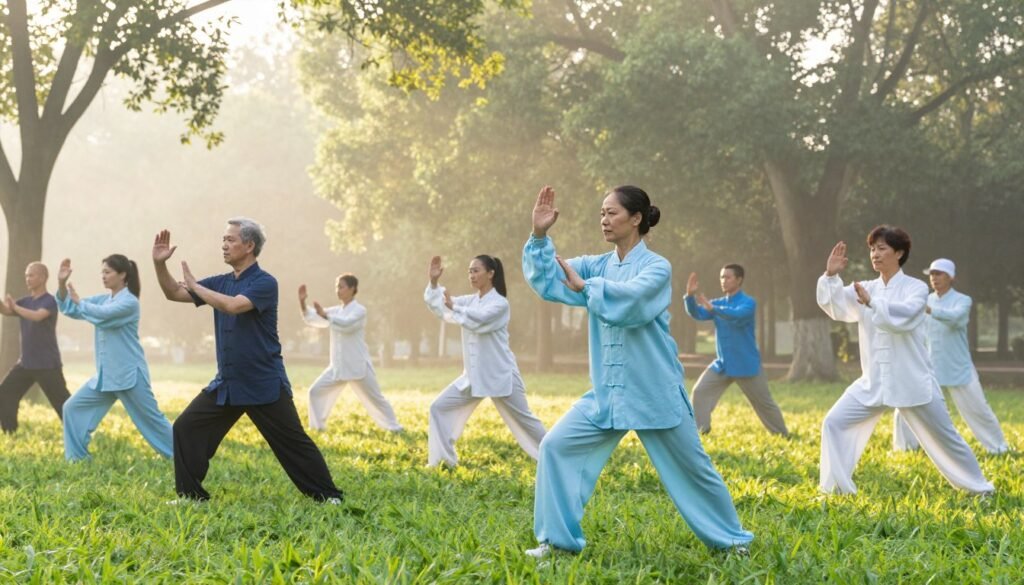
Habit stacking is a powerful technique that leverages your brain’s natural tendency to follow patterns. By performing a short movement sequence immediately after a task you already do, you create a reliable trigger for your daily taichi practice.
For example, you might perform three minutes of gentle weight shifting while waiting for your coffee to brew. Similarly, you could practice mindful breathing during your morning commute on the train or while sitting in your parked car before heading into the office.
Preparing visual and environmental reminders
Your environment plays a significant role in how often you remember to move. Placing a small, meaningful object in your workspace can serve as a visual cue to pause and reset your posture.
Digital tools also provide excellent support for your journey. Using app notifications or a 21-day challenge structure helps keep your goals front and center without the need for constant mental effort.
Making the minimum practice small enough to repeat
The most common mistake is setting a goal that feels too large on a busy day. By keeping your minimum requirement small—perhaps just one minute of movement—you ensure that you can succeed even when life gets hectic.
Consistency is far more important than intensity when you are building a new routine. When you make the barrier to entry low, you are much more likely to show up for yourself every single day.
| Habit Trigger | TaiChi Action | Expected Benefit |
|---|---|---|
| Brushing Teeth | Rooted standing | Improved balance |
| Morning Coffee | Gentle weight shifts | Increased focus |
| Commuting | Mindful breathing | Reduced stress |
| Lunch Break | Shoulder releases | Less physical tension |
By focusing on these small, manageable steps, you turn your daily taichi practice into a natural part of your life. Over time, these taichi habits become automatic, allowing you to enjoy the benefits of movement without feeling like it is just another chore on your to-do list.
Progressing From Basic Forms to More Confident Movement
Growth in your practice is not about speed, but about finding greater control and grace in your daily routine. As you settle into your rhythm, you will naturally begin to notice the subtle details of your mindful taichi movements. This stage of your journey focuses on refining your internal awareness rather than simply adding more complex steps.
Increasing practice duration without sacrificing relaxation
Many practitioners feel the urge to extend their sessions as they gain confidence. The key is to lengthen your time on the mat while maintaining the same level of deep relaxation you felt during shorter sessions. If you find your muscles tensing up, simply shorten the duration until you can hold that sense of ease again.
Developing smoother transitions and more deliberate weight shifts
True progress often shows up in how you move between poses. Focus on making your weight shifts feel like water flowing from one side to the other. By slowing down these transitions, you build greater stability and control, which are essential components of any successful practice.
Adding gentle balance work and directional changes
Once you feel steady, you can introduce slight variations in direction or balance. These taichi challenges should be approached with curiosity rather than pressure. Always prioritize your safety by keeping your movements controlled and grounded.
The following table outlines how you can track your growth as you move from a beginner to a more confident practitioner.
| Focus Area | Beginner Level | Intermediate Level |
|---|---|---|
| Practice Duration | 5 Minutes | 10-15 Minutes |
| Weight Shifts | Basic side-to-side | Fluid, continuous flow |
| Balance | Static standing | Gentle single-leg shifts |
| Direction | Forward only | Subtle turns and pivots |
Remember that your personal progress is unique to your body and lifestyle. By participating in taichi challenges that fit your current ability, you ensure that your practice remains a sustainable and enjoyable part of your life.
Supporting Tai Chi With Other Lifestyle Choices
A holistic taichi approach thrives when supported by your daily habits. While movement is a vital pillar of health, it works best when paired with intentional choices throughout your day. By aligning your environment and personal care with your goals, you create a foundation for lasting success.
Pairing Tai Chi with sleep, hydration, and regular walking
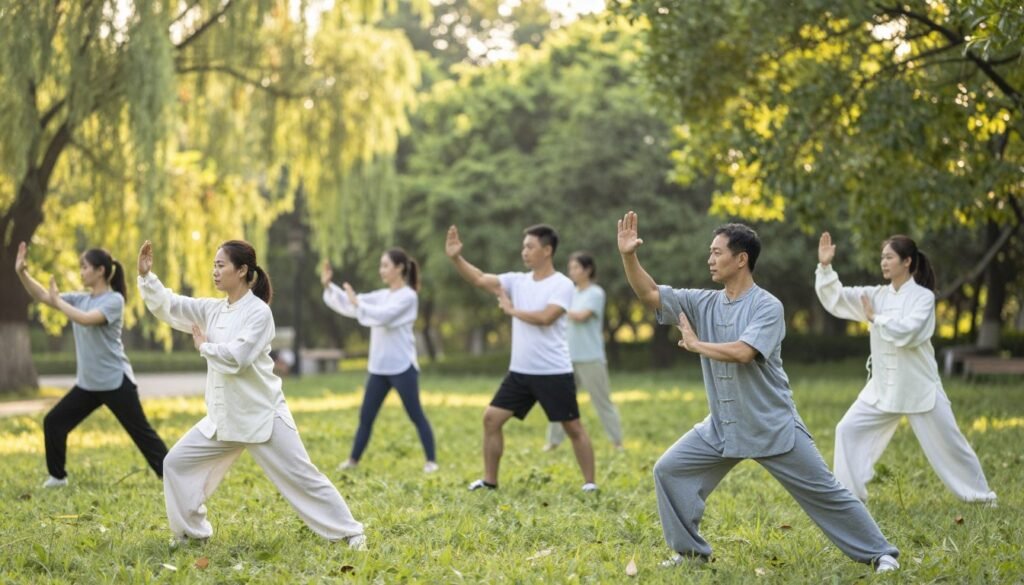
Quality sleep acts as the bedrock for any physical discipline. When you are well-rested, your body moves with greater ease and your mind remains sharp during your daily taichi practice. Proper hydration further supports your joints, ensuring that every movement feels fluid rather than stiff.
Regular walking serves as a perfect companion to your formal sessions. It keeps your muscles supple and reinforces the weight-shifting principles you learn on the mat. Together, these habits create a sustainable rhythm that keeps you feeling energized.
Using mindful meals and screen breaks to reinforce awareness
Mindfulness should not end when you finish your routine. You can extend this awareness to your meals by eating slowly and noticing the textures and flavors of your food. This practice helps you stay grounded and prevents the rushed feeling that often leads to stress.
Taking intentional screen breaks is equally important for your taichi & lifestyle balance. Stepping away from your computer allows you to reset your posture and release tension in your neck and shoulders. These brief pauses act as mini-meditations that keep you connected to your body throughout the workday.
“Balance is not something you find, it is something you create through the small, consistent choices you make every single day.”
Creating a supportive home and community practice environment
Your physical space plays a significant role in your consistency. Designating a small, clutter-free area in your home for your practice serves as a visual cue to stay active. When your environment is inviting, you are much more likely to show up for yourself.
Connecting with a local community or an online group can also provide the encouragement you need. Sharing your progress with others makes the journey more enjoyable and keeps you accountable. Consider the following ways to optimize your daily habits for better results:
| Lifestyle Habit | Benefit to Practice | Action Step |
|---|---|---|
| Hydration | Improved joint mobility | Drink water before sessions |
| Screen Breaks | Reduced physical tension | Stretch every 60 minutes |
| Walking | Better weight distribution | Walk for 15 minutes daily |
| Sleep | Enhanced mental focus | Maintain a consistent schedule |
By integrating these elements, you transform your routine into a comprehensive lifestyle. Remember that every small change contributes to your overall well-being. Stay patient with yourself as you build these habits over time.
Conclusion
Building a sustainable practice requires patience and a focus on small, manageable steps. You can integrate these taichi lifestyle tips into your day by prioritizing consistency over intensity. Every minute spent on mindful movement contributes to your long-term mobility and inner calm.
The beginner app provides helpful resources to support your growth. You will find short sessions, a 21-day guided program, and tools for tracking your progress. These features offer structure while allowing you to personalize your routine to fit your unique schedule.
Environmental cues and habit stacking turn your practice into a natural part of your life. You do not need to aim for perfection to see results. Focus on the feeling of rooted standing and gentle weight shifts as you move through your day.
True balance comes from treating your health as a gradual process. By applying these taichi lifestyle tips, you create a foundation for lasting wellness. Start today with a simple movement and enjoy the quiet benefits of a mindful life.