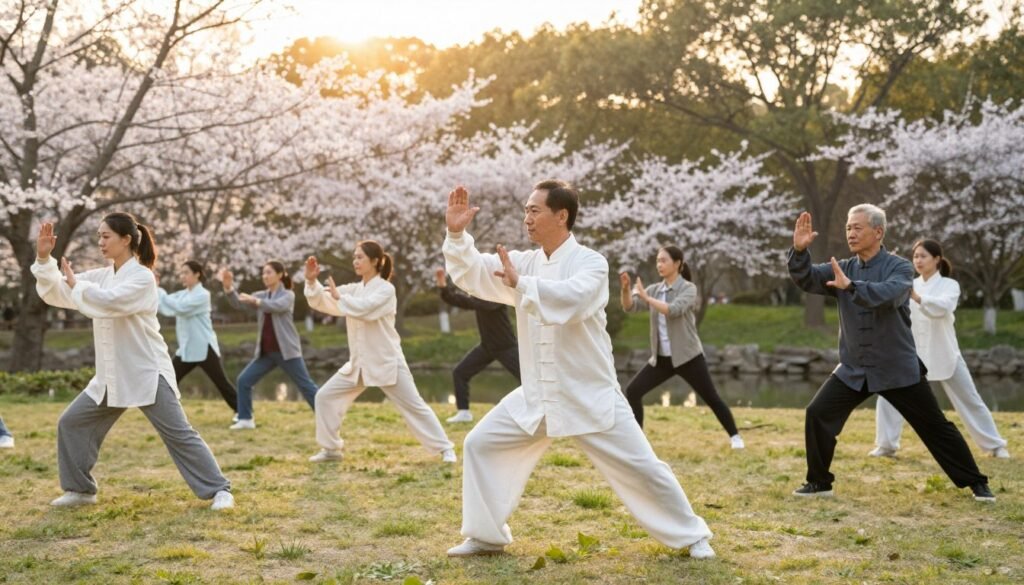
Did you know that over 250 million people worldwide practice this ancient movement art daily? What began centuries ago as a sophisticated martial system has transformed into a global phenomenon for wellness.
Many individuals turn to these slow, flowing motions to find peace in a chaotic world. Our goal is to serve as your friendly, evidence-conscious partner in exploring this practice. We bridge the gap between historical philosophy and modern scientific inquiry.
You will discover how tai chi benefits your physical stability, mental clarity, and stress levels. We carefully distinguish between time-honored wisdom, personal anecdotes, and claims that require more rigorous validation. Join us as we navigate the intersection of heritage and current health data.
Key Takeaways
- The practice evolved from a combat system into a popular mind-body exercise.
- Regular movement helps improve balance and reduces daily stress.
- We prioritize evidence-based insights to help you understand health claims.
- Our approach respects historical roots while embracing modern scientific inquiry.
- Readers learn to distinguish between anecdotal experiences and proven results.
What Tai Chi Deeper Examines in Tradition, Practice, and Evidence
This guide serves as a bridge, connecting the rich heritage of movement traditions with the practical needs of today’s students. We aim to honor the depth of tai chi philosophy while providing clear, actionable insights for your daily tai chi practice. By blending historical context with modern inquiry, we help you navigate this complex field with confidence.
How traditional principles shape a modern tai chi guide
Traditional instruction relies heavily on oral transmission and direct, hands-on correction. Because subtle alignment and weight distribution are difficult to master alone, we emphasize the necessity of finding a qualified teacher. True mastery often requires the physical feedback that only an experienced mentor can provide.
Our approach respects these roots by focusing on the core tenets that have sustained the art for centuries. We view these principles as the foundation upon which all modern adaptations must be built. By keeping these standards in mind, you ensure that your progress remains authentic and safe.
Why comparisons help clarify different schools and practices
The world of movement arts is vast, often leading to confusion for newcomers. Comparing different schools allows you to see how various lineages interpret the same fundamental movements. This clarity helps you choose a path that aligns with your personal goals, whether you seek health, meditation, or martial skill.
- Identify your focus: Understand if a school prioritizes health or combat.
- Evaluate intensity: Compare the physical demands of different styles.
- Assess accessibility: Determine which forms fit your current mobility levels.
How to read research without overstating tai chi benefits
Scientific studies offer valuable data, but they should not replace the wisdom of traditional training. When reviewing research, it is important to look for studies that match your specific interests and physical needs. Critical thinking is your best tool for separating proven outcomes from anecdotal claims.
We encourage you to use evidence as a guide rather than a rigid rulebook. By maintaining a balanced view, you can enjoy the mental and physical rewards of your tai chi practice without falling for exaggerated promises. Always remember that the most significant benefits often come from consistent, mindful effort over time.
Tai Chi Deeper guides tradition with comparisons and research
Navigating the world of internal arts can feel overwhelming without a clear map. Tai Chi Deeper guides tradition with comparisons and research to ensure that your journey remains grounded in both authenticity and clarity.
Connecting tai chi history with present-day practice
To truly appreciate the movements, one must look at the evolution of the art. Tai chi history is not just a collection of dates and names; it is a living lineage that informs how we move today.
By understanding the original intent behind specific postures, you can better apply them to your daily routine. This connection transforms simple exercise into a meaningful practice that respects its roots.
Balancing cultural context, personal experience, and scientific findings
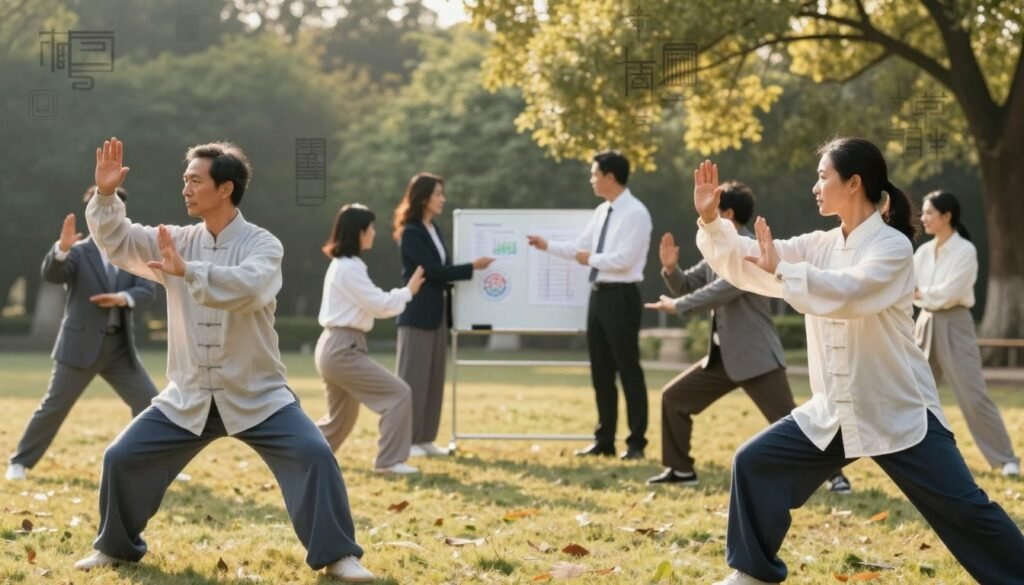
A balanced approach requires us to weigh ancient philosophy alongside modern data. For instance, a recent study involving 120 participants explored how technology-assisted training can support traditional learning.
These tools do not replace the human element of the art. Instead, they provide a new lens through which we can verify traditional knowledge and improve our physical alignment.
Separating established traditions from modern wellness claims
The wellness industry often promotes quick fixes that lack depth. It is vital to distinguish between time-tested principles and marketing trends that oversimplify the benefits of the practice.
Critical thinking allows you to filter out noise while keeping the core values of the art intact. By focusing on evidence-based outcomes, you can build a sustainable routine that serves your long-term health goals.
Tai Chi History from Martial Art to Mind-Body Practice
Tai chi began as a sophisticated martial art before transforming into the popular mind-body practice we see today. While many modern practitioners focus on stress relief, the tai chi history is deeply rooted in ancient Chinese combat techniques. This evolution reflects a broader shift in how traditional movement arts are valued in contemporary society.
Early Chinese roots and the development of tai chi
The origins of this practice are often traced back to the Chen village in Henan province. Early practitioners developed these movements to enhance internal power and physical resilience for self-defense. Over time, the focus shifted from purely combative applications toward the cultivation of qi, or vital energy, and overall longevity.
This transition was not sudden but occurred over several centuries of refinement. As the practice matured, it began to incorporate elements of traditional Chinese medicine and Taoist tai chi philosophy. These additions helped transform a rigorous fighting system into a holistic method for balancing the body and mind.
How Chen, Yang, Wu, and Sun traditions became distinct
As the art spread, different families developed their own unique interpretations, leading to the creation of distinct tai chi forms. Each style emphasizes different movement qualities, ranging from explosive power to gentle, flowing grace. These variations allow practitioners to choose a path that best suits their physical needs and personal goals.
| Style | Primary Characteristic | Focus |
|---|---|---|
| Chen | Silk-reeling spirals | Martial power |
| Yang | Expansive, slow | Health and wellness |
| Wu | Compact, leaning | Internal structure |
| Sun | Agile, high-stance | Joint mobility |
The spread of tai chi into American communities
The arrival of these traditions in the United States marked a significant turning point for the global reach of the art. Through community programs, public demonstrations, and dedicated instructors, the practice became accessible to a diverse audience. Many Americans were drawn to the calming nature of the movements, which offered a welcome respite from the fast pace of modern life.
Today, instructors continue to transmit both the physical skills and the underlying cultural context to their students. This ongoing exchange ensures that the practice remains relevant while honoring its historical roots. By integrating these ancient techniques into daily routines, practitioners across the country continue to experience the lasting benefits of this timeless tradition.
Comparing the Major Tai Chi Forms and Styles
Understanding the major tai chi forms is essential for finding a practice that fits your personal goals. While these traditions share common roots, the way they express movement varies significantly across different schools. It is important to remember that style labels are merely starting points, as individual teachers and local schools often adapt these tai chi techniques to suit their students.
Many foundational movements, such as “Ward Off,” “Grasp Sparrow’s Tail,” and “Single Whip,” appear across almost all traditions. However, the internal focus and physical execution of these moves change depending on the lineage you choose to follow.
Chen style’s spiraling movements and martial emphasis
The Chen style is widely recognized as the oldest form of this practice. It is famous for its dynamic, spiraling energy known as silk-reeling. This style often alternates between slow, flowing motions and sudden, explosive bursts of power, highlighting its deep martial roots.
Yang style’s expansive movements and accessibility
Yang style is perhaps the most popular version practiced in the United States today. It features expansive, graceful movements that are performed at a steady, even pace. Because of its emphasis on relaxation and large, open postures, it is highly accessible for beginners and those seeking health benefits.
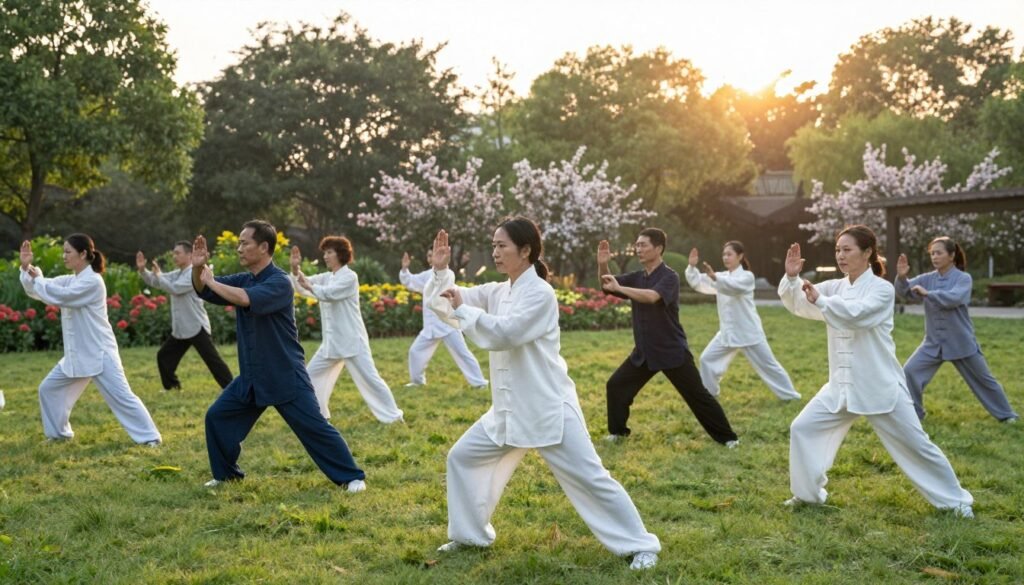
Wu style’s compact posture and subtle weight shifts
The Wu style is characterized by its compact, neutral posture and very subtle weight shifts. Practitioners often lean slightly forward, which helps in maintaining a strong center of gravity. This style is excellent for those who prefer a more internal, meditative approach to their training.
Sun style’s agile steps and qigong influence
Sun style is unique for its agile, follow-step footwork and high, comfortable stances. It incorporates significant qigong influence, making it a gentle option for individuals with limited mobility or joint sensitivity. The movements are fluid and continuous, promoting a sense of calm and mental clarity.
| Style | Primary Focus | Movement Quality |
|---|---|---|
| Chen | Martial Power | Spiraling and Explosive |
| Yang | Health and Wellness | Expansive and Steady |
| Wu | Internal Balance | Compact and Subtle |
| Sun | Agility and Flow | High Stance and Agile |
Tai Chi Techniques That Define a Safe and Effective Practice
Achieving grace and stability in your routine depends on how you manage your body. By focusing on specific tai chi techniques, you can ensure that your movements remain fluid and safe. These foundational principles help you build a sustainable tai chi practice that supports long-term health and physical awareness.
Rooting, alignment, and relaxed structural support
Rooting is the ability to feel grounded and stable, as if your feet are firmly connected to the earth. Proper alignment ensures that your joints are stacked correctly, which reduces unnecessary strain on your muscles. When you maintain a relaxed structural support, you allow your body to hold its shape without tension.
Weight shifting, stepping, and balance control
Effective movement relies on your ability to transfer weight smoothly from one leg to the other. By keeping your center of gravity low and controlled, you improve your overall stability during every step. This careful balance control is a hallmark of a high-quality tai chi practice, helping you move with confidence.
Coordinating breath, posture, and continuous movement
The beauty of this art lies in the seamless connection between your breath and your physical form. Rather than forcing your breath, you should allow it to flow naturally with your movements. This coordination creates a meditative state that keeps your posture upright and your transitions continuous.
Silk-reeling, spiraling, and whole-body coordination
Silk-reeling involves a gentle, spiraling motion that originates from the core and travels through the limbs. This whole-body coordination ensures that no single part of your body works in isolation. By embracing these circular transitions, you learn to move as one unified entity, which is essential for mastering advanced tai chi techniques.
Remember that progress in this discipline is a gradual journey. Avoid the temptation to force your body into rigid positions. Instead, prioritize softness and continuity to keep your joints healthy and your mind calm.
Tai Chi Mindfulness, Meditation, and the Role of Attention
The true essence of this practice lies in how you direct your focus while moving through space. Rather than attempting to empty the mind, tai chi mindfulness encourages you to remain fully engaged with your physical sensations. You learn to observe your posture, balance, and transitions with a curious and gentle attitude.
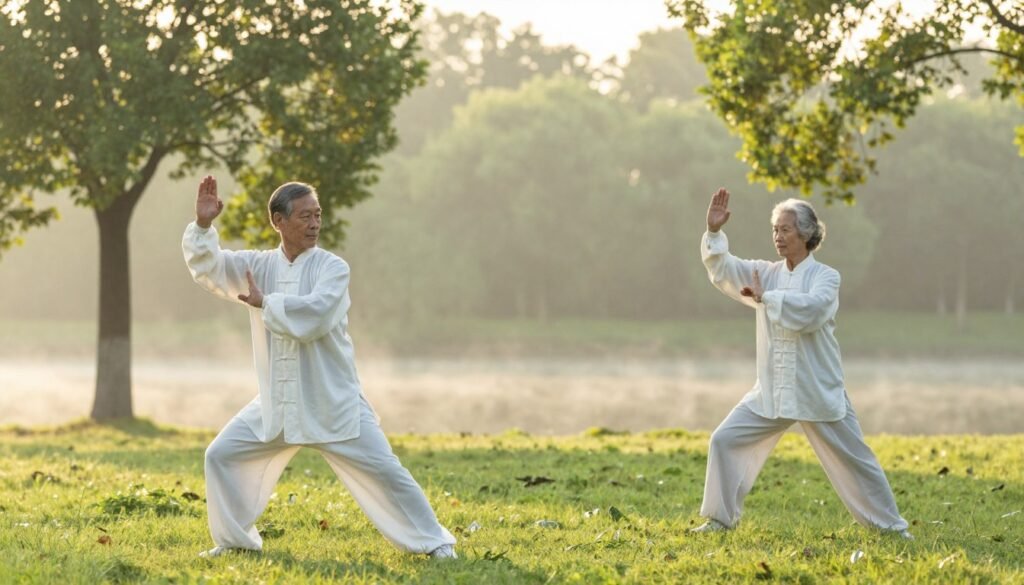
Using slow movement to develop present-moment awareness
Slow, deliberate movement acts as an anchor for your attention. By focusing on the subtle shifts in weight and the alignment of your limbs, you naturally pull your awareness away from daily distractions. This attentive participation allows you to notice tension in the body and release it in real-time.
This approach is central to tai chi philosophy, which emphasizes harmony between the internal state and external form. As you move, you are not just exercising; you are practicing a form of active observation. This builds a stronger connection between your intention and your physical reality.
Comparing moving meditation with seated meditation
While seated meditation often focuses on stillness and internal reflection, tai chi meditation keeps your attention connected to constant change. You are required to maintain focus while your body is in motion, which provides a unique challenge for the brain. This dynamic state helps you stay grounded even when your environment is active.
| Feature | Seated Meditation | Moving Meditation |
|---|---|---|
| Primary Focus | Internal stillness | Physical coordination |
| Body State | Stationary | Continuous flow |
| Attention Target | Breath or mantra | Movement and posture |
| Environment | Quiet space | Anywhere |
How breath awareness supports calm without forcing the breath
Many beginners worry about controlling their breathing, but the goal is simply to observe it. When you allow your breath to follow your movement naturally, you avoid the stress of forced patterns. This relaxed awareness supports a sense of calm that feels authentic rather than manufactured.
- Focus on the natural rhythm of your inhale and exhale.
- Avoid holding your breath during complex transitions.
- Let the breath deepen on its own as your body relaxes.
By keeping your attention soft and flexible, you create a sustainable practice. You do not need to chase specific energetic outcomes or mystical states. Instead, you simply show up, breathe, and move with intentional presence.
What Research Says About Tai Chi Benefits
Exploring the clinical data behind this movement practice reveals a fascinating intersection between tradition and modern medicine. While many individuals report feeling better after a session, researchers have worked to quantify these tai chi benefits through rigorous study designs. It is important to remember that results often vary based on the participant’s age, the intensity of the program, and the duration of the training.
Evidence related to balance, mobility, and fall prevention
One of the most well-documented areas of research involves the impact of this practice on physical stability. Studies consistently show that regular tai chi practice helps improve postural control in older adults. By focusing on weight shifting and core engagement, participants often experience a significant reduction in the risk of accidental falls.
Findings on stress, mood, and sleep quality
Beyond physical stability, many practitioners find that the meditative nature of the movements helps lower cortisol levels. Research suggests that the combination of deep breathing and slow, rhythmic motion can lead to improved mood regulation. Furthermore, individuals struggling with mild insomnia often report better sleep quality after incorporating these gentle routines into their evening schedule.
Research involving arthritis, chronic pain, and functional movement
For those living with joint discomfort, this discipline offers a low-impact way to maintain range of motion. Clinical trials indicate that the slow, controlled movements help lubricate joints and reduce stiffness associated with osteoarthritis. This tai chi practice is frequently recommended as a complementary approach to manage chronic pain while improving overall functional independence.
What studies suggest about cardiovascular and general physical health
Emerging evidence points toward positive outcomes for heart health and blood pressure management. While it is not a substitute for high-intensity aerobic exercise, it provides a sustainable way to keep the body active. The following table summarizes the common areas where research has identified positive outcomes for practitioners.
| Health Area | Primary Benefit | Evidence Level |
|---|---|---|
| Balance | Reduced fall risk | High |
| Mental Health | Lowered stress | Moderate |
| Joint Health | Reduced stiffness | Moderate |
| Heart Health | Improved circulation | Emerging |
Ultimately, while the tai chi benefits are promising, they should be viewed as part of a holistic approach to wellness. Consistency remains the most critical factor in achieving these positive health outcomes over time.
Comparing Tai Chi With Yoga, Qigong, Walking, and Other Practices
Many people wonder how different exercise styles compare to the gentle art of tai chi. Choosing the right activity often comes down to your specific goals, physical tolerance, and personal enjoyment. By understanding the unique focus of each practice, you can better integrate tai chi forms into your life.
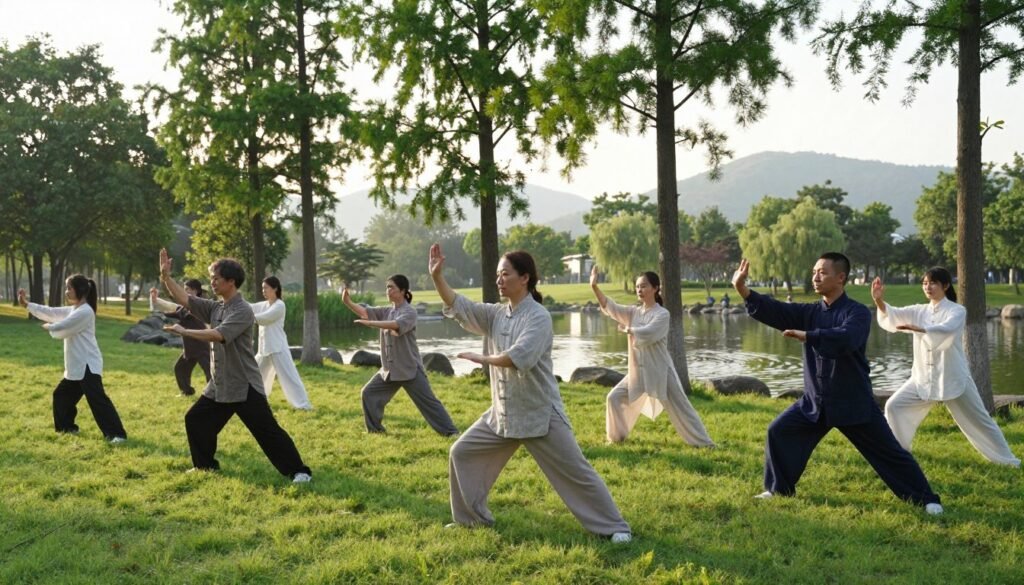
Tai chi and yoga: flowing forms versus held postures
Yoga typically emphasizes static poses held for a period to build flexibility and strength. In contrast, tai chi relies on continuous, fluid transitions that never fully stop. This constant movement helps develop a unique type of tai chi meditation that integrates the mind and body through motion.
Tai chi and qigong: overlapping roots and different training goals
While both practices share deep roots in Chinese tradition, their primary objectives often differ. Qigong is frequently used for specific health outcomes through repetitive, simpler movements. Tai chi is more complex, focusing on a sequence of movements that also serve as a sophisticated martial art.
Tai chi and walking: structured coordination versus straightforward activity
Walking is a wonderful, accessible aerobic activity that requires little preparation. However, it lacks the whole-body coordination and structural alignment training found in tai chi. Practicing these forms adds a layer of mental focus that simple walking does not provide.
Tai chi and conventional balance or strength training
Conventional gym workouts often isolate specific muscle groups to build power. Tai chi takes a different approach by training the body to move as a single, unified unit. This holistic method is highly effective for improving functional balance and long-term stability.
| Practice | Primary Focus | Movement Style |
|---|---|---|
| Tai Chi | Coordination & Flow | Continuous |
| Yoga | Flexibility & Strength | Held Postures |
| Qigong | Energy & Breath | Repetitive |
| Walking | Aerobic Health | Linear |
Ultimately, the best choice depends on what you value most in your daily routine. Whether you seek the mindful movement of tai chi or the structured intensity of strength training, consistency remains the most important factor for success.
Matching Tai Chi Forms and Techniques to Individual Goals
Choosing the right path in your practice depends on aligning specific movements with your personal health goals. Because there are many tai chi forms available, understanding your primary motivation helps you select a style that fits your lifestyle. Whether you want to improve your physical stability or find a quiet moment of peace, a targeted approach ensures you get the most out of your training.
Best starting points for balance and fall-risk concerns
If your main goal is improving stability, look for programs that emphasize tai chi techniques focused on weight shifting and rooting. Beginners with fall-risk concerns should prioritize supervised classes where an instructor can provide real-time feedback on posture. Starting with stable, high-stance movements allows you to build confidence without overextending your joints.
Options for relaxation, mindfulness, and stress management
For those seeking mental clarity, the practice of tai chi mindfulness offers a powerful way to reduce daily stress. By focusing on slow, continuous movement and deep breathing, you can quiet the mind and lower your heart rate. This meditative approach emphasizes the flow of energy rather than complex martial applications, making it perfect for those who want to unwind after a long day.
Approaches for martial arts curiosity and practical application
If you are drawn to the historical roots of the art, you might prefer styles that highlight the martial side of tai chi benefits. These forms often include more distinct, spiraling movements that teach you how to use your whole body for structural support. Engaging with the martial aspect requires a commitment to learning precise alignment and the mechanics of force redirection.
Adapting practice for limited mobility or joint sensitivity
You do not need perfect physical health to enjoy the advantages of this practice. Many instructors offer tai chi mindfulness sessions that can be performed while seated or with modified, smaller steps to accommodate joint sensitivity. Individualized feedback is essential here, as it helps you adjust the range of motion to keep your practice safe and sustainable. Always listen to your body and remember that the goal is to move with ease, not to force your body into uncomfortable positions.
Building a Sustainable Tai Chi Practice at Home or in Class
Whether you prefer a quiet home environment or a lively group setting, your path to wellness begins with a simple commitment. Establishing a routine that fits your lifestyle is the most effective way to ensure long-term success. By focusing on consistency, you allow your body to adapt to new patterns of movement over time.
Choosing between an in-person class, video course, and private lesson
Selecting the right learning environment depends on your personal goals and learning style. In-person classes offer the benefit of immediate feedback from an instructor, which is vital for refining your tai chi techniques. If you prefer flexibility, video courses allow you to practice at your own pace whenever your schedule permits.
Some students find the best results by combining different methods. For example, the Qi Tribe provides a unique hybrid model that blends recorded courses with live Wednesday Zoom meetings. This approach offers the convenience of self-paced study alongside the accountability of a supportive community.
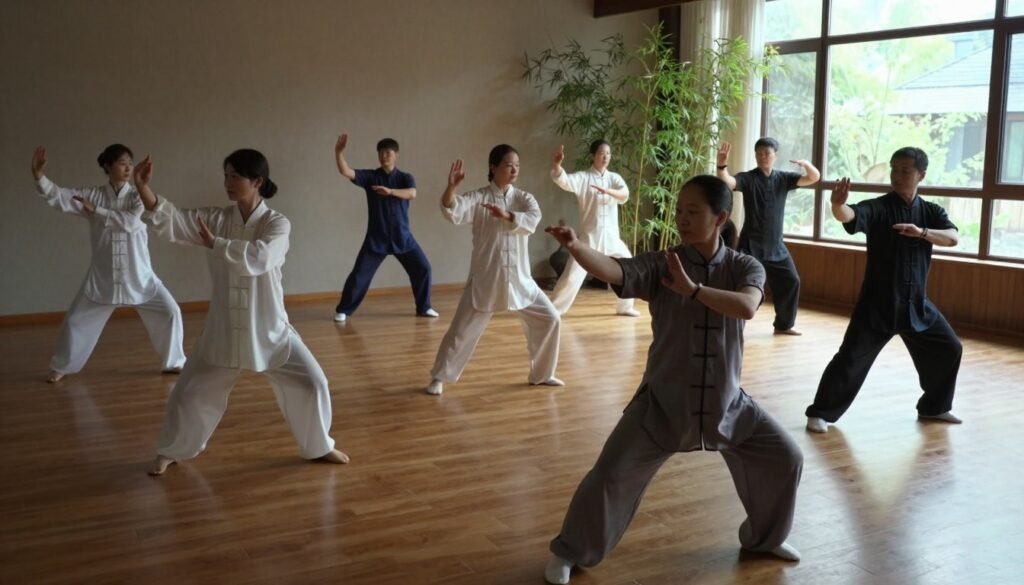
Creating a realistic weekly schedule for beginners
You do not need hours of free time to see results. A manageable weekly schedule might involve three sessions of twenty minutes each. Consistency is far more important than the duration of any single session.
Try to anchor your sessions to existing habits, such as practicing right after your morning coffee or before dinner. This makes your tai chi practice feel like a natural part of your day rather than an extra chore. Keep your initial goals small to avoid feeling overwhelmed.
Structuring a practice with warm-up, form work, and cool-down
A well-rounded session should always include three distinct phases to keep your body safe. Start with five minutes of gentle warm-ups to loosen your joints and prepare your muscles. This is essential for maintaining proper alignment during your movements.
- Warm-up: Focus on gentle neck rolls, shoulder rotations, and light leg stretches.
- Form Work: Dedicate the middle portion of your time to practicing specific movements or sequences.
- Cool-down: End with deep, slow breathing to help your nervous system transition back to a resting state.
Tracking comfort, consistency, balance, and gradual progress
Keeping a simple log can help you stay motivated as you learn new tai chi techniques. Note how your body feels after each session, paying attention to any changes in your balance or overall comfort. You might be surprised by how quickly your coordination improves when you track your small wins.
Remember that progress in your tai chi practice is rarely a straight line. Some days will feel easier than others, and that is perfectly normal. Focus on the joy of movement rather than perfection, and you will build a habit that lasts a lifetime.
Safety, Adaptations, and Instructor Quality
Engaging in a mindful movement practice requires a careful balance between personal ambition and physical safety. While these movements are generally gentle, understanding your own limits ensures that your tai chi practice remains a source of health rather than strain.
When to seek medical guidance before beginning tai chi
If you have pre-existing health conditions, such as heart disease, severe arthritis, or recent surgeries, it is wise to consult your physician first. A medical professional can provide specific advice on which tai chi techniques are appropriate for your current level of mobility. Always disclose any medications that might affect your balance or blood pressure to ensure your safety during class.
Modifying stances, depth, speed, and range of motion
One of the greatest strengths of this art is its inherent flexibility. You do not need to mimic an instructor’s deep, wide stances to gain the benefits of the movement. Instead, focus on maintaining a comfortable, upright posture that supports your joints without causing unnecessary tension.
Adjusting the speed of your movements allows you to maintain better control and stability. If a particular sequence feels too demanding, simply reduce the range of motion or perform the movement while seated. This approach honors the core tai chi philosophy of working with your body rather than against it.
Recognizing pain, dizziness, fatigue, and other warning signs
Your body provides constant feedback during your sessions. It is essential to distinguish between the mild muscle fatigue of a workout and actual pain. If you experience sharp pain, sudden dizziness, or a loss of balance, stop immediately and rest.
“The body is the primary teacher; listen to its whispers before they become shouts of injury.”
Evaluating an instructor’s training, communication, and cultural respect
Finding the right teacher is crucial for a positive experience. A qualified instructor should prioritize your safety while demonstrating a deep understanding of the history and cultural roots of the art. Use the following table to help you assess potential instructors.
| Criteria | What to Look For | Red Flag |
|---|---|---|
| Communication | Clear, encouraging, and patient instructions. | Dismissive of questions or concerns. |
| Adaptability | Offers modifications for different abilities. | Forces one-size-fits-all movements. |
| Cultural Respect | Acknowledges lineage and traditional roots. | Claims to have “invented” the art. |
| Supervision | Actively observes and corrects form safely. | Ignores students during the session. |
By choosing an instructor who values both safety and tradition, you ensure that your journey remains sustainable. Always remember that the goal is long-term well-being through consistent, mindful effort.
How to Evaluate Tai Chi Claims, Sources, and Comparisons
When you explore the many claims surrounding movement practices, it is vital to know how to separate fact from fiction. By learning to analyze the information you encounter, you ensure that tai chi deeper guides tradition with comparisons and research in a way that truly serves your health goals.
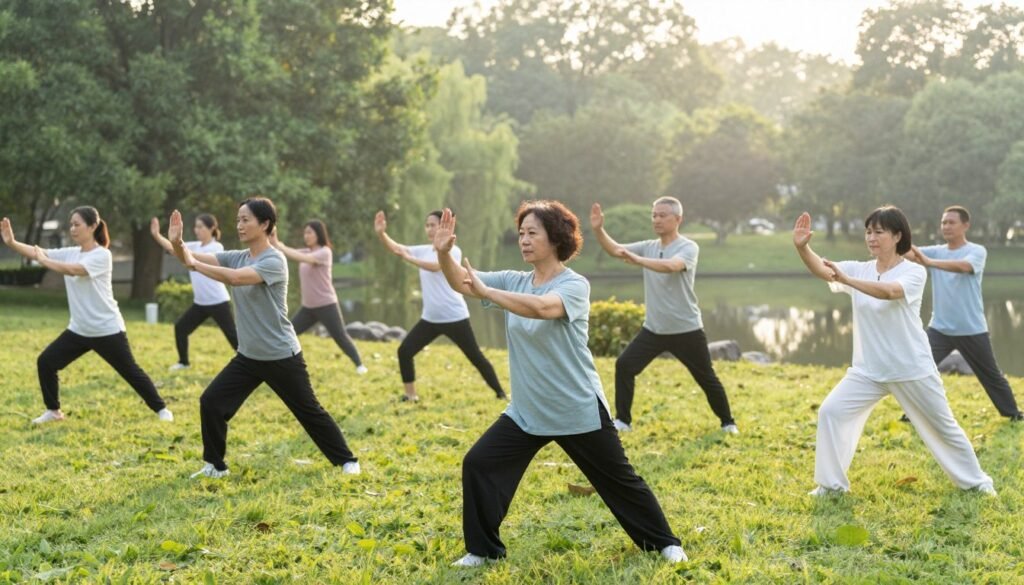
Distinguishing peer-reviewed research from testimonials
Personal stories can be inspiring, but they do not replace the rigor of scientific inquiry. A testimonial reflects one person’s unique experience, which may not apply to everyone else.
In contrast, peer-reviewed research undergoes scrutiny by independent experts before publication. This process helps filter out bias and ensures that the methodology meets professional standards.
Checking whether a study actually tests the claimed outcome
It is common to see bold headlines about health improvements, but you must look closer at the actual study design. For example, a study might report a 92.8% accuracy rate in error detection for a specific movement, yet that result might not translate to a general improvement in physical health.
Always ask if the researchers measured what they claimed to measure. If a study focuses on technical performance, it does not automatically prove that the practice provides specific tai chi benefits for chronic pain or cardiovascular health.
Comparing routines by intensity, duration, supervision, and population
Not all studies are created equal, and comparing different programs requires a careful eye. You should consider several key factors when reviewing evidence:
- Intensity and Duration: Does the study reflect a realistic schedule that you could maintain?
- Supervision: Were the participants guided by a qualified instructor, or were they practicing alone?
- Population: Does the study group match your age, fitness level, or health status?
Fair comparisons help you understand if a specific routine is right for your needs. By focusing on these variables, you can see how tai chi deeper guides tradition with comparisons and research to provide a clearer picture of what to expect from your own practice.
Making Tradition and Research Work Together in Daily Practice
Many practitioners find that combining time-honored traditions with modern evidence leads to a deeper, more sustainable practice. When you explore how tai chi deeper guides tradition with comparisons and research, you unlock a path that respects the past while embracing the benefits of today. This dual approach ensures that your routine remains both meaningful and effective for your specific health needs.
Preserving tai chi philosophy while using modern health goals
The core of tai chi philosophy remains rooted in the pursuit of harmony and internal energy flow. While you may practice to improve your blood pressure or mobility, you can still honor the tai chi history that shaped these movements. By keeping the original intent alive, you transform a simple exercise into a holistic ritual.
Modern health goals often focus on measurable outcomes like fall prevention or stress reduction. You do not have to sacrifice the meditative quality of the art to achieve these physical results. Instead, view your health objectives as a modern extension of the traditional desire for longevity and vitality.
Applying principles such as softness, continuity, and balance
Principles like softness and continuity are essential for both martial efficacy and physical therapy. When you focus on tai chi mindfulness, you learn to move with a relaxed structure that protects your joints. This intentional way of moving creates a foundation for better balance in your daily life.
Practicing tai chi meditation allows you to observe your weight shifts and breath patterns without judgment. These internal adjustments are the bridge between ancient wisdom and modern biomechanics. By maintaining a continuous flow, you encourage your nervous system to remain calm and responsive.
Using evidence to guide expectations rather than dictate experience
Scientific research provides a helpful framework for what you might expect from your practice. Studies often highlight improvements in stability and mood, which can motivate you to stay consistent. However, evidence should never dictate exactly what you must feel during your personal time on the mat.
Your experience is unique and may evolve differently than the data suggests. Use research to validate your progress, but allow your intuition to guide your daily movements. The following table illustrates how traditional goals align with modern health outcomes.
| Traditional Goal | Modern Health Outcome | Primary Benefit |
|---|---|---|
| Cultivating Qi | Improved Circulation | Enhanced Vitality |
| Rooting | Fall Prevention | Increased Stability |
| Mindful Flow | Stress Reduction | Mental Clarity |
| Softness | Joint Mobility | Pain Management |
Conclusion
Your journey toward mastery relies on blending historical wisdom with modern inquiry. By integrating these elements, you gain a clearer perspective on how tai chi deeper guides tradition with comparisons and research to support your personal growth.
Consistent tai chi practice offers a reliable way to improve your physical and mental well-being. You can unlock significant tai chi benefits by staying patient and adapting movements to your unique needs. Always prioritize safety and seek out qualified instructors to refine your form.
Engaging in regular tai chi meditation helps you cultivate lasting inner calm. This mindful approach transforms simple movements into a powerful tool for daily stress management. You will find that your focus sharpens as you deepen your connection to the practice.
Modern tools now exist to accelerate your learning curve. Data shows that specific systems can lead to 42% faster skill acquisition and 28.5% greater movement-quality improvement. These digital aids serve to complement traditional instruction rather than replace the vital role of human teachers.
Keep your expectations realistic as you explore these ancient arts. A steady, thoughtful approach ensures that your progress remains sustainable over the long term. Enjoy the process of discovery as you refine your skills and improve your overall quality of life.