
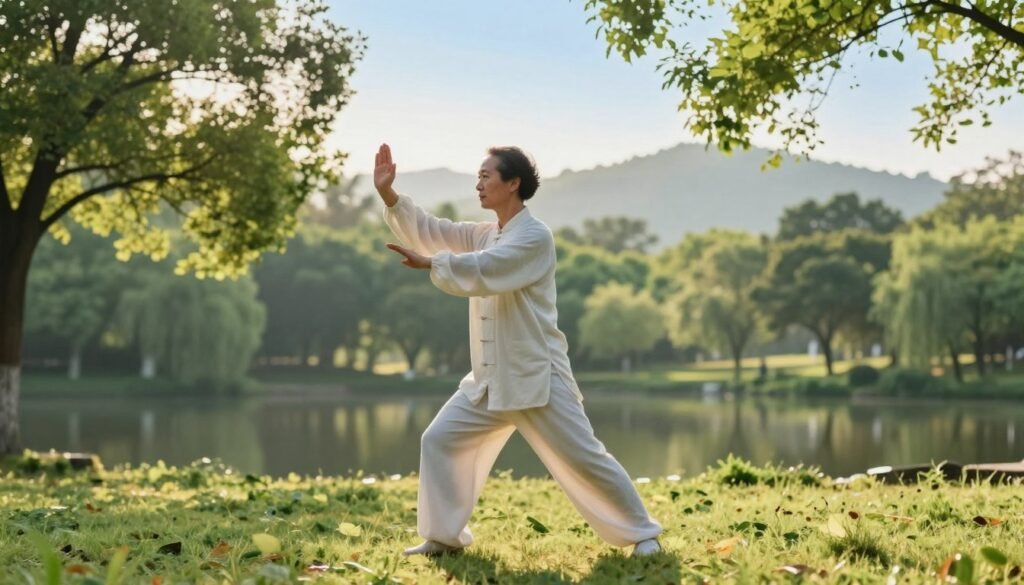
Did you know that falls are the leading cause of injury-related visits to emergency rooms for older adults in the United States? Maintaining stability is essential for long-term health, yet many people overlook simple ways to stay steady on their feet. Tai chi walking offers a gentle, effective solution that blends mindful movement with physical conditioning.
This practice focuses on slow, continuous motions rather than forceful exertion. By emphasizing relaxed muscles and natural breathing, it helps you build greater body awareness and confidence. Whether you are young or simply young at heart, this approach supports better posture and stress management.
While individual results vary, many practitioners find that these rhythmic steps improve their daily mobility. It is a practical way to connect your mind and body while enhancing your overall quality of life.
Key Takeaways
- Improves physical stability and reduces the risk of falls.
- Promotes deep relaxation through natural, rhythmic breathing.
- Enhances proprioception and spatial awareness in daily life.
- Supports stress reduction by encouraging a mindful state.
- Offers a low-impact exercise suitable for all fitness levels.
Why Tai Chi Walking Matters for Balance and Wellbeing
Transforming your daily stroll into a practice of awareness can change how you move through the world. By slowing down, you begin to notice the subtle mechanics of your stride. This intentional approach serves as a form of walking meditation, helping you cultivate a deeper sense of stability in your everyday life.
The connection between slow movement and body awareness
When you move at a slower pace, your brain receives clearer signals from your muscles and joints. This heightened state of proprioception allows you to feel exactly how your weight shifts from one foot to the other. You become more attuned to your alignment, which is essential for maintaining balance on uneven surfaces.
Regular practice helps you identify tension that you might otherwise ignore. By releasing this unnecessary effort, you create a more fluid and efficient way of moving. This connection between mind and body is the foundation for long-term physical health.
How mindful walking differs from an ordinary walk
Ordinary walking is often an automatic habit performed while we are distracted by thoughts or technology. In contrast, walking meditation requires you to focus entirely on the sensation of the foot touching the ground. You are not just moving from point A to point B; you are observing the entire process of each step.
This practice encourages you to notice your posture, the rhythm of your breath, and the environment around you. It turns a simple physical activity into a mental exercise that sharpens your focus. The following table highlights the key differences between these two approaches.
| Feature | Ordinary Walking | Tai Chi Walking |
|---|---|---|
| Primary Goal | Reaching a destination | Improving body awareness |
| Mental State | Often distracted | Focused walking meditation |
| Movement Style | Automatic and fast | Slow and intentional |
| Balance Focus | Minimal attention | Active weight shifting |
Who may benefit from Tai Chi Walking
This practice is highly accessible and offers advantages for a wide range of individuals. Older adults often find it helpful for improving stability and reducing the fear of falling. Beginners who are new to exercise appreciate the low-impact nature of these movements.
Furthermore, those who are recovering from injury or looking to rebuild confidence in their mobility can benefit greatly. Because it is gentle on the joints, it serves as an excellent entry point for anyone seeking a sustainable way to stay active. By integrating walking meditation into your routine, you can support your wellbeing at any stage of life.
How Tai Chi Walking Works as a Mind-Body Exercise
Tai Chi walking serves as a powerful mind-body exercise that transforms simple movement into a meditative practice. By integrating your breath and focus, you can turn every step into a purposeful act of balance. This approach helps you cultivate a deeper connection between your physical body and your mental state.
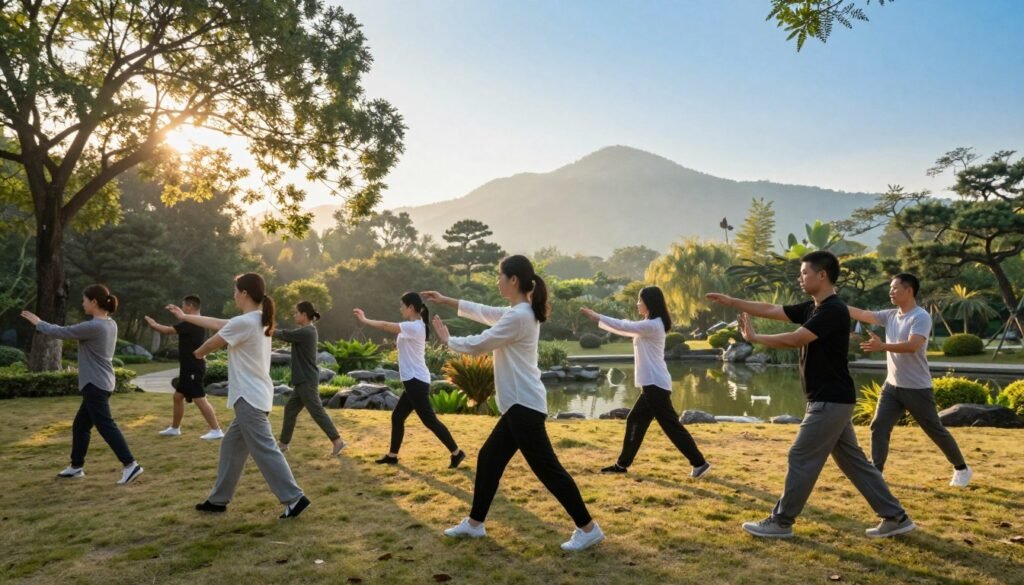
Combining posture, weight shifting, breath, and attention
Success in this practice relies on the harmony of four key elements. You must maintain an upright, relaxed posture while shifting your weight deliberately from one leg to the other. Coordinating your natural breathing with these movements helps anchor your attention to the present moment.
When you focus on the sensation of your feet touching the ground, you create a stable foundation. This intentional awareness prevents your mind from wandering. It turns a routine activity into a structured, rhythmic flow that supports both physical stability and mental calm.
The role of relaxation in controlled movement
Many beginners mistakenly believe that control requires tension. In reality, relaxed muscles are essential for fluid, circular movements. When you release unnecessary tightness in your shoulders and jaw, your body moves with greater ease and efficiency.
This state of “active relaxation” allows you to maintain balance without turning every step into a rigid performance. By staying soft, you can adapt more quickly to shifts in your environment. This gentle approach ensures that your movements remain smooth and sustainable over time.
How taiji walking relates to qi gong walking and martial arts walking
You may notice that terminology often overlaps between different movement traditions. For instance, qi gong walking shares many foundational principles with Tai Chi, as both emphasize the flow of energy and breath. While some styles focus primarily on health and meditation, others retain clear links to martial arts applications.
Regardless of the specific name, the core goal remains the same: to improve your internal coordination and physical poise. Because terminology varies, the most useful approach is one that matches your personal goals and physical needs. Whether you seek a mind-body exercise for stress relief or functional mobility, you can adapt these techniques to suit your lifestyle.
Balance Benefits from Slow, Intentional Steps
Slow, deliberate movement transforms the simple act of walking into a powerful tool for stability. By breaking down each stride into distinct phases, you gain greater control over your body’s alignment. This practice of mindful movement allows you to observe how your weight shifts and how your muscles engage to keep you upright.
Improving weight transfer from one leg to the other
Effective balance relies on the smooth transition of weight from one side to the other. When you move slowly, you can feel the subtle process of loading one leg while simultaneously unloading the opposite side. This gradual weight transfer prevents sudden shifts that often lead to stumbles or falls.
Focusing on this transition helps you maintain a steady center of gravity. As you practice, you will notice that your body becomes more efficient at distributing weight, which is a core component of mindful movement.
Training stability during single-leg support
Every step you take involves a brief moment where you balance on a single leg. By slowing your pace, you extend this period of support, which acts as a natural training exercise for your stabilizing muscles. This challenge encourages your body to make micro-adjustments that keep you centered.
- Strengthens the muscles around the ankles and knees.
- Enhances core engagement for better posture.
- Builds confidence during the transition phase of walking.
Developing better reactions to uneven or changing surfaces
As your proprioception improves, your body learns to react more effectively to the environment. You will find that you can navigate minor obstacles or changes in terrain with increased ease and grace. While you should start on flat, stable ground, this training eventually prepares you for more complex surfaces.
Consistent practice helps you develop a heightened awareness of your surroundings. Over time, your nervous system becomes better at processing sensory input, allowing for faster and more accurate physical responses. This proactive approach to balance ensures that you remain steady, even when the ground beneath you is not perfectly level.
Mind-Body Effects of Walking Meditation
Walking meditation transforms a simple stroll into a profound exercise for the mind and body. By shifting your focus inward, you can turn every step into a moment of deep mental clarity. This practice encourages you to move away from the automatic, hurried pace that often defines our daily lives.
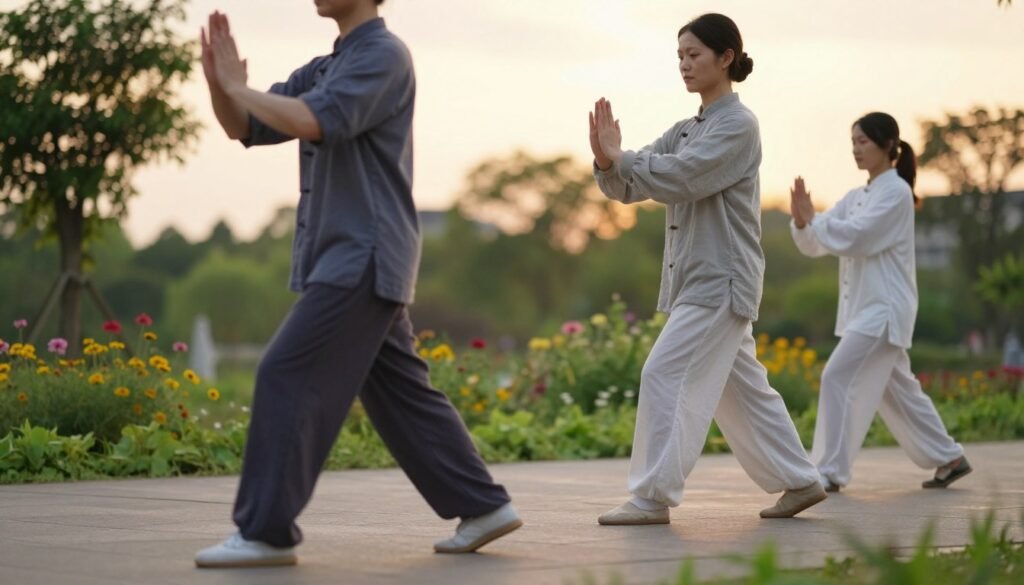
Using attention to reduce distracted movement
Most of us walk while thinking about our to-do lists or checking our phones. This distracted movement often leads to tension and poor posture. By practicing walking meditation, you learn to anchor your attention to the physical sensation of your feet touching the ground.
This intentional focus helps break the cycle of mental clutter. When you notice your mind wandering, you simply return your awareness to the rhythm of your stride. This simple act of returning is where the real growth happens.
Breathing patterns that encourage calm and focus
Many people worry about finding the “perfect” breathing technique, but simplicity is key here. Rather than using forced breath counts, allow your body to find its own natural rhythm. Natural breathing supports a sustainable pace that keeps you feeling relaxed rather than strained.
As you coordinate your breath with your steps, you will likely notice a sense of inner quiet. This synchronization acts as a gentle signal to your nervous system that it is safe to slow down. You are not trying to control the breath, but rather observing it as it flows in and out.
How mindful movement may support stress management
Gentle, repetitive movement is a powerful tool for managing the pressures of modern life. While this practice is not a replacement for professional mental-health care, it serves as a valuable complementary practice. Research suggests that mindful movement can significantly improve your overall quality of life.
By dedicating time to walking meditation, you create a sanctuary of calm in your day. This consistent, low-impact activity helps lower stress levels and fosters a more grounded perspective. Over time, you may find that this sense of balance carries over into your other daily responsibilities.
Tai Chi Walking and Everyday Mobility
The skills you develop through mindful movement extend far beyond the practice mat. By incorporating taiji walking into your routine, you create a foundation for better control during your busiest hours. This practice helps you become more aware of your body in space, which is essential for navigating the world around you.
Translating practice into safer turns, starts, and stops
Many falls occur during simple transitions, such as turning to answer a door or starting to walk after standing still. When you practice deliberate weight shifts, you learn to verify your stability before moving your next foot. This habit allows you to initiate movement with greater intention and stop with more grace.
By slowing down these transitions, you gain the ability to notice if you are off-balance before a potential stumble happens. This heightened awareness acts as a safety buffer during your daily errands. You will find that you can adjust your posture quickly if you feel unsteady on your feet.
Supporting smoother movement on stairs and sidewalks
Navigating uneven sidewalks or climbing stairs requires a high level of focus and coordination. Using the principles of taiji walking, you can learn to scan your environment visually while maintaining a steady, grounded pace. It is always wise to use handrails when they are available to provide extra support.
Instead of rushing, try to adapt your step size to the terrain. If you encounter a narrow or crowded path, remember to keep your weight centered and your movements fluid. This approach helps you manage obstacles without feeling overwhelmed or rushed.
Building confidence for daily activities
Confidence is not built overnight; it is the result of many small, successful movement experiences. As you continue to practice, you will likely notice that you feel more secure and capable during your regular activities. This progress is a natural outcome of training your body to move with purpose.
Remember that the goal is to improve your quality of life, not to achieve perfection. Each time you move with mindfulness, you are reinforcing your ability to stay active and independent. Trust the process and enjoy the newfound ease in your daily steps.
Preparing for Safe Tai Chi Walking
Creating a safe and welcoming environment is the foundation of any effective practice. When you prepare your body and your surroundings, you allow your mind to settle into the rhythm of taoist walking without unnecessary distractions. Taking these small steps ensures that your focus remains entirely on your internal alignment and breath.
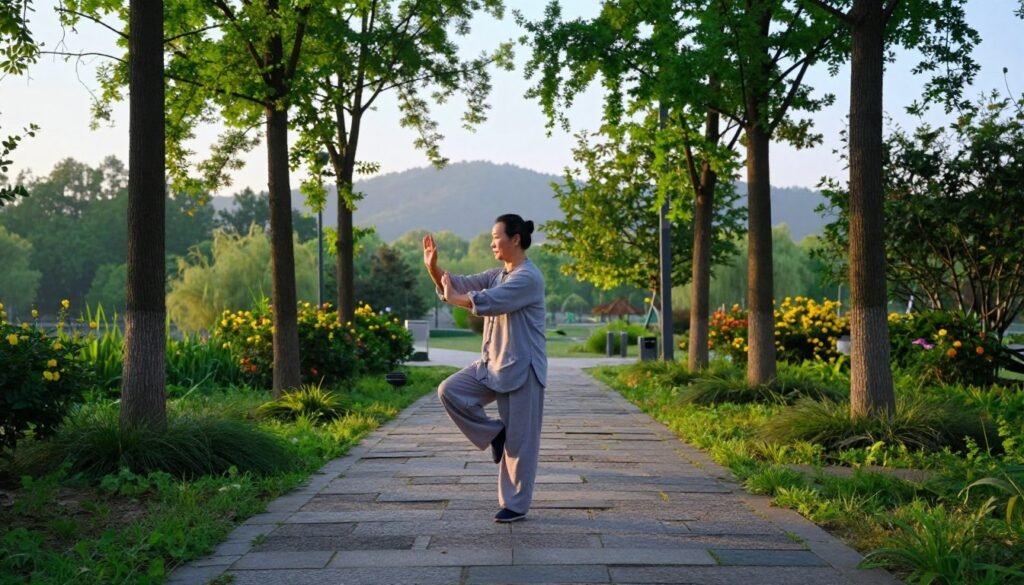
Choosing a level, uncluttered practice area
Your practice space should be a sanctuary of stability. Select a flat, level surface where you can move freely without the risk of tripping over household items. It is vital to remove loose rugs, electrical cords, or scattered clutter that might disrupt your flow.
“The journey of a thousand miles begins with a single step, but that step must be taken on solid ground.”
Selecting comfortable clothing and supportive footwear
When engaging in taoist walking, your attire should never restrict your range of motion. Choose loose-fitting, breathable fabrics that allow your joints to move naturally through every transition. Your clothing should feel like a second skin, supporting your comfort rather than hindering your posture.
Footwear is equally important for maintaining your balance. Look for shoes that provide firm support and a flat sole, which helps you feel the ground beneath you. Avoid shoes with thick, squishy heels that might throw off your alignment or force your weight forward.
Warming up the ankles, knees, hips, and spine
Before you begin your session, spend a few minutes gently waking up your body. Traditional taoist walking relies on fluid joints, so a light warm-up is essential to prevent strain. You can follow these simple movements to prepare your frame:
- Ankle circles: Gently rotate each foot to improve flexibility and stability.
- Knee bends: Perform soft, shallow knee bends to lubricate the joint.
- Hip rotations: Use slow, circular motions to release tension in the lower back and pelvis.
- Spinal alignment: Gently tilt your head and rotate your shoulders to encourage an upright, relaxed posture.
If you experience dizziness, chronic pain, or have specific musculoskeletal concerns, please consult with a healthcare professional before starting. Safety is your priority, and professional guidance can help you tailor these movements to your unique physical needs.
Posture and Alignment for a Stable Practice
Achieving a stable foundation begins with how you hold your body during movement. While the roots of this practice are found in martial arts walking, you do not need to be a fighter to benefit from its principles. The goal is to find a natural, upright structure that supports your weight without creating unnecessary tension.
Keeping the head, spine, pelvis, and knees comfortably aligned
Think of your body as a connected chain rather than a series of separate parts. Imagine a gentle string pulling the crown of your head toward the sky, which naturally lengthens your spine. When your head, spine, and pelvis are stacked, your weight distributes evenly through your frame.
This alignment allows your knees to track naturally over your feet. By keeping these areas organized, you create a stable base that makes every step feel secure. You should feel tall and alert, yet completely at ease.
Relaxing the shoulders while maintaining upright posture
Many people hold stress in their upper body, which can disrupt their balance. To counter this, consciously drop your shoulders away from your ears and let your arms hang loosely at your sides. Softness in the shoulders is a hallmark of effective movement.
Maintaining an upright posture does not mean being rigid or stiff. Instead, it means keeping your chest open and your breath deep. This relaxed state helps you stay responsive to the ground beneath you.
Using a soft knee bend without collapsing inward
A soft knee bend is essential for absorbing impact and maintaining control. When you move, keep your knees slightly flexed to act as natural shock absorbers. This is a core technique in martial arts walking that preserves your energy and protects your joints.
Be careful to keep your knees aligned with your toes to avoid collapsing inward. If your knees cave toward each other, you lose the structural integrity of your legs. Keeping them strong and aligned ensures that your movement remains fluid and safe throughout your practice.
Footwork That Builds Control and Confidence
Developing control starts from the ground up through intentional foot placement. By refining how you interact with the floor, you create a stable foundation that supports your entire body. This approach draws inspiration from traditional martial arts walking, where every movement is deliberate and grounded.
Placing the foot gently before committing weight
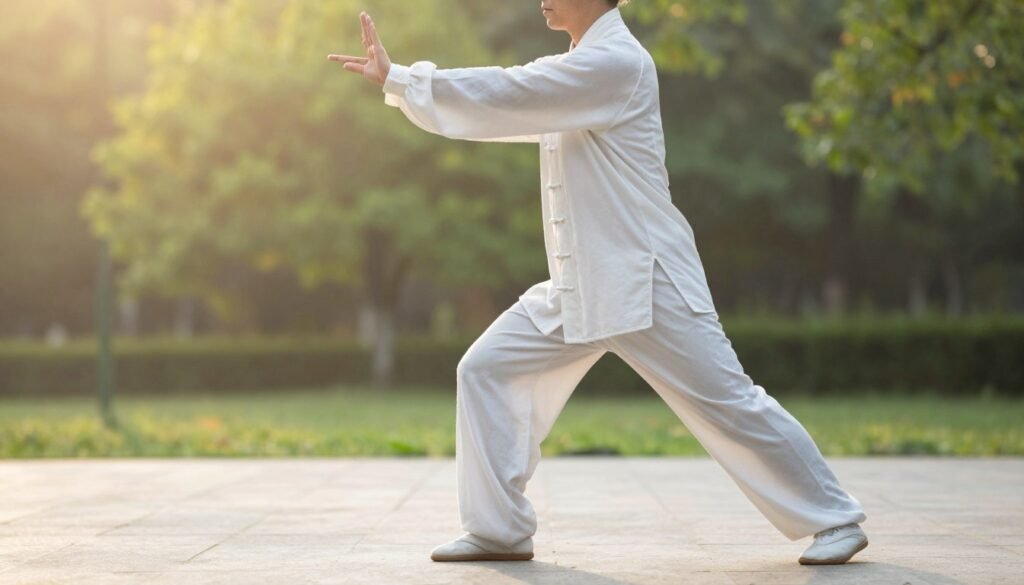
Before you shift your full body weight, practice placing your foot softly on the surface. Imagine you are testing the ground for stability before you fully commit to the step. This mindful contact allows your brain to register the terrain, which is essential for preventing slips or stumbles.
Always choose footwear that offers a nonslip grip and enough flexibility to feel the floor beneath you. Avoid taking steps that are too long, as reaching too far can compromise your center of gravity. Keep your movements compact to maintain total control.
Keeping the feet parallel and creating a comfortable base
A stable base begins with your feet positioned parallel to one another. This alignment helps distribute your weight evenly across your joints, reducing unnecessary strain on your knees and hips. When your feet are properly aligned, you naturally feel more secure and balanced.
Think of your stance as a wide, supportive platform rather than a narrow line. A comfortable base allows you to transition between movements without feeling wobbly. Consistency in your alignment is the key to building long-term confidence in your mobility.
Practicing forward, backward, and side-stepping patterns
Once you feel comfortable with basic placement, you can begin to explore different directions. Incorporating forward, backward, and lateral movements helps you adapt to the varied demands of daily life. This type of martial arts walking practice trains your body to remain stable regardless of the path you take.
Start with small, slow steps to ensure your form remains intact. As you gain proficiency, you will notice that your ability to navigate uneven surfaces improves significantly. Patience during these practice sessions will pay off in your everyday activities.
Breathing and Attention During Each Step
You can transform your daily walk into a powerful practice by simply adjusting how you breathe and where you place your attention. By focusing on mindful movement, you create a sense of calm that supports your physical stability throughout the day.
Coordinating natural breathing with a steady pace
Many people mistakenly believe they must follow a rigid inhale-and-exhale pattern during exercise. In reality, it is much more effective to allow your breath to remain natural and steady.
If you find your breathing becoming strained or shallow, simply pause and return to your normal rhythm. Comfortable breathing is the foundation of a sustainable practice, ensuring you stay relaxed while you move.
Using a simple attention cue for the landing foot
To keep your mind from wandering, use a practical anchor for your focus. Pay close attention to the sensation of your foot as it makes contact with the ground.
Feeling the sole of your foot meet the floor provides a grounding effect that enhances your balance. This simple cue helps you stay present, turning every step into an opportunity for mindful movement.
Releasing unnecessary effort in the face, hands, and jaw
Excess tension in your upper body can easily disrupt your center of gravity. It is common to hold stress in the face, hands, or jaw without even realizing it.
Take a moment to consciously soften these areas as you walk. When you release this hidden tension, your body naturally finds a more efficient alignment. Maintaining a relaxed expression and loose hands will significantly improve the quality of your mindful movement.
A Beginner Tai Chi Walking Practice
Starting your journey with tai chi walking requires only a small space and a calm mindset. You do not need special equipment to begin, though keeping a sturdy chair or wall nearby is a smart safety precaution. If you ever feel dizzy or experience pain, please stop your practice immediately and rest.
Settling into standing and sensing the ground
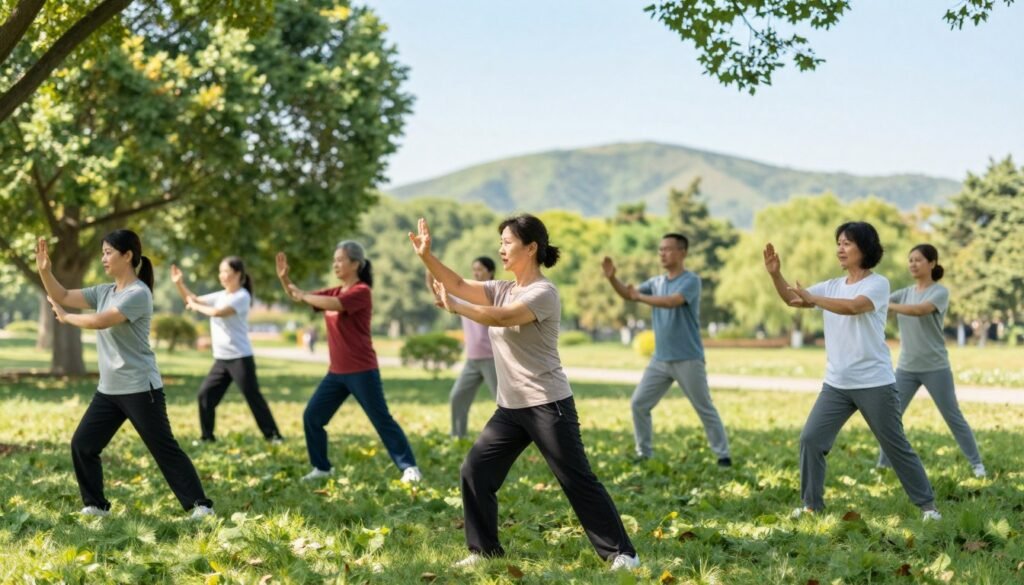
Begin by standing with your feet hip-width apart. Let your arms hang naturally at your sides and soften your knees. Focus your attention on the soles of your feet, feeling the firm contact with the floor beneath you.
Shifting weight before lifting the free foot
Slowly move your body weight toward your right leg. As you shift, notice how your left foot becomes light and unburdened. Keep your torso upright and avoid leaning to the side as you prepare to move.
Taking the first slow step with control
Once you feel stable, gently lift your left heel and then the toes. Place your left foot forward, touching the heel down first, followed by the rest of the foot. This tai chi walking technique ensures you maintain balance before transferring your full weight forward.
Repeating the step while maintaining relaxed breathing
Continue this sequence by shifting your weight onto the front foot and bringing the back foot forward. Remember to keep your breath deep and steady throughout the movement. You can follow these simple guidelines to build your confidence:
- Stay relaxed: Release tension in your jaw, shoulders, and hands.
- Move slowly: Focus on the quality of each step rather than speed.
- Stay present: Keep your mind on the sensation of your feet connecting with the ground.
Practicing tai chi walking in short, manageable sessions helps you develop better stability over time. By focusing on these small, intentional movements, you create a solid foundation for improved balance in your daily life.
Progressing from Basic Steps to Fluid Movement
Once you feel comfortable with your initial steps, you can begin to refine your movement for greater ease. Progression is not about moving faster, but about finding a deeper sense of harmony within your body. By focusing on the quality of your motion, you will naturally enhance the benefits of your qi gong walking practice.
Extending practice time without sacrificing quality
It is tempting to increase the duration of your sessions quickly, but consistency is far more valuable than length. Start by adding just a few minutes to your routine each week, ensuring that your breathing remains deep and your weight transfer stays smooth. If you notice your posture collapsing or your breath becoming shallow, return to a shorter duration until you feel steady again.
Maintaining relaxed alignment is the key to a sustainable practice. When you extend your time, pay close attention to the sensations in your feet and ankles. This mindful approach ensures that your body continues to benefit from every single step you take.
Adding gentle changes in direction
Once you have mastered forward movement, you can introduce subtle turns to your routine. Begin by practicing small, controlled pivots that allow you to change your orientation without losing your balance. These gentle shifts help you develop better spatial awareness and core stability.
Remember to keep your movements slow and deliberate during these transitions. By integrating intentional turns, you prepare your body for the varied movements required in everyday life. This practice builds the confidence needed to navigate your environment with grace and ease.
Practicing different surfaces and environmental conditions gradually
Your journey with qi gong walking should eventually move beyond the flat, predictable surfaces of your home. Start by practicing on slightly different textures, such as a low-pile rug or a smooth patio, before moving to more challenging terrain. Always prioritize safety by choosing areas that are free from clutter or tripping hazards.
As you gain confidence, you may explore outdoor environments during calm weather. Introducing these variables one at a time allows your nervous system to adapt to new sensory input. This gradual progression is essential for building long-term stability and functional strength.
| Phase | Focus Area | Goal |
|---|---|---|
| Weeks 1-4 | Basic Foundation | Consistent, relaxed breathing |
| Weeks 5-8 | Extended Duration | Maintaining form over 15 minutes |
| Weeks 9-12 | Dynamic Movement | Fluid turns and varied surfaces |
Adapting Tai Chi Walking for Different Abilities
You do not need perfect mobility to begin your journey with gentle, intentional movement. The core philosophy of taoist walking focuses on internal awareness and relaxation rather than achieving a specific athletic standard. By making thoughtful adjustments, you can enjoy the mental and physical rewards of this practice at any stage of your fitness journey.
Practicing beside a wall, counter, or sturdy chair
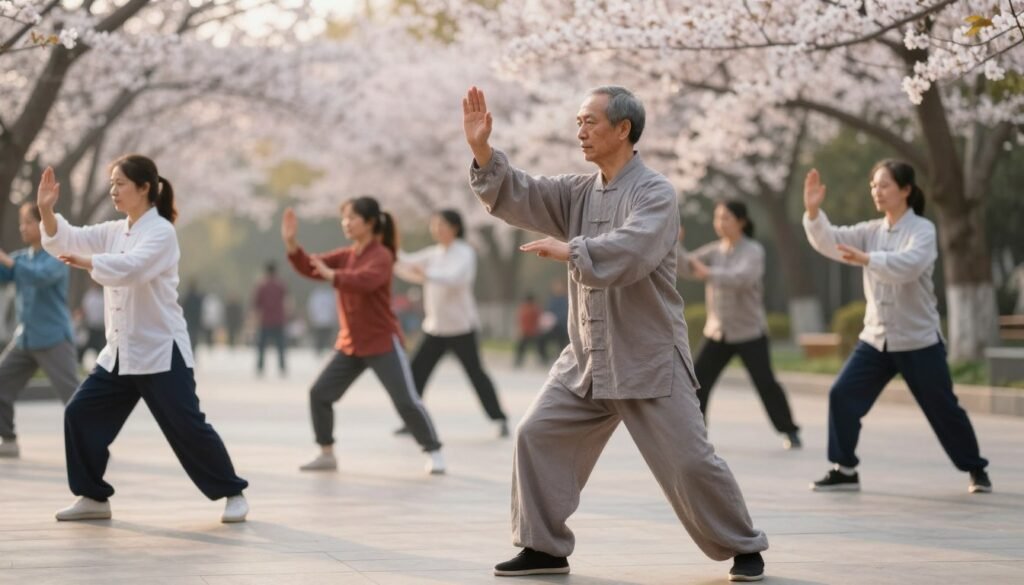
If you feel unsteady, using external support is a smart and safe way to build your confidence. Placing your hand lightly on a kitchen counter or the back of a sturdy chair provides a reliable anchor as you shift your weight. This allows you to focus on the rhythm of your steps without worrying about losing your balance.
- Keep your support surface at a comfortable height to avoid leaning.
- Use only as much pressure as you need to feel secure.
- Practice near a wall if you prefer a longer path for your movement.
Using shorter steps or seated preparation exercises
You can easily modify the intensity of your session by shortening the distance of each step. Smaller movements require less strength and coordination, making them ideal for beginners or those recovering from injury. If standing for long periods is difficult, you can perform the weight-shifting portion of the practice while seated in a firm chair.
Seated practice allows you to focus entirely on the flow of your breath and the alignment of your spine. You can practice lifting your heels and toes to mimic the footwork while remaining safely supported. This approach ensures that you maintain the mental benefits of the exercise while respecting your body’s current limits.
Modifying practice for joint sensitivity or limited mobility
It is important to listen to your body and avoid any movement that causes discomfort. If you experience joint sensitivity, simply reduce the depth of your knee bends and avoid forcing your range of motion. The goal of taoist walking is to cultivate ease, not to push through pain or physical strain.
Consider these tips for a more comfortable experience:
- Keep your joints soft rather than locked to reduce impact.
- Separate your breathing from your footwork if coordinating both feels overwhelming.
- Focus on the quality of your intention rather than the size of your movement.
Remember that consistency is more valuable than intensity. By adapting the practice to fit your specific needs, you create a sustainable routine that supports your long-term wellbeing and balance.
Common Mistakes That Limit Balance and Wellbeing Benefits
Refining your practice starts with identifying the subtle errors that disrupt your flow. While taiji walking is a gentle exercise, it is easy to fall into habits that limit your potential for improved balance. Recognizing these common hurdles allows you to adjust your approach and enjoy a more effective, relaxing experience.
Moving too quickly to notice weight transfer
Many beginners feel the urge to move at a normal walking pace. However, rushing prevents you from feeling the crucial shift of weight from one leg to the other. Slowing down is essential to build the stability required for better balance.
Overcorrecting posture or holding the breath
It is natural to want to stand perfectly straight, but overcorrecting can actually make your body rigid. When you force your posture, you lose the natural responsiveness needed for fluid movement. Furthermore, holding your breath creates unnecessary tension in the chest and shoulders. Always prioritize soft, rhythmic breathing to keep your energy flowing freely.
Looking down continuously instead of developing spatial awareness
Staring at your feet is a common habit that limits your ability to sense the environment. While it feels safer to watch where you step, this creates a narrow focus that hinders your overall balance. Try to keep your gaze soft and directed forward to improve your spatial awareness during your taiji walking sessions.
Practicing through pain or ignoring fatigue
Learning a new skill requires effort, but it should never cause sharp pain. If you feel unusual fatigue, dizziness, or discomfort, it is important to stop and rest immediately. Listen to your body and do not hesitate to reduce the intensity of your practice or use a wall for support. If you have underlying health conditions, consult with a medical professional to ensure your routine remains safe and supportive of your long-term wellbeing.
Building a Sustainable Tai Chi Walking Routine
Creating a lasting habit requires more than just willpower; it needs a thoughtful approach to your daily movement. By viewing this practice as a mind-body exercise, you can focus on the quality of your steps rather than the quantity of miles covered.
Choosing a realistic weekly schedule
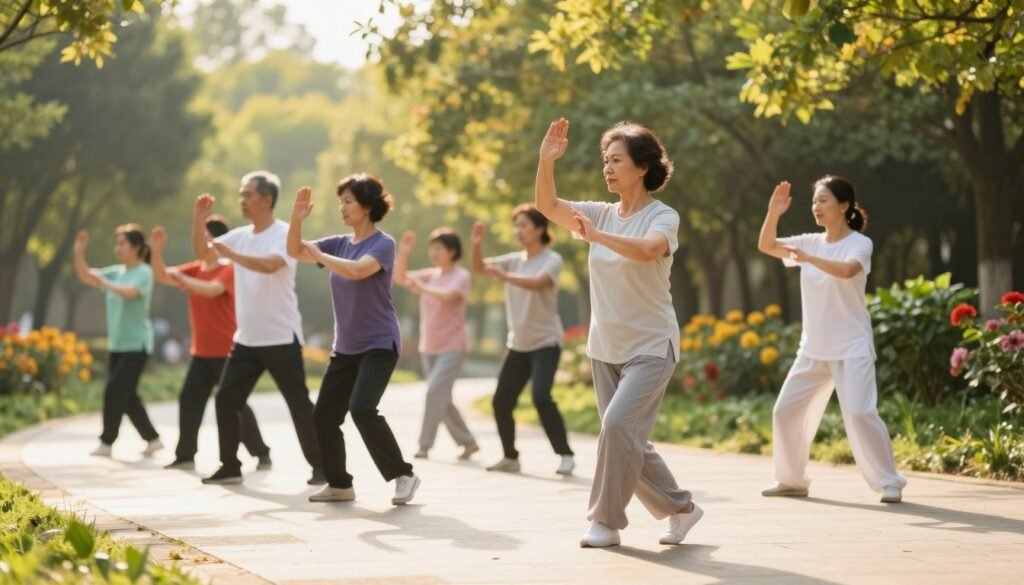
Consistency is far more effective than intensity when you are starting out. Aim for short, frequent sessions rather than one long, exhausting workout once a week. Even ten minutes of daily practice can help you build lasting stability and confidence.
Find a time of day when you feel most alert and least rushed. Whether it is a quiet morning session or a relaxing evening stroll, keeping a regular time helps anchor the habit into your lifestyle.
Combining Tai Chi Walking with strength, aerobic, and flexibility work
While this practice offers unique benefits, it works best as part of a well-rounded fitness plan. You can easily integrate this mind-body exercise alongside other activities like swimming, cycling, or light resistance training.
Strength training helps support your joints, while aerobic activities improve your heart health. By balancing these different types of movement, you ensure that your body remains resilient and capable for all of life’s daily demands.
Tracking balance, comfort, mood, and confidence over time
Avoid the temptation to measure your success by speed or distance. Instead, keep a simple journal to note how you feel during and after your practice. Pay attention to improvements in your balance confidence and your overall sense of comfort.
Notice if your mood feels lighter or if your movements feel more fluid as the weeks progress. Tracking these qualitative changes provides a much more accurate picture of your growth as you continue your journey with this mind-body exercise.
Conclusion
Mastering the art of mindful movement transforms how you interact with the world around you. By integrating slow stepping, weight shifting, and natural breathing, you create a foundation for lasting physical stability. This practice invites you to listen to your body while building strength and flexibility in every deliberate motion.
Consistent effort yields significant rewards for your daily confidence and stress management. You will notice improvements in your proprioception and overall coordination as you refine your technique. Focus on the quality of your movement rather than the speed of your progress.
Start your journey with short, safe sessions that fit your current ability level. Seek guidance from a healthcare professional if you experience dizziness or have specific mobility concerns. Your path to improved wellbeing is a personal process that grows stronger with every mindful step you take.