
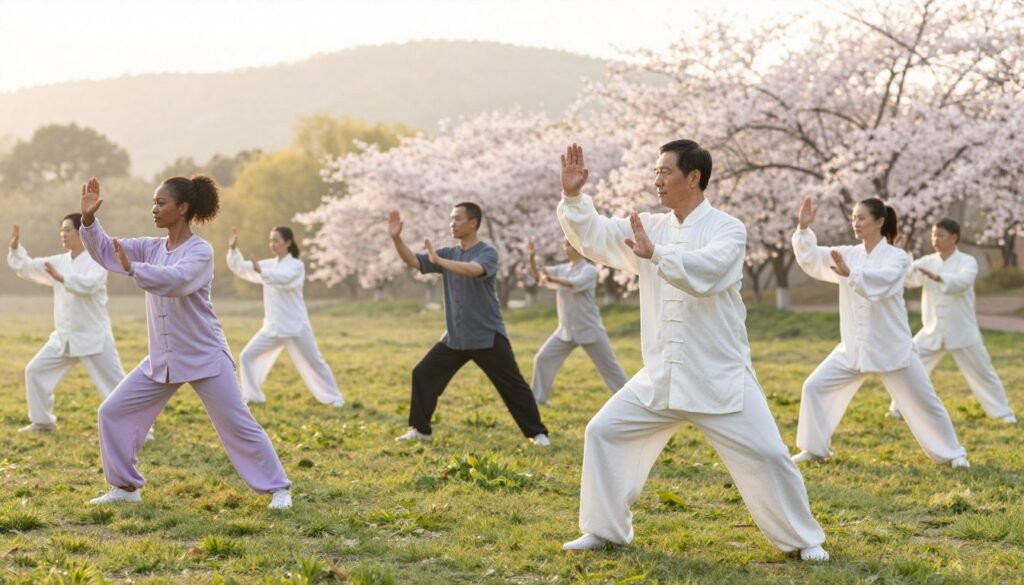
Did you know that over 60% of adults report feeling overwhelmed before they even leave their homes? Instead of a frantic start, you can transform your day with a gentle, moving meditation. This practice helps you find balance and clarity before the world demands your attention.
Incorporating a simple tai chi routine into your schedule offers a powerful way to awaken your body. These tai chi exercises combine deliberate movements with controlled breathing to sharpen your mental focus. You do not need special equipment or high fitness levels to begin this journey.
By dedicating just a few minutes to this morning tai chi practice, you support better circulation and posture. It is an effective tool for managing stress while preparing your mind for the tasks ahead. Experience how these fluid motions create a calm foundation for your entire day.
Key Takeaways
- Start your day with calm movement to reduce stress.
- Improve your mental focus through mindful breathing.
- No special equipment is required for these sessions.
- Enhance your physical circulation and daily posture.
- Build a sustainable habit for better long-term wellness.
Why Morning Tai Chi Can Improve Energy and Focus
Integrating ancient movement practices into your morning routine provides a unique boost to your daily energy. By engaging in morning tai chi, you encourage gradual circulation and joint mobility without the harsh impact of high-intensity workouts. This gentle approach helps you transition from sleep to wakefulness with a clear and steady mind.
How Slow, Continuous Movement Supports Alertness
The secret to feeling alert lies in the rhythm of your practice. Slow, continuous movements require your full attention, which naturally clears away morning brain fog. Focusing on the flow of your limbs helps synchronize your breathing with your physical actions, creating a state of calm alertness.
“The journey of a thousand miles begins with a single step.”
Why Tai Chi Practice May Reduce Morning Stress
Many practitioners find that these movements act as a buffer against the pressures of the day. By prioritizing tai chi benefits like deep, rhythmic breathing, you signal to your nervous system that it is safe to relax. This practice lowers cortisol levels, allowing you to approach your tasks with a sense of composure rather than urgency.
Realistic Benefits for Beginners and Experienced Practitioners
Whether you are new to the practice or a seasoned pro, the advantages remain consistent. Tai chi for beginners is highly accessible because it emphasizes posture and balance over complex choreography. As you progress, you will discover that tai chi benefits extend to improved coordination and deeper body awareness.
Experienced practitioners often use these sessions to refine their internal alignment and mental discipline. Regardless of your skill level, morning tai chi serves as a reliable tool for maintaining long-term health. Starting your day with tai chi for beginners techniques ensures that you build a sustainable habit that supports your physical and mental well-being.
Create a Safe and Comfortable Space for Morning Tai Chi
Setting up a calm and safe area is essential for getting the most out of your morning flow. Whether you are a seasoned practitioner or just starting, your environment directly influences your ability to relax and maintain focus. A well-prepared space allows you to move with confidence and ease.
Choosing Indoor or Outdoor Practice Areas
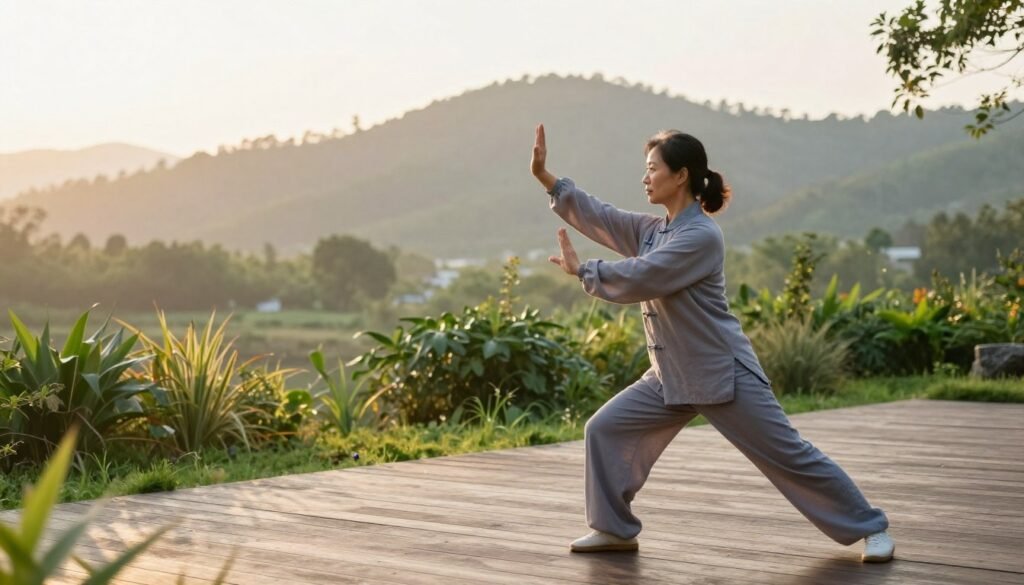
When selecting a spot for your tai chi practice, prioritize a flat, level surface. If you are indoors, a clear area in your living room or bedroom works perfectly, provided you have enough room to extend your arms fully without hitting furniture.
For those who prefer the outdoors, a patio, deck, or a flat patch of grass is ideal. Ensure the ground is stable and free of tripping hazards like loose stones or uneven roots. Consistency is key, so choose a location where you feel peaceful and undisturbed.
Selecting Supportive Clothing and Stable Footwear
Comfortable clothing is vital for unrestricted movement. Choose loose-fitting fabrics that allow your body to breathe and move naturally. Avoid restrictive waistbands or heavy materials that might hinder your flow.
Your choice of footwear is equally important for maintaining balance. Opt for flat, flexible shoes with a thin sole that allows you to feel the ground beneath you. Many people find that lightweight sneakers or dedicated martial arts shoes provide the stability needed for a safe session.
Adjusting the Routine for Limited Mobility or Balance Concerns
It is important to remember that tai chi for beginners is highly adaptable to your personal needs. If you have concerns about balance, you can practice near a sturdy chair or wall for extra support. Simply place your hand lightly on the surface to maintain your center of gravity.
You can also modify your movements by reducing the range of motion or practicing in a seated position. The goal is to focus on the quality of your movement rather than the size of the gesture. By making these small adjustments, you ensure that your routine remains a safe and rewarding part of your day.
Align Your Breathing, Posture, and Attention
Achieving a state of calm requires more than just physical motion; it demands a deliberate alignment of your body and mind. When you begin your tai chi practice, the goal is to create a seamless flow where your internal state matches your external form. By focusing on these core principles, you transform simple exercise into a restorative morning ritual.
Using Gentle Nasal Breathing Without Strain
Your breath acts as the engine for all tai chi movements. It is essential to breathe slowly and naturally through your nose, allowing the air to fill your lower abdomen rather than just your chest. Avoid the common mistake of holding your breath during complex transitions.
If you find yourself gasping or feeling lightheaded, simply slow down your pace. The rhythm of your inhalation and exhalation should remain smooth and continuous throughout the entire session. This gentle approach ensures that your body receives the oxygen it needs without unnecessary physical stress.
Relaxing the Shoulders, Jaw, Knees, and Hands
Tension often hides in the small corners of the body, preventing the energy from flowing freely. During your tai chi techniques, consciously check your shoulders to ensure they are dropped and away from your ears. Soften your jaw by slightly parting your teeth, and keep your hands loose as if you are holding a delicate object.
Your knees should always remain slightly bent, never locked, to maintain a stable base. This softness in your joints is what allows you to move with grace and agility. By releasing these common tension points, you allow your body to function as a unified, fluid system.
Keeping the Spine Tall While Staying Grounded
A tall, upright spine is the secret to maintaining balance and internal structure. Imagine a light string pulling the crown of your head toward the sky, which naturally lengthens your neck and back. While your upper body reaches upward, your feet should feel firmly rooted into the floor.
This combination of a lifted crown and grounded feet creates a sense of stability and poise. It allows you to shift your weight with confidence during your daily tai chi practice. Use the following table to identify how to shift from rigid habits to more effective, relaxed postures.
| Body Area | Common Tension Habit | Relaxed Tai Chi State |
|---|---|---|
| Shoulders | Raised and tight | Dropped and heavy |
| Knees | Locked or stiff | Soft and flexible |
| Jaw | Clenched teeth | Relaxed and neutral |
| Hands | Gripping or rigid | Soft and rounded |
Build a Morning Tai Chi Routine That Fits Your Schedule
Designing a morning tai chi habit starts with finding a rhythm that fits your unique lifestyle. You do not need a large block of time to experience the mental and physical rewards of this ancient art. By focusing on consistency rather than duration, you can easily integrate movement into your busy day.
Choosing a Five-, Ten-, or Twenty-Minute Practice
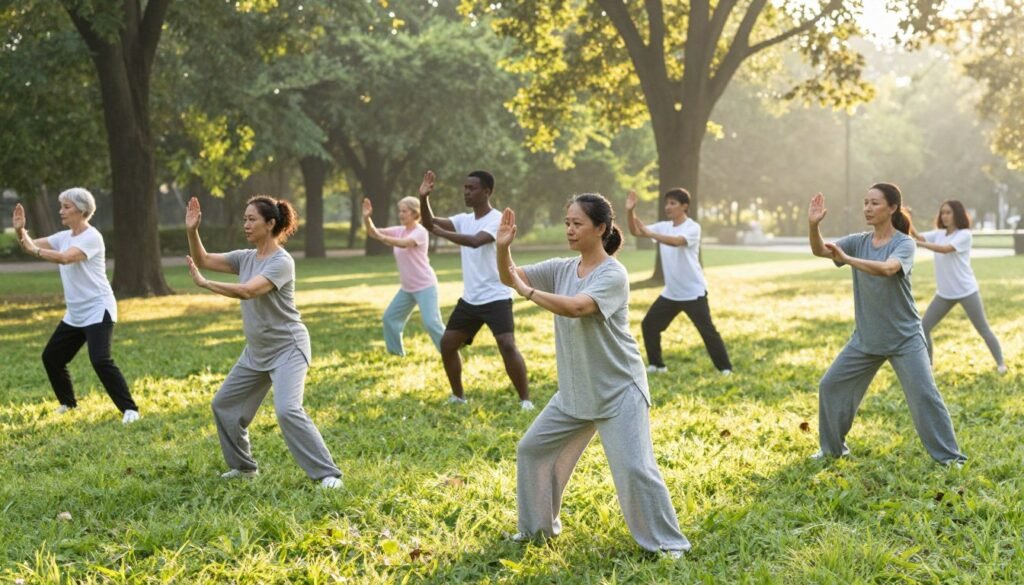
If you are new to this, start with a manageable five-minute session. This short window helps you build the habit without feeling overwhelmed by your schedule. As your comfort grows, you can gradually extend your tai chi practice to ten or twenty minutes.
Remember that quality always outweighs quantity. A focused five-minute session is far more effective than a distracted twenty-minute one. Listen to your body and choose a duration that leaves you feeling energized rather than drained.
Organizing Warm-Up, Tai Chi Movements, and Cooldown
A well-structured tai chi routine should always include three distinct phases. Begin with a brief warm-up to loosen your joints and prepare your muscles for movement. This ensures your body is ready for the gentle flow that follows.
Dedicate the middle portion of your time to your chosen movements. Finally, always conclude with a short, quiet cooldown to help you transition into the rest of your day. This simple structure keeps your practice safe and balanced.
Using Consistent Practice Cues to Form a Habit
Linking your session to an existing habit is a powerful way to ensure you never miss a day. Try practicing your morning tai chi immediately after waking up or before you check your phone. You might also choose to practice near a window where natural light can help you feel more alert.
When you use these consistent cues, your brain begins to associate the time of day with your movement practice. Over time, this makes your tai chi routine feel like a natural part of your morning. Stay patient with yourself as you build this rewarding new habit.
Wake Up the Body With Gentle Tai Chi Warm-Ups
Awakening your joints through mindful movement sets a positive tone for the entire day. By incorporating specific tai chi exercises, you can transition smoothly from the stillness of sleep to the activity of your morning. These gentle preparations help lubricate your joints and improve circulation without causing strain.
Loosening the Neck and Turning the Head Safely
Begin by standing with your feet shoulder-width apart and your spine tall. Slowly turn your head to the right, keeping the movement small and comfortable, then return to the center before repeating on the left side. Never force your range of motion; instead, focus on the sensation of release in your neck muscles.
Opening the Chest and Mobilizing the Shoulders
As you continue your tai chi movements, focus on expanding your chest to encourage deeper breathing. Gently roll your shoulders in slow, rhythmic circles to release any tension held from the night. This practice prepares your upper body for the more fluid motions that follow in your routine.
“The secret of health for both mind and body is not to mourn for the past, worry about the future, or anticipate troubles, but to live in the present moment wisely and earnestly.”
Waking Up the Wrists, Ankles, Hips, and Knees
It is essential to address your lower body and extremities to ensure overall stability. Gently rotate your wrists and ankles to wake up the smaller joints, then perform slow, controlled hip circles. Finally, bend your knees slightly to encourage blood flow, ensuring you avoid any bouncing or locking of the joints.
| Joint Area | Primary Benefit | Movement Focus |
|---|---|---|
| Neck | Reduces stiffness | Small, slow turns |
| Shoulders | Improves posture | Fluid, circular motion |
| Hips/Knees | Enhances stability | Controlled weight shifts |
| Wrists/Ankles | Increases flexibility | Gentle rotation |
By consistently practicing these tai chi exercises, you build a foundation of comfort and ease. Remember that the goal of these tai chi movements is to connect your breath with your physical form. This mindful approach ensures you start your day feeling refreshed and fully present.
Use Grounding Stances to Build Stability and Energy
Developing a strong base allows you to feel more secure and energized throughout your day. When you establish a firm connection with the ground, your body naturally releases unnecessary tension. This approach is particularly helpful for tai chi for beginners who want to build confidence before moving into more complex sequences.
Finding a Comfortable Natural Standing Position
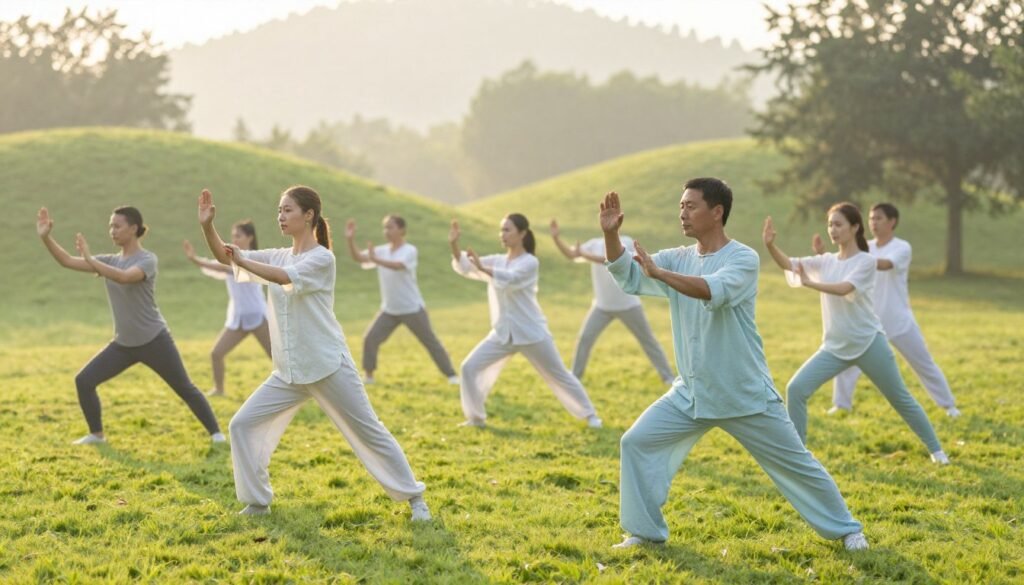
Begin by standing with your feet shoulder-width apart, keeping your toes pointed forward. Allow your arms to hang loosely at your sides while keeping your head upright as if suspended by a string. This neutral posture, often called Wuji, helps you center your mind and prepare for the movements ahead.
Practicing the Horse Stance Without Locking the Knees
The horse stance is a fundamental movement that builds leg strength and endurance. To perform this correctly, bend your knees slightly while keeping your back straight and your weight evenly distributed. It is crucial to avoid locking your knees, as this restricts blood flow and creates physical strain.
Think of this position as sitting on a high stool rather than a deep squat. By keeping your joints soft, you maintain a fluid connection to the ground. These types of tai chi poses are designed to be adaptable, so you should only sink as low as your current comfort level allows.
Shifting Weight Between the Feet With Control
Once you feel stable, begin to shift your weight slowly from one leg to the other. Keep your torso upright and avoid leaning or swaying your hips excessively. This controlled movement improves your proprioception and helps you understand how to distribute your body weight effectively.
Focus on the sensation of your feet pressing into the floor during each transition. Mastering these simple tai chi poses will provide a solid foundation for your practice. With consistent effort, you will notice improved balance and a greater sense of calm during your morning routine.
Practice Cloud Hands for Coordination and Mental Focus
Cloud Hands is a foundational movement that helps you find rhythm and grace in your morning routine. By integrating your limbs with your core, you create a sense of fluidity that carries over into your daily tasks. These tai chi movements are designed to calm the mind while waking up the body.
Learning the Side-to-Side Weight Shift
The secret to this practice lies in the legs. You begin by shifting your weight slowly from one foot to the other, keeping your knees soft and your hips level. This steady transfer of weight provides a stable base for your upper body to move freely.
As you move, imagine your feet are rooted into the ground like the base of a tree. This tai chi technique ensures that your balance remains centered throughout the entire motion. Consistency in your weight shift is the key to building long-term stability.
Coordinating Circular Arm Movements With the Legs
Once your legs feel steady, you can introduce the circular motion of your arms. Your hands should follow the movement of your waist, creating a smooth, continuous flow. It is important to avoid moving your arms and legs as separate parts.
Instead, let the rotation of your torso guide your hands through the air. This connection creates a unified rhythm that feels natural and effortless. When your body moves as one unit, you will notice a significant boost in your physical coordination.
Using the Gaze to Support Concentration
Your eyes play a vital role in maintaining your focus during these exercises. Keep your gaze soft and follow the movement of your leading hand without locking your neck. This gentle visual tracking helps you stay present and prevents unnecessary tension.
By keeping your eyes relaxed, you allow your mind to settle into a meditative state. This simple adjustment improves your concentration and makes the practice feel more restorative. The following table outlines how to refine your technique for better results.
| Focus Area | Common Mistake | Corrective Action |
|---|---|---|
| Weight Shift | Bouncing or bobbing | Keep hips at a constant height |
| Arm Motion | Moving arms independently | Rotate from the waist/core |
| Gaze | Staring intensely | Use a soft, wide-angle focus |
| Breathing | Holding the breath | Breathe naturally and deeply |
Try Opening and Closing Movements for Full-Body Awareness
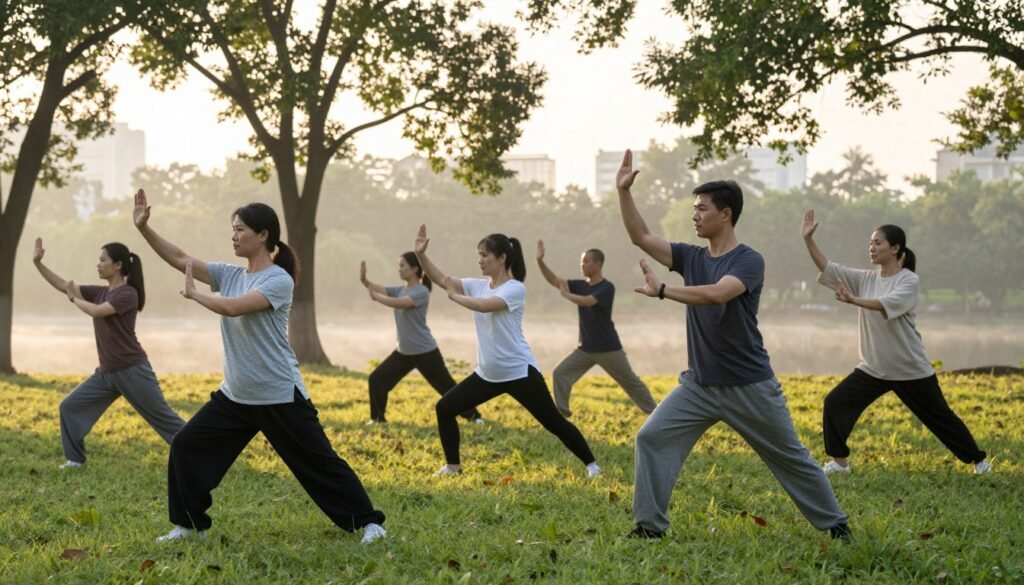
Opening and closing movements serve as the foundation for building full-body awareness in your morning practice. These tai chi exercises help you link your breath, torso, and limbs into one fluid motion. By focusing on these simple patterns, you can wake up your body gently while preparing your mind for the day ahead.
Expanding the Arms While Inhaling
Begin by standing in a comfortable, upright position with your feet shoulder-width apart. As you slowly raise your arms in front of you, inhale deeply and naturally through your nose. Imagine your chest opening wide as your arms expand outward, allowing your lungs to fill without any forced effort.
Returning the Hands While Exhaling
Once your arms reach a comfortable height, begin to lower them back toward your sides. Coordinate this downward motion with a slow, steady exhale. Keeping your breath natural is essential, as it prevents tension from building in your shoulders or neck during these tai chi movements.
Connecting Upper-Body Motion With Relaxed Footwork
Your upper body should never feel disconnected from your base. As you move your arms, ensure your knees remain soft and your weight stays grounded through your feet. These tai chi exercises are most effective when your legs provide a stable foundation for your arms to float through the air. By maintaining this connection, you cultivate a sense of harmony and balance that carries through your entire morning routine.
Add Brush Knee and Push for Strength and Direction
Mastering the Brush Knee and Push sequence allows you to cultivate strength through controlled, intentional movement. These tai chi movements are designed to build core stability and upper-body engagement without the need for external weights. By focusing on the path of your limbs, you create a harmonious flow that wakes up your entire body.
Learning the Brushing Hand Path
The movement begins by creating a clear path for your hand as it sweeps across the body. Imagine you are gently clearing space in front of you while keeping your shoulder relaxed and low. This specific motion helps you practice mindful coordination, ensuring that your arm does not move in isolation from your torso.
Coordinating the Forward Push With Weight Transfer
Effective tai chi techniques rely heavily on the seamless transition of weight from one leg to the other. As you push forward, your back leg should provide the power, while your front leg remains stable and grounded. This shift should feel natural, like water flowing from a high point to a low point, keeping your momentum steady and calm.
“In movement, seek stillness; in stillness, seek movement. The essence of the practice lies in the transition between these two states.”
To help you visualize the progression of this exercise, consider the following breakdown of the movement phases:
| Phase | Action | Focus Area |
|---|---|---|
| Preparation | Shift weight back | Rooting the feet |
| Brushing | Sweep hand across | Shoulder relaxation |
| Pushing | Extend forward | Core engagement |
Protecting the Knees and Lower Back During the Motion
Safety is paramount when performing these tai chi techniques to ensure long-term health. Always keep your knees soft and aligned with your toes to prevent unnecessary strain on the joints. By maintaining a neutral spine, you protect your lower back and allow your energy to circulate freely throughout your core.
Remember that comfort is the ultimate guide for your practice. If you feel any sharp tension, simply reduce the depth of your stance or the reach of your push. Consistent, gentle practice will naturally build your strength and coordination over time.
Use Tai Chi Poses to Refresh Posture and Breathing
Simple standing exercises offer a powerful way to reset your physical state each morning. By focusing on intentional alignment, you can unlock significant tai chi benefits that carry you through your daily tasks with ease. These movements help you maintain balance and energy without the need for intense physical strain.
Settling Into Wuji Standing for Quiet Focus
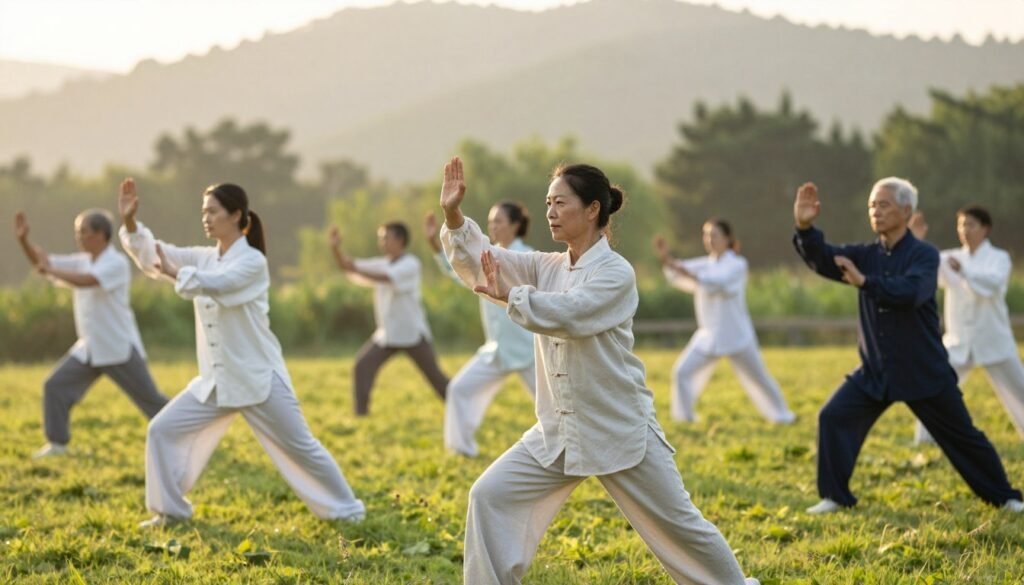
Wuji standing serves as the foundation for all tai chi poses. To begin, stand with your feet shoulder-width apart and keep your knees soft rather than locked. This position encourages a grounded feeling that calms the mind and prepares the body for movement.
Focus on keeping your spine tall as if a string is pulling the crown of your head toward the sky. Allow your breath to flow naturally through your nose. This quiet focus helps you become aware of your posture before you begin more active sequences.
Practicing Embrace the Tree With Relaxed Arms
Once you feel stable, transition into the “Embrace the Tree” posture. Imagine you are gently holding a large, round object in front of your chest. Keep your elbows slightly lower than your shoulders to ensure your upper body remains relaxed.
- Maintain a soft curve in your fingers and palms.
- Keep your chest open to allow for deeper, fuller breaths.
- Feel the connection between your hands and your core muscles.
This movement is excellent for building posture awareness without creating unnecessary tension. It teaches you how to hold space in your body while staying completely relaxed.
Using Single Whip Principles to Open the Torso
The principles of the “Single Whip” movement focus on gently rotating the torso to improve flexibility. By shifting your weight while keeping your hips stable, you create a natural stretch through the spine and shoulders. This practice is highly effective for reducing morning stiffness.
As you move, ensure your gaze follows your leading hand to maintain mental concentration. These tai chi benefits include improved coordination and a greater sense of physical freedom. Consistent practice of these movements will help you feel more agile and refreshed throughout your day.
Combine Tai Chi Exercises Into a Complete Morning Flow
You can transform your morning by linking individual movements into a seamless sequence. Instead of focusing on complex forms with hundreds of steps, you can build a personalized flow that fits your schedule perfectly. This approach ensures you stay consistent while enjoying the meditative benefits of your practice.
Starting With Centering and Joint Warm-Ups
Every effective tai chi routine begins by settling the mind and body. Start by standing in a neutral position to find your center, allowing your breath to slow down naturally. Once you feel grounded, move into gentle joint warm-ups to release any tension held from sleep.
Focus on loosening your neck, shoulders, and wrists with slow, circular motions. These tai chi exercises prepare your muscles for the more active parts of your session. By waking up your joints early, you protect your body and improve your overall range of motion.
Moving From Stances Into Gentle Weight Shifts
After warming up, transition into your foundational stances to build stability. Practice shifting your weight slowly from one leg to the other while keeping your spine tall and relaxed. This rhythmic movement helps you connect with the ground beneath you.
Maintaining a steady, controlled weight shift is essential for balance. As you move, keep your knees slightly bent and avoid locking them. These tai chi poses provide the structural support needed for the more fluid motions that follow.
Linking Cloud Hands, Opening and Closing, and Push Movements
Now, you can combine your favorite tai chi movements into a continuous, flowing sequence. Linking these actions creates a sense of harmony that carries over into your daily tasks. You might follow this simple structure for a ten-minute session:
- Opening and Closing: Begin with three repetitions to synchronize your breath with your arm movements.
- Cloud Hands: Transition into side-to-side weight shifts while coordinating your circular arm patterns.
- Brush Knee and Push: Integrate forward weight transfers to build strength and focus.
- Closing: Return to a neutral standing position to seal your energy and finish your practice.
By organizing your practice this way, you create a reliable habit that refreshes your body and mind. Remember that the quality of your movement matters more than the quantity of steps you perform. Stay present, breathe deeply, and enjoy the flow of your morning.
Adjust Morning Tai Chi for Different Energy Levels
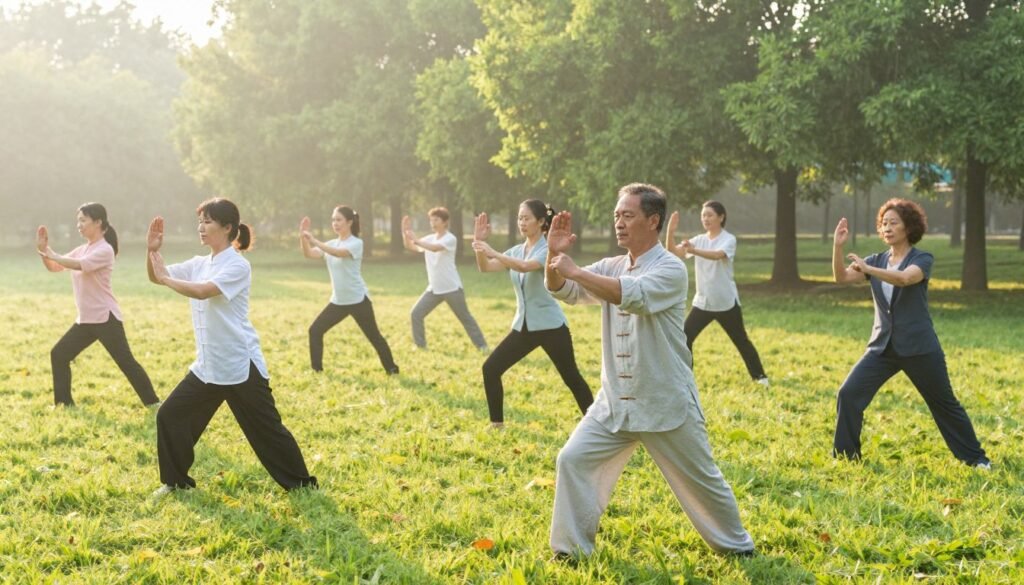
Your morning tai chi routine should adapt to how you feel when you wake up. Flexibility is the secret to maintaining a long-term practice that supports your well-being. By listening to your body, you can ensure that your daily movement remains a source of joy rather than a chore.
Using a Restorative Version on Tired Mornings
On days when you feel sluggish or sleep-deprived, prioritize gentle restoration over intensity. You do not need to complete a full, vigorous sequence to gain the benefits of your practice.
- Focus on smaller, slower movements that conserve your energy.
- Consider performing your tai chi routine while seated if standing feels too demanding.
- Incorporate longer pauses between movements to allow for deep, restorative breathing.
Adding More Repetitions When You Need a Stronger Wake-Up
When you wake up feeling refreshed and ready for a challenge, you can increase the intensity of your session. Adding more repetitions helps to build heat and improves your cardiovascular engagement.
Always prioritize proper alignment and relaxed breathing, even when you increase your pace. If you find yourself rushing or holding your breath, scale back the repetitions to maintain the meditative quality of your movements.
Modifying Practice for Desk-Related Stiffness
Many people experience tightness in the shoulders, hips, and wrists after long hours at a desk. You can use specific movements to address this tension without resorting to aggressive stretching.
Focus on these areas to improve your mobility:
- Shoulders and Spine: Use gentle rotations to release tension accumulated from sitting.
- Wrists and Ankles: Perform slow, circular motions to improve circulation and flexibility.
- Hips: Practice slow weight shifts to open the hip joints and encourage a more fluid gait.
By focusing on these targeted areas, you can effectively counteract the physical toll of a sedentary workday. Consistency in these small adjustments will help you feel more comfortable and energized throughout your morning.
Protect Your Joints and Practice With Good Technique
Your joints deserve care and attention as you explore new movements each morning. While tai chi practice is known for being gentle, maintaining proper form is essential to keep your body feeling refreshed and healthy. By focusing on alignment, you ensure that your daily routine remains a source of vitality rather than a cause of strain.
Recognizing the Difference Between Effort and Pain
It is vital to distinguish between the sensation of working muscles and the sharp signal of physical pain. Healthy effort often feels like a mild stretch or a gentle warmth in your limbs. This is a natural part of building strength and flexibility.
In contrast, sharp, stabbing, or persistent pain is a clear warning sign from your body. If you feel discomfort that does not fade after a few moments, you should stop immediately. Learning to listen to these subtle cues is a core skill for anyone new to tai chi for beginners.
Avoiding Locked Knees, Forced Turns, and Overreaching
One of the most important tai chi techniques involves keeping your joints soft and fluid. You should avoid locking your knees, as this restricts energy flow and puts unnecessary pressure on your ligaments. Always keep a slight, natural bend in your legs to stay grounded and stable.
Similarly, avoid forcing your body into deep twists or reaching beyond your comfortable range of motion. Your spine should remain tall and relaxed, not strained by aggressive turns. By staying within your personal limits, you protect your joints and improve the quality of your movement.
Knowing When to Stop and Seek Professional Guidance
Sometimes, your body may need extra support, especially if you have existing musculoskeletal conditions. If you experience dizziness, unusual symptoms, or pain that worsens during your session, please pause your tai chi practice. It is always wise to consult with a healthcare provider to ensure your movements are safe for your specific needs.
This is especially true for tai chi for beginners who may be taking medications that affect balance or coordination. A professional can help you adapt these tai chi techniques to suit your unique physical requirements. Remember, the goal is to feel better, so never hesitate to prioritize your long-term health over completing a specific movement.
Measure Progress Without Losing the Meditative Quality
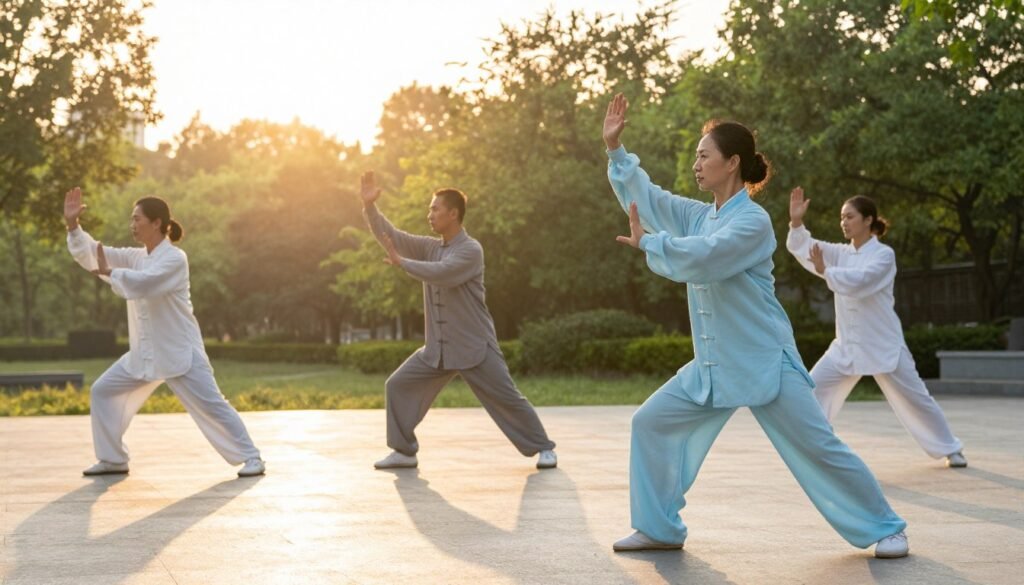
Measuring your development in tai chi exercises requires a shift in perspective from competition to personal awareness. Instead of treating your morning routine like a high-stakes workout, focus on the subtle shifts in your daily well-being. By keeping your approach gentle, you ensure that the meditative quality of your practice remains the priority.
Tracking Consistency, Comfort, and Morning Alertness
Consistency is the most reliable indicator of success when starting a new habit. You might keep a simple log to note how often you complete your sessions, which helps build long-term momentum. Tai chi benefits often appear as a steady increase in your morning alertness, making it easier to start your day with a clear mind.
Pay attention to your comfort levels during each movement. If you feel relaxed and at ease, you are likely performing the motions correctly. Avoid the urge to turn these sessions into a performance test, as the goal is personal growth rather than external validation.
Evaluating Balance, Coordination, and Breathing Control
As you continue your practice, you will notice improvements in your physical stability. You can evaluate your progress by observing how easily you shift your weight and maintain your posture during daily tasks. Improved coordination often translates into a more graceful way of moving through your home or office.
Breathing control is another key metric to monitor. When you can maintain deep, rhythmic breaths throughout your routine, you are effectively calming your nervous system. This sense of internal rhythm is a hallmark of effective tai chi benefits that extend well beyond your morning practice.
Increasing Practice Time Gradually
It is wise to increase your practice time slowly to allow your body to adapt. A 12-week period is a practical timeframe for noticing significant physical and psychological changes. Start with just five minutes and add small increments as you feel more confident in your movements.
| Progress Marker | Early Stage | Advanced Stage |
|---|---|---|
| Consistency | Occasional practice | Daily habit |
| Balance | Slight wobbling | Stable and grounded |
| Breathing | Shallow or forced | Deep and rhythmic |
| Alertness | Morning grogginess | Mental clarity |
Conclusion
Starting your day with a dedicated morning tai chi practice offers a simple path toward lasting wellness. By blending gentle movement with natural breathing, you create a foundation for physical balance and mental clarity that lasts throughout your busy day.
The true power of this practice lies in your commitment to consistency. You do not need hours of free time to experience meaningful tai chi benefits. Even a short, five-minute session helps wake up your muscles and centers your focus before you face your daily tasks.
Building a sustainable morning tai chi routine is about listening to your body rather than chasing perfection. You can adjust the intensity of your movements based on your current energy levels or mobility needs. This flexible approach ensures that your practice remains a source of joy and relaxation.
Prioritize awareness over rigid form as you explore these movements. Over time, you will likely notice improvements in your posture, stress management, and overall sleep quality. Stay patient with your progress and enjoy the quiet strength that comes from moving with intention every single day.
## FAQ
### Q: What are the primary tai chi benefits of starting a morning routine?
A: Engaging in morning tai chi helps transition the body from sleep to activity by improving circulation, alertness, and mental clarity. These tai chi exercises act as a moving meditation that reduces morning stress and promotes better posture without the physical strain often associated with high-impact workouts.
### Q: Is tai chi for beginners safe for people with limited mobility?
A: Absolutely. Tai chi for beginners is highly adaptable and can be performed with smaller ranges of motion or even while seated. If balance is a concern, you can use a sturdy chair or wall for support. Experts from the Tai Chi for Health Institute emphasize that these tai chi techniques should always feel comfortable and never forced.
### Q: What equipment do I need to begin a tai chi practice?
A: One of the best things about a tai chi practice is that it requires no special equipment. You simply need a clear, level space—either indoors or outdoors—and comfortable, loose-fitting clothing. For footwear, choose stable, flexible shoes that allow you to feel the ground, similar to those recommended by brands like Vivobarefoot or simple flat-soled sneakers.
### Q: How long should my morning tai chi routine last?
A: Your tai chi routine should fit your lifestyle. You can see results with as little as five to ten minutes of daily practice. As the habit becomes more natural, you might choose to extend your session to twenty minutes, incorporating a full sequence of tai chi movements including warm-ups and a quiet cooldown.
### Q: How should I breathe while performing tai chi poses?
A: The goal is to maintain gentle, natural nasal breathing. In many tai chi poses, such as Opening and Closing, you will inhale as your arms expand and exhale as they return to the center. Avoid holding your breath or forcing deep inhalations; instead, let your breath guide the pace of your tai chi movements.
### Q: What are some foundational tai chi techniques for balance?
A: Grounding is essential. Key tai chi techniques include maintaining “soft” knees (never locked), relaxing the shoulders, and keeping the spine tall. Stances like the Horse Stance or Wuji Standing help build lower-body strength and improve your awareness of weight distribution between your feet.
### Q: Can I practice these tai chi exercises if I have joint pain?
A: Yes, but you must listen to your body. While tai chi exercises are low-impact and often recommended by organizations like the Mayo Clinic for joint health, you should distinguish between gentle muscular effort and sharp pain. If a movement like Brush Knee and Push causes discomfort, reduce the depth of your stance or the reach of your arms.
### Q: How do I learn complex movements like Cloud Hands?
A: Break the movement down. For Cloud Hands, focus first on the side-to-side weight shift in your legs, then add the circular arm motions. By coordinating the upper and lower body gradually, you improve coordination and focus. These types of tai chi movements are designed to be continuous and fluid rather than rigid.
### Q: How can I track my progress with tai chi for beginners?
A: Rather than focusing on “perfection,” track how you feel. Notice improvements in your morning alertness, balance, and how easily you can maintain steady breathing. Consistency is the best metric; try to maintain your tai chi practice for at least 12 weeks to notice significant physical and psychological changes.
### Q: How do I adjust my tai chi routine if I’m feeling tired or stiff?
A: On low-energy mornings, focus on restorative tai chi poses like Embrace the Tree or gentle neck and shoulder circles. You can decrease the number of repetitions or use a more upright stance. If you have desk-related stiffness, spend more time on the warm-up portion of your tai chi routine to loosen the hips, wrists, and spine.