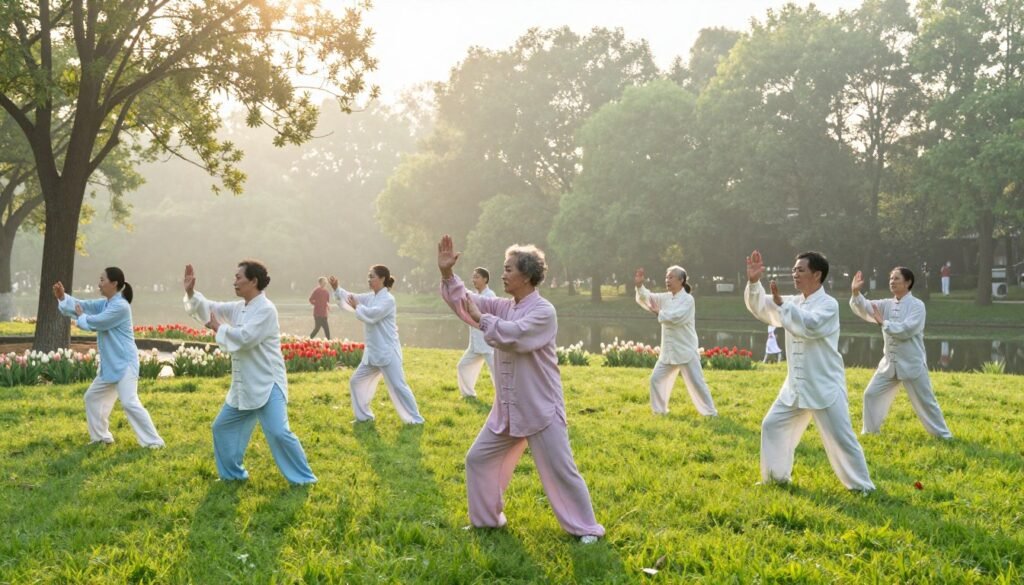
Did you know that one in four Americans aged 65 and older reports a fall each year? This startling statistic highlights a critical need for accessible, evidence-based movement routines. Practicing tai chi for seniors offers a gentle, effective way to regain your confidence and improve physical stability.
These slow, rhythmic movements focus on weight shifting and controlled breathing. By incorporating mindful posture into your daily life, you can reduce the risk of accidents while moving through your home. Many people find that these tai chi exercises for senior citizens provide a peaceful path to staying active without putting stress on the joints.
Our guide covers simple routines, seated variations, and essential safety tips to help you get started. Please remember that if you have significant health concerns, you should consult with your doctor before beginning any new fitness program.
Key Takeaways
- Falls are a major health concern for older adults in the United States.
- Mindful movement helps improve balance and physical confidence.
- Slow, controlled weight shifting is the foundation of these practices.
- Seated options make these routines accessible to everyone.
- Always speak with a medical professional before starting new exercises.
Why Tai Chi for Seniors Supports Safer, Easier Movement
Tai Chi offers a gentle way to reclaim your natural grace and physical confidence. By focusing on slow, deliberate movements, this practice helps you build the foundation needed for everyday tasks like walking, turning, and reaching. Many people find that these tai chi benefits translate directly into a more comfortable and active lifestyle.
How Slow, Controlled Motion Helps Daily Mobility
The core of this practice lies in shifting your weight with precision and control. When you move slowly, you become more aware of your body’s alignment and center of gravity. This heightened awareness is essential for maintaining stability during routine activities.
Mindful movement teaches your muscles to react more effectively to changes in your environment. By practicing these patterns, you improve your ability to navigate uneven surfaces or tight spaces with greater ease. Consistent practice helps you develop the coordination required to move through your home with confidence.
What Older Adults May Gain From Regular Practice
Engaging in this ancient art provides a wide range of tai chi health benefits that extend beyond simple physical movement. While research on fall prevention is ongoing and results can vary, many practitioners report feeling more secure on their feet. The practice encourages a calm mind, which is just as important as physical strength.
Regular sessions can lead to several positive outcomes for your overall well-being:
- Improved balance and postural stability during daily tasks.
- Greater flexibility in the joints, making it easier to reach and bend.
- Reduced stress levels through rhythmic, deep breathing.
- Increased mental clarity and focus on body positioning.
- Higher levels of self-confidence when performing routine chores.
It is important to remember that while these exercises are highly effective, they are not a cure-all for every health challenge. Instead, view them as a supportive tool to enhance your quality of life. By staying consistent, you can enjoy the gradual improvements that come with a dedicated practice.
Tai Chi Benefits for Balance, Strength, and Flexibility
Discovering the core physical advantages of this ancient practice can change how you move through your day. Many older adults report that tai chi benefits extend far beyond simple exercise, touching on every aspect of daily physical function. By focusing on slow, intentional movements, you can cultivate a body that feels more capable and resilient.
Improving Stability During Walking and Standing
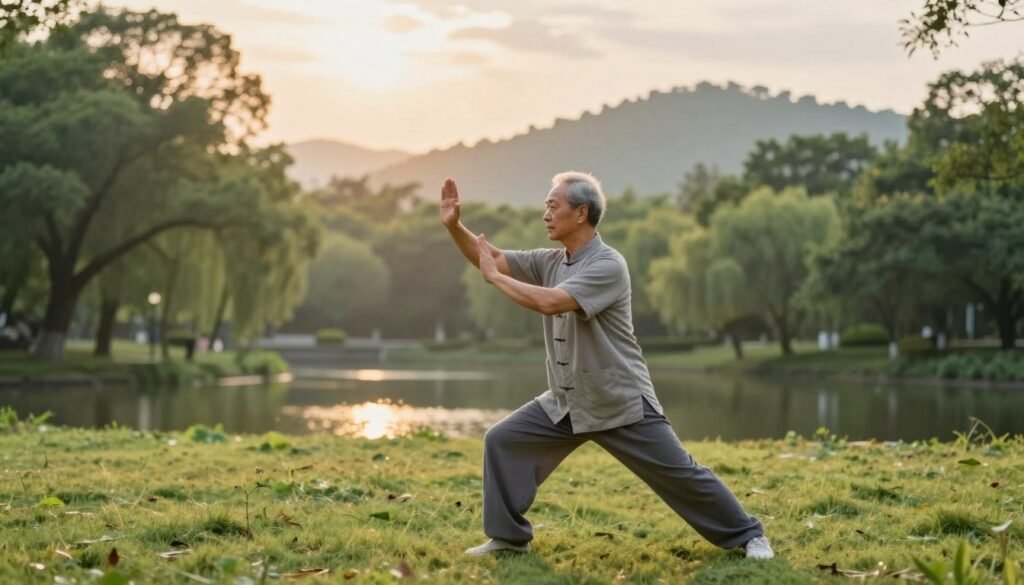
Stability is the foundation of confidence when you are out and about. Through the practice of shifting your weight from one leg to the other, you learn to maintain your center of gravity even while in motion. This constant awareness helps you stay steady during routine activities like walking to the mailbox or standing in a grocery line.
Mindful weight shifting is a key component of tai chi balance and flexibility. As you become more comfortable with these transitions, your body naturally adjusts to uneven surfaces. This reduces the risk of stumbles and helps you feel more secure on your feet.
Gently Building Leg and Core Strength
You do not need heavy weights or intense gym sessions to build functional strength. Tai chi uses your own body weight to engage the muscles in your legs and core through controlled, rhythmic movements. These exercises provide a gentle yet effective way to maintain the muscle tone necessary for daily tasks.
“Movement is the song of the body, and when we move with intention, we find a rhythm that sustains our strength for years to come.”
By keeping your knees soft and your posture upright, you support your skeletal structure while strengthening the surrounding muscles. This approach ensures that your body remains capable without the strain often associated with high-impact training.
Supporting Joint Mobility Without High Impact
Joint health is vital for maintaining an active lifestyle as you age. Instead of forceful stretching, this practice relies on smooth, continuous motions that encourage lubrication within the joints. This gentle repetition helps reduce stiffness and promotes a greater range of motion over time.
| Physical Goal | Tai Chi Approach | Expected Outcome |
|---|---|---|
| Balance | Weight shifting | Increased stability |
| Strength | Controlled posture | Core muscle support |
| Flexibility | Smooth movement | Reduced joint stiffness |
Focusing on these tai chi benefits allows you to move with more ease and less discomfort. By prioritizing consistency over intensity, you create a sustainable path toward better physical health. Embracing tai chi balance and flexibility is a wonderful gift you can give to your body every single day.
Health and Safety Checks Before Starting Tai Chi
Taking a moment to assess your physical readiness ensures a positive experience with your new practice. Whether you are exploring tai chi for seniors to improve your daily mobility or seeking tai chi for arthritis relief, your safety remains the top priority. A thoughtful approach helps you build confidence while protecting your joints and overall health.
When to Speak With a Doctor or Physical Therapist
Before starting any new exercise program, it is wise to consult with your healthcare provider. This is especially important if you have a history of recent falls, unexplained fainting, or persistent chest pain. Professionals can offer personalized guidance based on your specific medical needs.
You should also seek advice if you live with neurological conditions, experience numbness in your feet, or struggle with significant balance disorders. A physical therapist can help you identify which movements are safe for your current level of strength. They may provide specific modifications to ensure your routine remains gentle and effective.
Choosing Between Standing, Seated, and Supported Practice
You do not need to stand for the entire duration of a session to gain the benefits of this practice. Many beginners find that starting with a chair or a sturdy countertop provides the necessary stability to learn the movements correctly. You can transition to standing as your confidence and balance improve over time.
| Practice Mode | Best For | Primary Benefit |
|---|---|---|
| Seated | Limited mobility | Joint range of motion |
| Supported | Balance concerns | Increased stability |
| Standing | Advanced practice | Full body coordination |
Recognizing Pain, Dizziness, and Overexertion
Learning to listen to your body is a fundamental skill in any wellness journey. If you feel sharp pain, sudden dizziness, or unusual breathlessness, you must stop immediately. These are clear signals that your body needs a break or a change in intensity.
“True progress in movement comes from patience and awareness, not from pushing past your body’s natural limits.”
Avoid exercising when you feel unusually tired or lack control over your movements. It is always better to perform shorter, consistent sessions than to risk injury by overexerting yourself. Remember that consistency and comfort are the keys to long-term success in your practice.
Setting Up a Comfortable Tai Chi Practice Space
You can transform any corner of your home into a sanctuary for gentle movement with just a few simple adjustments. Prioritizing senior exercise safety ensures that your focus remains on your breathing and flow rather than your surroundings. A clear, prepared space allows you to move with confidence and ease.
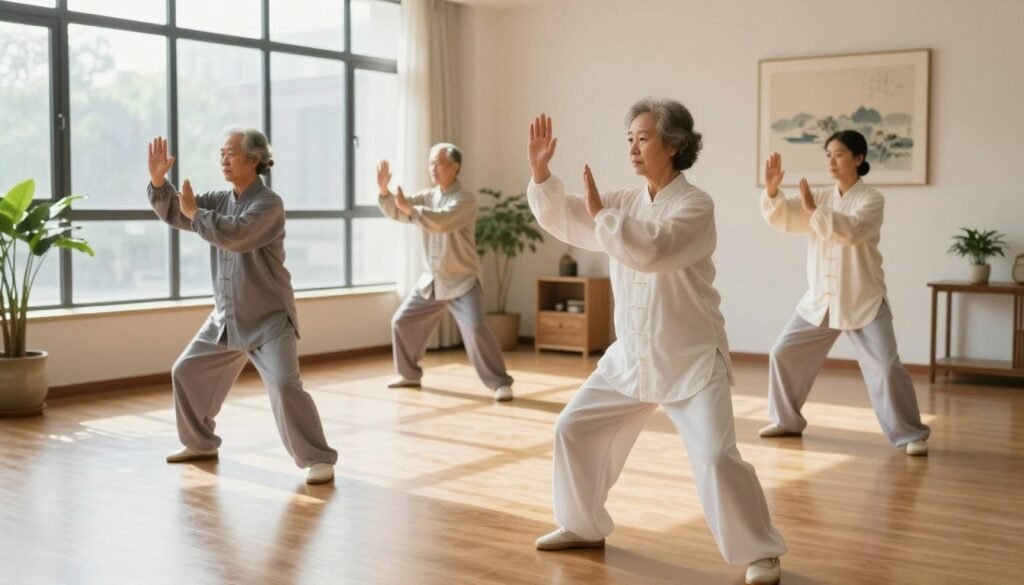
Selecting Supportive Shoes and Comfortable Clothing
Wearing the right gear is essential for maintaining balance during your sessions. Choose breathable, loose-fitting clothing that allows your body to move without restriction. Avoid long, flowing fabrics that might catch on furniture or cause you to trip.
Your footwear should provide a firm grip on the floor to prevent sliding. Look for sneakers with a flat, non-slip sole and adequate arch support. Proper shoes are a foundational element of a safe and supported Tai Chi practice.
Using a Chair, Countertop, or Wall for Stability
If you are just beginning, having a reliable point of contact can provide immense peace of mind. A sturdy, armless chair is an excellent tool for seated exercises or as a steady anchor while standing. You might also utilize a kitchen countertop or a clear wall space to help maintain your balance during weight shifts.
“The journey of a thousand miles begins with a single step, but that step is much safer when you have a steady hand to guide you.”
Removing Tripping Hazards and Improving Visibility
A clutter-free environment is the best way to prevent accidental falls. Take a moment to clear away loose area rugs, electrical cords, and small objects from your path. Ensure your practice area is well-lit, as shadows can sometimes obscure potential obstacles on the floor.
Whether you choose to practice indoors or outdoors, always check the conditions before you begin. Avoid areas with uneven ground or poor weather, such as high winds or extreme heat. By maintaining a clean and stable environment, you ensure that your supported Tai Chi practice remains a relaxing and beneficial part of your daily routine.
Tai Chi Breathing Techniques for Relaxed Movement
Relaxed movement begins with a calm and steady flow of air. When you practice, your breath acts as a bridge between your mind and your body. These tai chi breathing techniques are designed to support your comfort rather than serve as a difficult performance challenge.
Breathing Naturally Through the Nose
The most important rule is to keep your breathing natural and easy. You should always inhale and exhale through your nose, keeping your mouth gently closed. This method helps to warm and filter the air before it reaches your lungs.
Never hold your breath or force your lungs to expand beyond what feels comfortable. If you feel any tension or dizziness, simply return to your normal, resting breath. Your body knows how to breathe best when you stop trying to control it too strictly.
Pairing Inhalation and Exhalation With Motion
As you move, you will begin to coordinate your breath with your physical actions. This is often referred to as diaphragmatic breathing, where you focus on the gentle expansion of your lower abdomen during inhalation.
Try to follow these simple guidelines to keep your flow smooth:
- Inhale as you open your arms or move into a starting position.
- Exhale as you push, press, or return to a resting stance.
- Keep your movements slow to match the natural length of your breath.
A Simple Seated Breathing Practice for Beginners
You can start practicing these skills while sitting in a sturdy, upright chair. This position allows you to focus entirely on your breath without worrying about your balance.
Follow these steps to begin your session:
- Sit tall with your feet flat on the floor and your shoulders relaxed.
- Place your hands gently on your lap and close your eyes if you feel comfortable.
- Inhale slowly through your nose, feeling your belly rise like a soft balloon.
- Exhale gently, letting your shoulders drop and your body soften.
Repeat this cycle for a few minutes to center your thoughts. Consistency is more important than intensity, so enjoy the quiet stillness of each breath.
Gentle Warm-Up Movements for Older Adults
Starting your practice with gentle movements helps ensure your body feels ready and relaxed. A consistent tai chi warm-up acts as a bridge between your daily activities and your focused exercise time. By moving slowly, you allow your muscles to release tension and prepare for more fluid motions.
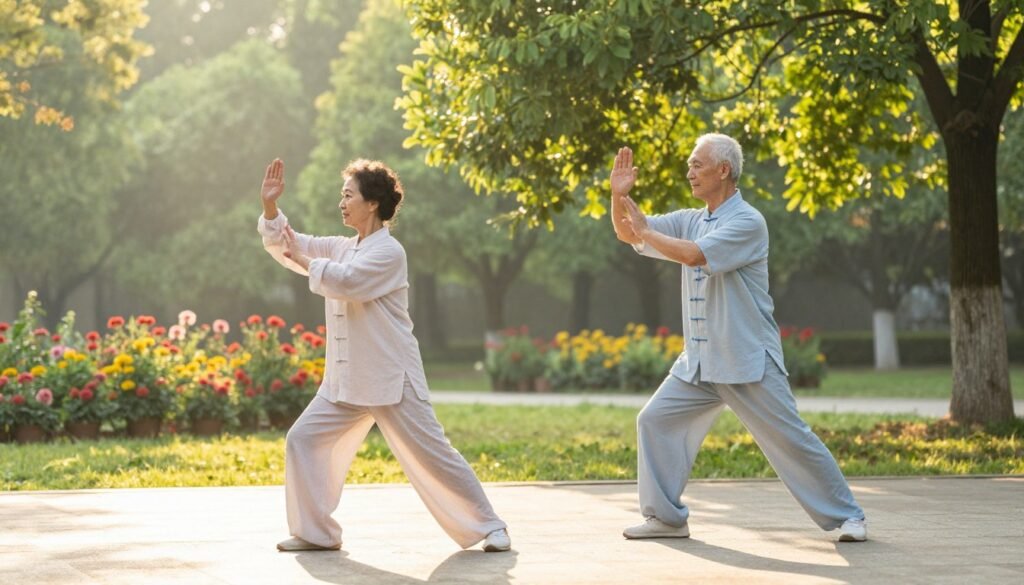
Waking Up the Ankles, Knees, Hips, and Shoulders
Begin by standing near a sturdy chair or wall for support if you feel unsteady. Gently rotate your ankles in small circles, then move to your knees by performing shallow, soft bends. These gentle mobility exercises help lubricate the joints and improve your overall range of motion.
- Shoulder rolls: Lift your shoulders toward your ears and roll them back slowly.
- Hip circles: Keep your feet wide and move your hips in a small, controlled circle.
- Ankle taps: Gently tap your toes to wake up the lower legs.
Shifting Weight Without Straining the Joints
Weight shifting is a core skill that builds balance and confidence. As you move from side to side, aim to place approximately 70% of your body weight over the supporting leg while keeping the other foot light. Always keep your knees soft and avoid locking them, as this protects the joint from unnecessary pressure.
If you feel any discomfort, reduce the distance of your shift. Using a chair for balance during this tai chi warm-up allows you to focus on the sensation of weight moving through your feet. Remember to move at a pace that feels natural and steady for your body.
Loosening the Neck and Upper Back Safely
Tension often hides in the neck and shoulders, so releasing this area is vital for comfort. Instead of rotating through your hips, focus on turning gently from your torso. This mindful approach protects your lower back while still providing a good stretch for your upper body.
Keep your chin tucked slightly to maintain a long, straight spine. If you feel dizzy or strained, stop immediately and return to a neutral, resting position. By prioritizing safety, you ensure that your practice remains a positive experience every single day.
Foundational Tai Chi Stance and Posture
A solid foundation begins with simple adjustments to your natural posture. By learning how to stand with intention, you create a base that supports tai chi balance and flexibility throughout your entire routine. This approach helps you feel more secure in your body during daily activities.
Standing With Soft Knees and Relaxed Shoulders
Begin by placing your feet about shoulder-width apart. Keep your knees slightly bent, which we call soft knees, to avoid locking your joints. This small adjustment prevents strain and allows your legs to act as natural shock absorbers.
Let your shoulders drop away from your ears. Many people hold tension in their upper body without realizing it. By consciously relaxing your shoulders, you allow your breath to flow more freely and improve your overall tai chi posture.
Keeping the Head, Spine, and Pelvis Aligned
Imagine a gentle string pulling the crown of your head toward the sky. This simple cue helps lengthen your spine without creating stiffness. Keep your chin tucked slightly to maintain a natural, comfortable line through your neck.
Your pelvis should remain neutral, neither tucked too far under nor pushed out. Think of your torso as a stable pillar that supports your movement. When your head, spine, and pelvis are aligned, you move with much greater ease and grace.
Distributing Weight to Improve Balance Awareness
Before you take a step, practice shifting your weight slowly from one foot to the other. Notice how the pressure changes under your soles as you move. This practice builds the tai chi balance and flexibility needed for more complex movements later on.
Developing this awareness helps you feel grounded and secure. When you understand where your weight sits, you gain confidence in your ability to move safely. Use the following table to check your alignment during your practice.
| Body Part | Common Mistake | Correct Alignment |
|---|---|---|
| Knees | Locked or rigid | Soft and slightly bent |
| Shoulders | Raised or tense | Dropped and relaxed |
| Spine | Slumped or arched | Long and upright |
| Weight | Heels or toes only | Evenly spread across feet |
Tai Chi Movements for Elderly Beginners
Discover how simple, rhythmic movements can transform your daily mobility and sense of well-being. These tai chi movements for elderly practitioners focus on gentle flow rather than physical strain. By keeping your joints soft and your breathing steady, you create a foundation for lasting comfort.
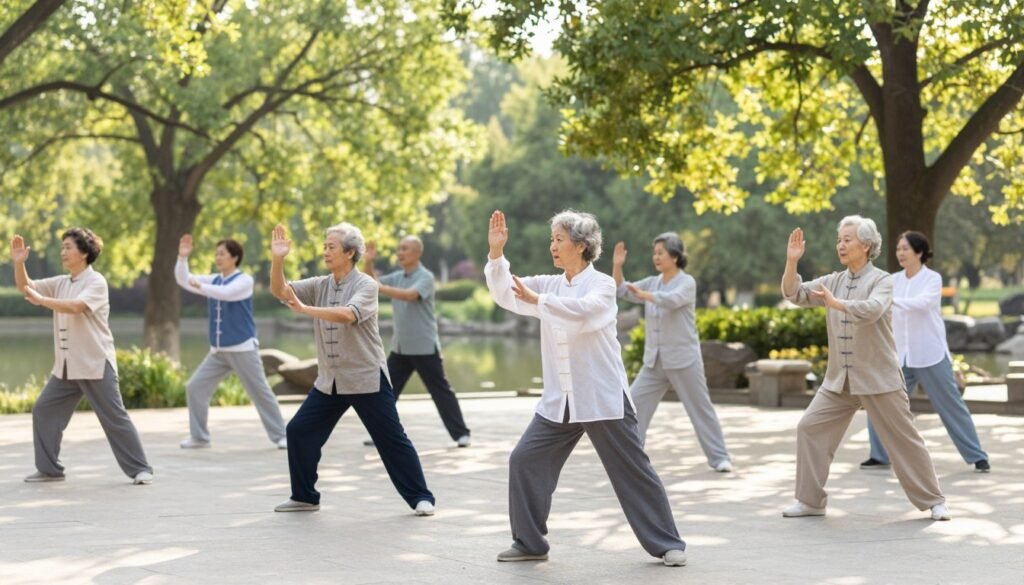
Opening and Closing the Hands
Begin by standing with your feet shoulder-width apart and your arms hanging loosely at your sides. Slowly raise your hands to chest height, keeping your wrists soft and relaxed. As you inhale, gently open your palms outward, and as you exhale, slowly close them back toward your center.
Raising and Lowering the Arms
This movement helps you synchronize your breath with your physical motion. Lift your arms slowly in front of you until they reach shoulder level, feeling the air support your weight. Focus on keeping your elbows slightly bent to ensure your joints remain fluid and tension-free throughout the motion.
Cloud Hands With a Supported Weight Shift
When you are ready to move, try Cloud Hands Tai Chi while standing near a sturdy countertop or chair for extra safety. Shift your weight slowly from one leg to the other while moving your hands in a horizontal, circular pattern. This practice builds core stability and improves your balance during lateral movements.
Wave Hands Like Clouds With Smaller Movements
If full-range motions feel challenging, you can easily adapt the exercise by reducing the size of your steps. Keep your movements compact and close to your body to maintain better control and coordination. By focusing on these smaller, intentional patterns, you will find it much easier to master the flow of Cloud Hands Tai Chi at your own pace.
Tai Chi Exercises for Senior Citizens to Improve Mobility
Mastering these simple forms will help you navigate your world with greater ease. By focusing on controlled weight shifts and intentional steps, you can build a foundation for better physical independence. These tai chi exercises for senior citizens are designed to be gentle on the joints while promoting active, fluid movement.
Parting the Wild Horse’s Mane
This movement is excellent for developing hip mobility and rotational control. You will perform small, controlled torso rotations while taking a diagonal step forward. Focus on keeping your movements smooth rather than rushing through the transition.
Repulse Monkey for Gentle Backward Stepping
Safety is the priority when practicing backward movement. You should always perform this exercise beside a stable piece of furniture or a wall for support. By stepping back with care, you improve your spatial awareness and leg strength.
Brush Knee and Step for Coordinated Movement
Coordinating your arms and legs is a hallmark of effective tai chi movements for elderly practitioners. This form involves a shallow half-step forward combined with a sweeping arm motion. You will find that this practice helps refine your balance during everyday walking tasks.
Golden Rooster Stands on One Leg With Support
Balance is a vital skill that improves with consistent, mindful practice. In this exercise, you will lift one knee while maintaining a tall, upright posture.
- Use a sturdy chair or countertop for essential stability.
- Focus on the quality of your control rather than the height of your foot.
- Keep your standing knee soft to avoid locking the joint.
These tai chi movements for elderly individuals provide a safe way to challenge your stability. Remember to listen to your body and move at a pace that feels comfortable for you.
Seated Tai Chi Exercises for Limited Mobility
Limited mobility does not mean you have to miss out on the grace of Tai Chi. These seated tai chi exercises allow you to enjoy the same health benefits while maintaining a secure, stable position. By using a sturdy chair, you can focus entirely on your posture and breath without worrying about balance.
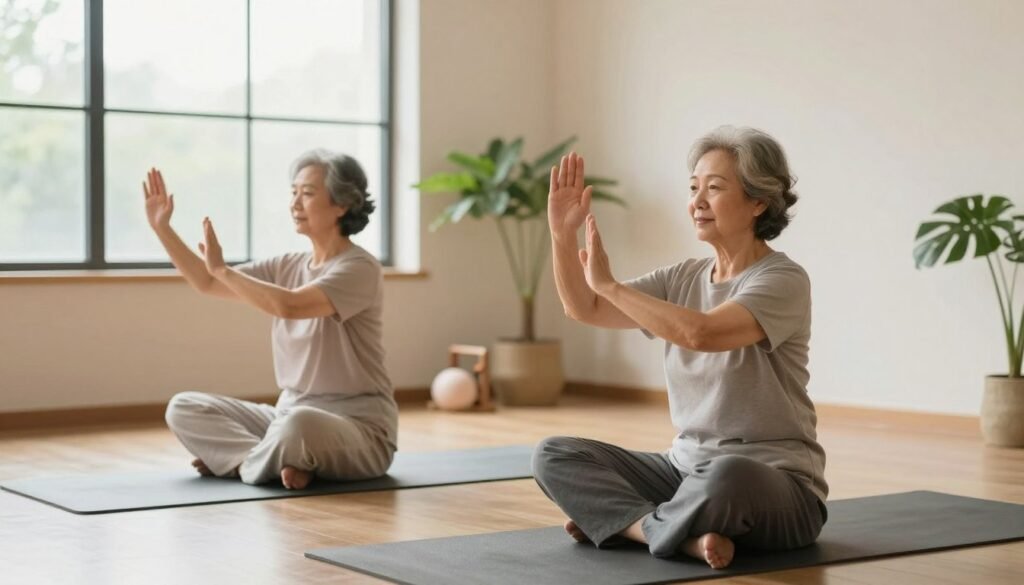
To begin, sit toward the front edge of a chair with your feet flat on the floor. Keep your spine tall and your shoulders relaxed to ensure energy flows freely. This foundation is essential for all tai chi movements for elderly practitioners who need extra support.
Seated Weight Shifts and Foot Lifts
Weight shifting is the heart of this practice, even when you are sitting down. Gently lean your torso from side to side to feel your weight move across your sit bones. This simple action helps you build core awareness and prepares your body for more complex patterns.
Once you feel comfortable, try lifting one heel or toe at a time while keeping the other foot grounded. This controlled movement mimics the stability required for walking. It strengthens your ankles and improves your overall coordination without the risk of falling.
Seated Arm Circles and Reaching Patterns
Arm movements in this practice are designed to be soft and fluid. Start by slowly circling your arms in front of you as if you are tracing the shape of a large ball. These tai chi movements for elderly individuals help loosen the shoulders and improve circulation in the upper body.
You can also practice reaching forward and pulling back gently. Imagine you are pushing through water, keeping your movements slow and deliberate. This creates a sense of inner calm while gently stretching your back and chest muscles.
Coordinating Gentle Leg and Arm Movements
The final step is to bring your upper and lower body together in harmony. Try lifting your right knee slightly as you extend your left arm forward. This cross-body coordination is excellent for brain health and physical fluidity.
Remember to keep your breathing steady throughout these sequences. If you feel tired, simply rest and return to your natural breath. Consistency is far more important than the intensity of your practice.
| Feature | Seated Practice | Standing Practice |
|---|---|---|
| Stability | High (Chair Support) | Moderate (Requires Balance) |
| Core Engagement | Focused on Posture | Dynamic Weight Shift |
| Fall Risk | Very Low | Higher |
| Accessibility | Excellent for All | Requires Mobility |
Tai Chi for Arthritis Relief and Joint Comfort
Finding relief from daily aches often starts with how we choose to move our bodies. Many older adults explore tai chi for arthritis relief as a way to maintain independence and ease of movement. While this practice is not a medical cure, it offers a gentle approach to staying active despite common challenges like knee osteoarthritis or fibromyalgia.
Keeping Movements Smooth Instead of Forceful
The core philosophy of this practice relies on fluid, continuous motion rather than rigid strength. By avoiding forceful movements, you protect your joints from unnecessary stress and impact. Focusing on the quality of the flow allows your muscles to support your frame without overworking sensitive areas.
When you move with intention, you create a sense of ease that radiates through your entire body. Remember that the goal is to feel relaxed and fluid, not to push through resistance. If a movement feels sharp or jarring, simply soften your posture to keep the motion smooth.
Adapting Exercises During Stiff or Tender Days
It is perfectly normal to have days where your body feels more sensitive than others. On these occasions, you can easily modify your routine to match your current energy levels. Tai chi health benefits remain accessible even when you choose to scale back your intensity.
- Reduce the range of motion by keeping your arms closer to your body.
- Practice in a seated position to remove weight-bearing pressure from your knees.
- Perform fewer repetitions to avoid overexertion.
- Use a higher, more stable stance to maintain balance without strain.
Using Warm-Up and Cool-Down Periods to Support Comfort
Preparation is essential for anyone looking to enjoy the long-term tai chi health benefits. Dedicating time to warm up helps lubricate the joints and prepares your muscles for the movements ahead. This gradual start ensures that your body is ready to transition into more active forms.
Similarly, a gentle cool-down period allows your heart rate to return to normal and helps you monitor how your joints feel after the session. Listening to your body during these quiet moments provides valuable feedback on your progress. By staying mindful of your comfort levels, you create a sustainable habit that supports your well-being for years to come.
A Simple Tai Chi Routine for Better Balance and Flexibility
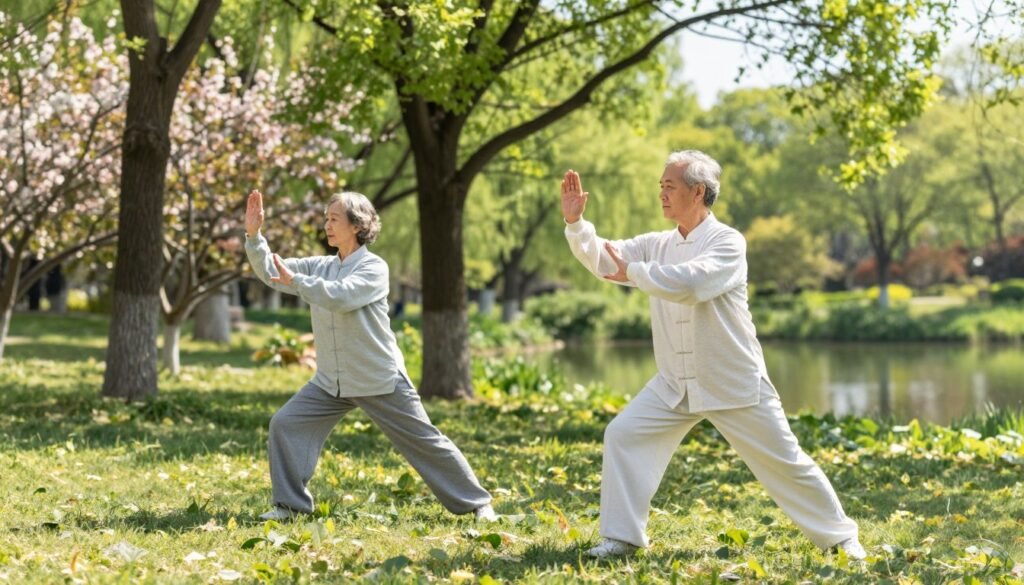
Starting your day with a short, structured practice can transform how you feel and move. By dedicating just five to ten minutes, tai chi for seniors becomes a manageable and rewarding part of your daily life. This routine is designed to be gentle, effective, and easy to follow from the comfort of your home.
Beginning With Breathing and Posture
Every session should start by grounding yourself in the present moment. Stand with your feet hip-width apart, keeping your knees soft and your spine tall. Utilize tai chi breathing techniques by inhaling slowly through your nose, allowing your belly to expand, and exhaling gently to release tension.
Consistency is the bridge between goals and accomplishment. By practicing small movements daily, you build a foundation for lasting mobility and grace.
Adding Warm-Up and Weight-Shifting Movements
Once you feel centered, begin to wake up your joints with light movements. Shift your weight slowly from one leg to the other, keeping your torso upright and stable. These tai chi exercises for senior citizens help prepare your body for more fluid motions while keeping your balance secure.
Practicing a Short Sequence of Tai Chi Forms
Now, you can transition into a short sequence of movements. Start with “Cloud Hands” to encourage fluid arm motion, followed by “Brush Knee and Push” to practice coordination. You may also include “Parting the Wild Horse’s Mane” to gently stretch your torso and improve your reach.
| Movement Phase | Duration | Primary Benefit |
|---|---|---|
| Breathing & Posture | 2 Minutes | Mental Focus |
| Weight Shifting | 3 Minutes | Core Stability |
| Tai Chi Forms | 4 Minutes | Coordination |
| Cool Down | 1 Minute | Relaxation |
Ending With Calm Breathing and Gentle Stretches
Conclude your practice by slowing down your movements significantly. Return to your tai chi breathing techniques to lower your heart rate and calm your nervous system. Finish with a few gentle arm circles and a deep, final breath to ensure you feel refreshed and ready for the rest of your day.
Remember that tai chi exercises for senior citizens are meant to be performed without strain. If you feel tired, use a chair for support or reduce the range of your movements. Staying consistent with tai chi for seniors will yield the best results for your long-term flexibility and balance.
Building a Consistent Weekly Tai Chi Habit
Consistency is the secret ingredient to mastering movement as you age. By turning your practice into a reliable weekly ritual, you allow your body to adapt and grow stronger over time. You do not need to spend hours each day to see real results.
Choosing Practice Length and Frequency
Start by setting aside just ten to fifteen minutes, three times a week. This short duration prevents overtraining while helping your muscles learn new patterns. As you feel more comfortable, you can slowly increase the length of your sessions or add extra days to your schedule.
Many people find that practicing at the same time each day helps them stay on track. Whether you prefer morning sessions to wake up your joints or evening practice to unwind, find a rhythm that fits your lifestyle. If you eventually want more guidance, you might look into local tai chi classes for older adults to refine your technique.
Progressing From Supported to Independent Movement
Safety remains your top priority as you build your skills. Begin your journey using a sturdy chair, a kitchen countertop, or a wall for extra support. This allows you to focus on your form without worrying about losing your footing.
Only move toward independent practice when you feel completely stable and confident. You might start by holding the chair with one hand, then eventually moving to just a light touch. Listen to your body at every stage of this transition to ensure you remain safe and steady.
Tracking Balance, flexibility, comfort, and confidence
Keeping a simple log is a fantastic way to monitor your progress. By writing down how you feel after each session, you can identify which movements help you the most. This data is also helpful to share with your doctor or physical therapist during your next visit.
Use the following table to track your weekly improvements:
| Metric | Goal | Notes |
|---|---|---|
| Balance | Steady footing | Record any wobbles |
| Flexibility | Increased range | Note joint stiffness |
| Confidence | Reduced fear | Track your comfort level |
Focusing on tai chi balance and flexibility will yield the best long-term outcomes. Remember that progress is rarely a straight line, so be patient with yourself. Every small movement you make contributes to a healthier, more active lifestyle.
Finding Tai Chi Classes for Older Adults
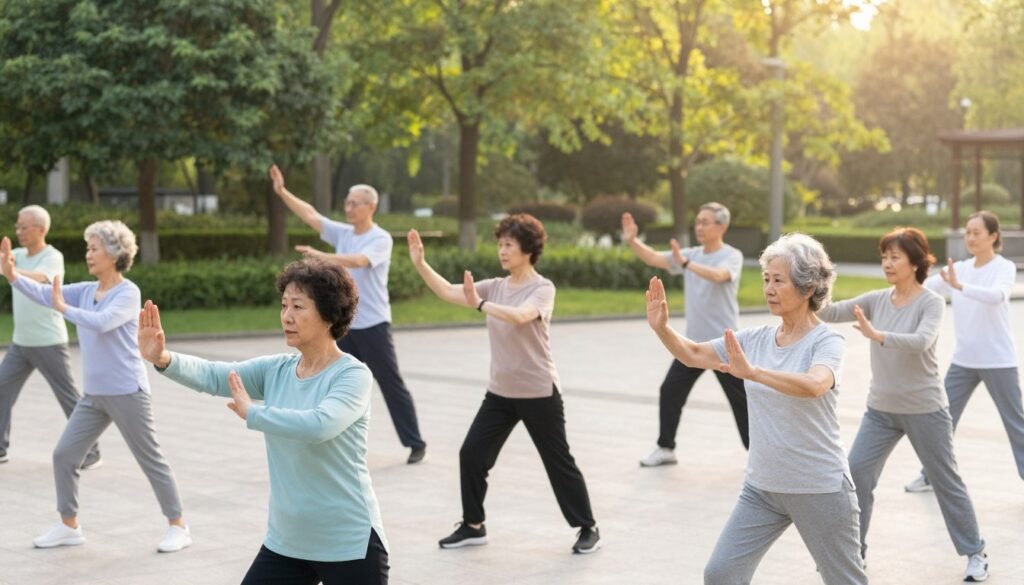
Your path to better mobility begins with choosing the right instructional setting. Whether you are a complete beginner or looking to refine your skills, the environment where you practice plays a significant role in your success. High-quality tai chi classes for older adults provide the structure and encouragement necessary to build confidence safely.
What to Look for in a Qualified Instructor
When searching for a teacher, prioritize those who have specific experience working with the aging population. A great instructor understands that safety is the top priority and will offer modifications for different physical needs. Look for certifications from reputable organizations that emphasize health-focused movement rather than just martial arts applications.
Observe how the teacher interacts with the group during a trial session. A qualified professional should be attentive, patient, and capable of explaining movements in simple, clear terms. They should also be able to demonstrate both standing and seated versions of every form.
Questions to Ask About Class Pace and Accessibility
Before you commit to a program, it is wise to ask specific questions about the class structure. You should inquire if the instructor provides senior Tai Chi classes that allow for chair-supported movements. It is also important to ask about the floor surface, as a non-slip, flat area is essential for preventing falls.
Consider asking the following questions to ensure the environment meets your needs:
- Is there a clear emergency procedure in place for participants?
- How many students are typically in the class to ensure individual attention?
- Are there accessible restrooms and easy entry points for those with mobility aids?
- Does the pace of the class allow for frequent rest breaks?
Comparing Community Centers, Senior Centers, and Online Classes
Different venues offer unique benefits depending on your personal goals and comfort levels. Community centers and YMCAs often provide a social atmosphere, while senior centers are specifically designed with accessibility in mind. Online classes offer the convenience of practicing from home, though they lack the direct supervision of an in-person instructor.
| Class Venue | Social Interaction | Supervision Level | Accessibility |
|---|---|---|---|
| Senior Centers | High | High | Excellent |
| Community Centers | Moderate | Moderate | Good |
| Online Classes | Low | None | Variable |
Ultimately, the best choice for senior Tai Chi classes is one that makes you feel comfortable and supported. If you choose an online format, ensure you have a clear, clutter-free space and a sturdy chair nearby for balance. Regardless of the venue, consistency remains the key to unlocking the full benefits of your practice.
Conclusion
Embarking on a journey toward better mobility starts with small, intentional steps. By integrating these gentle practices into your daily life, you unlock significant tai chi benefits that support your long-term independence. Focus on steady progress rather than speed to ensure your body feels comfortable and secure.
Prioritizing your physical well-being requires listening to your body during every session. Whether you choose standing forms or seated variations, consistent practice helps refine your balance and coordination. Incorporating mindful tai chi breathing techniques allows you to remain calm while you build strength and flexibility.
Research highlights how these movements may improve stability and overall quality of life for older adults. While individual results vary, the commitment to regular activity often leads to noticeable improvements in posture and stress management. Always consult with your healthcare provider before starting a new exercise routine to ensure it aligns with your specific needs.
Explore the diverse tai chi health benefits by staying patient with your personal pace. Your dedication to this practice creates a foundation for graceful aging and sustained vitality. Start your practice today to experience how these simple, controlled motions transform your daily movement and confidence.