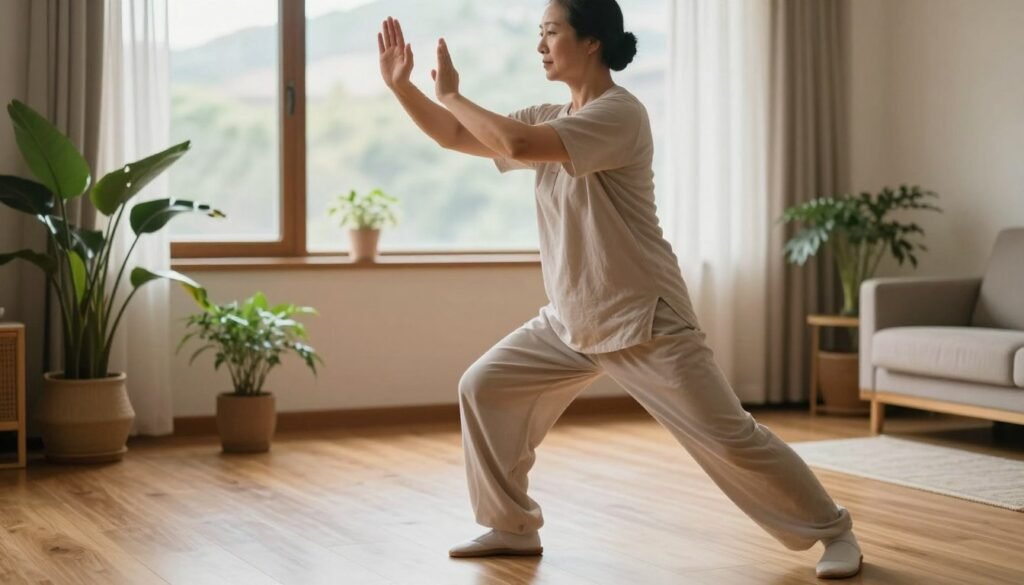
Did you know that consistent, low-impact movement can reduce stress levels by nearly 30% in just a few weeks? Many people believe they need a gym membership or expensive gear to improve their physical well-being. However, you can achieve remarkable results using simple tai chi at home.
This ancient discipline focuses on mindful breathing and fluid motion to boost your balance and flexibility. It is a perfect way to cultivate inner peace without leaving your living room. You do not need special equipment to begin this journey toward better health.
By utilizing high-quality tai chi instructional videos, you can learn the fundamentals at your own pace. These digital guides make it easy to master tai chi exercises at home while ensuring your form remains safe and effective. Embracing this practice allows you to transform your daily routine into a sanctuary of calm.
Key Takeaways
- Improve your physical balance and flexibility without needing gym equipment.
- Reduce daily stress through the power of mindful, continuous movement.
- Access professional guidance easily through digital learning resources.
- Establish a sustainable wellness routine that fits your personal schedule.
- Enhance your mental clarity by focusing on natural, rhythmic breathing.
Why Practice Tai Chi at Home for Health and Relaxation
Many people find that starting a routine of tai chi at home transforms their daily physical and mental well-being. This ancient practice offers a accessible way to cultivate strength and balance without needing a gym membership or expensive equipment.
By dedicating a small portion of your day to these movements, you create a sanctuary for personal growth. It is a gentle approach that fits perfectly into a busy American lifestyle.
How Gentle Movement Supports Everyday Health
Engaging in tai chi exercises at home provides a low-impact workout that benefits the entire body. While the movements appear slow, they actively challenge your muscles and improve your range of motion.
- Improved Balance: Regular practice helps stabilize your core and prevents falls.
- Increased Mobility: Gentle stretching keeps your joints fluid and flexible.
- Functional Strength: You build lean muscle mass through controlled, weight-bearing postures.
Ways Tai Chi Can Ease Stress and Encourage Relaxation
Beyond the physical perks, this practice acts as a powerful tool for mental clarity. The focus on deep, rhythmic breathing helps to lower cortisol levels and calm the nervous system.
When you move with intention, you naturally shift your focus away from daily worries. This meditative quality allows you to find a sense of inner peace even in the comfort of your own living room.
What Beginners Can Realistically Expect
It is important to remember that meaningful changes develop through consistent practice rather than intense, exhausting sessions. You should not expect to master complex forms overnight.
Instead, focus on the small, steady improvements you feel in your body each week. With patience, you will notice that your movements become smoother and your mind feels significantly more at ease.
What Tai Chi Practice Involves
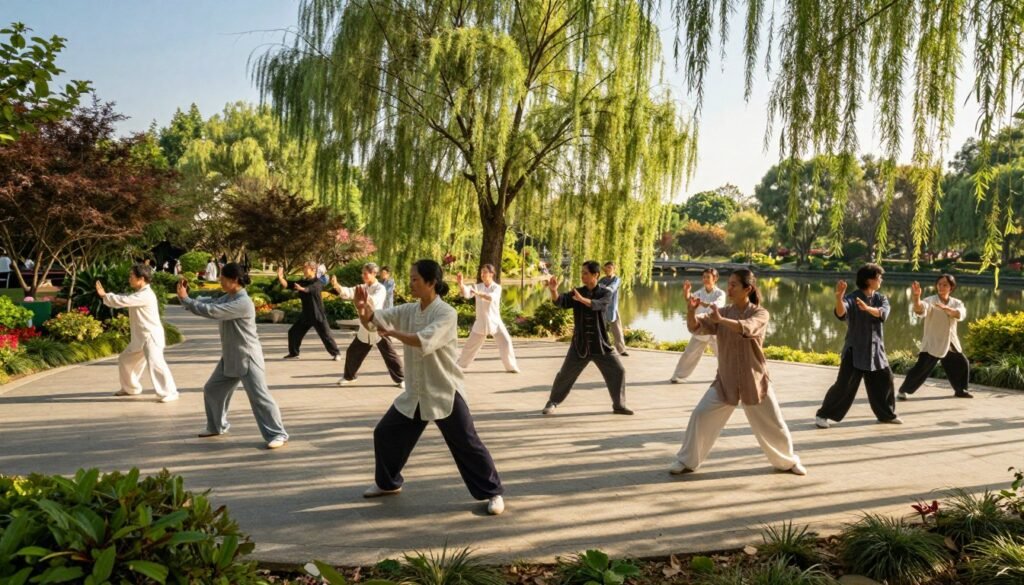
Tai Chi is far more than just slow motion; it is a deliberate art form that connects the mind and body. When you begin your tai chi practice guide, you will discover that the movements are designed to cultivate internal energy and physical balance.
Understanding Slow, Continuous Movement
The hallmark of this practice is the use of slow, fluid motions that never come to a hard stop. By maintaining a continuous flow, you allow your muscles to remain relaxed rather than tense.
Circular motions are preferred over straight lines to ensure that energy moves smoothly through the body. This approach helps beginners avoid the strain often associated with rigid, high-impact exercise.
The Relationship Between Posture, Breathing, and Attention
Success in your tai chi at home routine relies on the harmony between your physical alignment and your mental focus. You must keep your spine upright and your joints soft, ensuring that your knees are never locked.
Deep, natural breathing acts as the anchor for your movements. When you synchronize your breath with your physical transitions, you naturally lower your stress levels and improve your overall concentration.
How Tai Chi Differs From Yoga, Walking, and Conventional Exercise
It is helpful to understand how this practice stands apart from other common fitness activities. The following table highlights the unique nature of these movements.
| Feature | Tai Chi | Conventional Exercise |
|---|---|---|
| Muscle State | Relaxed | Contracted/Tense |
| Movement Style | Circular/Flowing | Linear/Repetitive |
| Joint Impact | Low/Soft | Variable/High |
Unlike walking or weightlifting, which often focus on external goals, Tai Chi emphasizes internal awareness. By practicing tai chi at home, you create a personal space where you can refine these subtle movements at your own pace.
Create a Safe and Comfortable Practice Space
You do not need a professional studio to enjoy the benefits of movement at home. A simple, dedicated area allows you to focus entirely on your form without distractions. By preparing your environment, you make tai chi at home a consistent and enjoyable part of your daily routine.
Choosing Enough Room for Stepping and Turning
When practicing, you need enough space to move freely in all directions. Ensure you have at least a six-foot by six-foot area clear of furniture, rugs, or sharp corners. This space provides the necessary clearance for gentle stepping and turning movements without the risk of tripping.
Selecting Supportive Flooring, Clothing, and Footwear
Your foundation is vital for balance. Choose a flat, non-slip surface like hardwood or low-pile carpet. Avoid thick, plush rugs that can cause instability during weight shifts.
Wear loose-fitting clothing that allows your body to move without restriction. Supportive footwear is also important; look for flat-soled shoes that provide grip while keeping you connected to the ground. This setup ensures that your tai chi exercises at home remain safe and effective.
Improving Comfort With Lighting, Temperature, and Quiet
A calm atmosphere helps you enter a meditative state more quickly. Use soft, natural lighting if possible, or dim your overhead lights to reduce eye strain. Keeping the room at a comfortable temperature prevents your muscles from tightening up during your session.
Finally, minimize noise to help maintain your concentration. If you live in a busy household, consider using headphones for guided audio or simply choosing a time when the house is quiet.
| Feature | Recommendation | Benefit |
|---|---|---|
| Space | 6×6 feet clear area | Prevents tripping |
| Flooring | Flat, firm surface | Improves balance |
| Clothing | Loose, breathable | Full range of motion |
| Environment | Quiet and dim | Enhances focus |
Build a Sustainable Home Practice Schedule
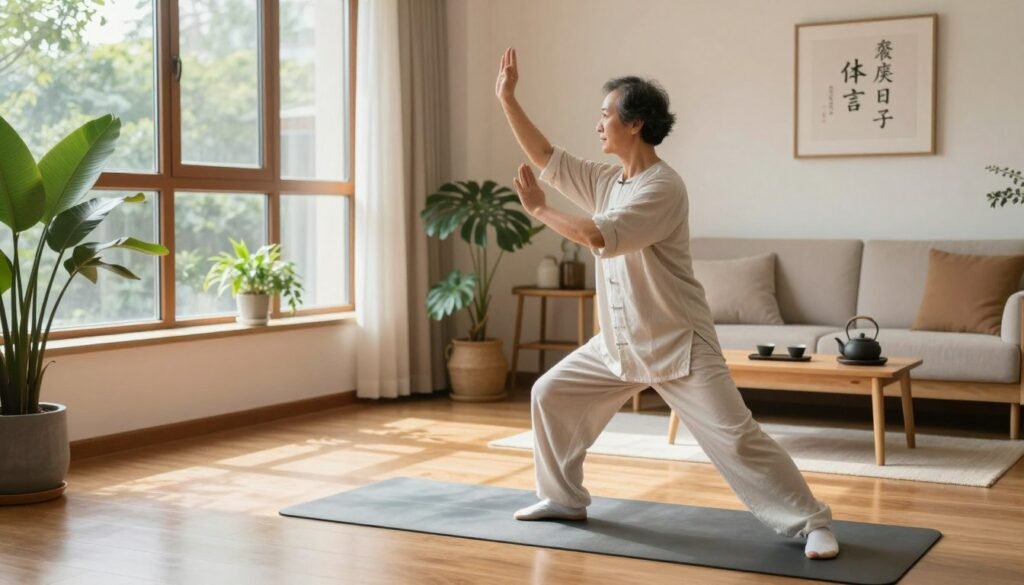
Building a lasting habit requires a thoughtful approach to your daily schedule. Many people fail to maintain their wellness goals because they start with plans that are far too ambitious. By focusing on small, manageable steps, you can create a tai chi training program that fits perfectly into your lifestyle.
Choosing a Consistent Time of Day
The best time to practice is whenever you can commit to being undisturbed for a few minutes. Some individuals prefer the morning to set a calm tone for the day, while others find that evening sessions help them unwind after work.
Consistency matters more than the specific hour you choose. Try to link your practice to an existing habit, such as right after you brush your teeth or before you start your morning coffee. This anchoring technique makes it much easier to remember your routine.
Starting With Short Sessions and Gradual Frequency
When you first begin tai chi at home, keep your sessions brief. Aiming for five to ten minutes is often more effective than trying to force a long, complex workout that leads to burnout.
You can gradually increase the frequency as your body becomes more familiar with the movements. Consider this simple progression plan to build your confidence:
- Week 1-2: Practice for 5 minutes, 3 days per week.
- Week 3-4: Practice for 10 minutes, 4 days per week.
- Week 5+: Increase to 15 minutes or more as you feel comfortable.
Combining Tai Chi With Walking and Other Healthy Habits
Integrating tai chi exercises at home into a broader wellness routine amplifies the benefits for your mind and body. You might pair your movement practice with a short walk in the park or a dedicated hydration break.
Think of your practice as one piece of a larger puzzle. When you combine gentle movement with good sleep hygiene and mindful breathing, you create a sustainable foundation for long-term health. Small, positive changes often lead to the most significant results over time.
Learn the Foundational Posture and Breathing Pattern
Mastering the basics of posture and breath transforms your daily routine into a meditative flow. When you practice tai chi at home, your body acts as the primary instrument for health and relaxation. By focusing on these core elements, you create a stable base that supports every movement you perform.
Aligning the Head, Spine, Hips, Knees, and Feet
Good alignment starts from the ground up. Imagine a string gently pulling the crown of your head toward the sky, which helps to lengthen your spine naturally. Keep your hips level and your knees soft, ensuring they never lock during your practice.
Your feet should remain firmly connected to the floor, about shoulder-width apart. This structural integrity allows energy to flow freely through your body. Following a reliable tai chi practice guide helps you maintain this upright yet relaxed posture throughout your session.
Keeping the Shoulders, Jaw, and Hands Relaxed
Tension often hides in the shoulders, jaw, and hands without us noticing. Consciously release your shoulders away from your ears to prevent unnecessary strain. Allow your jaw to hang loosely, and keep your hands soft as if you are holding a delicate object.
When you let go of this hidden tension, your movements become fluid and graceful. Relaxation is the key to unlocking the full benefits of your routine. By staying mindful of these areas, you ensure that your tai chi at home remains a restorative experience rather than a rigid workout.
Breathing Naturally Without Forcing the Pace
Many beginners make the mistake of trying to synchronize their breath with specific movements too early. Instead, focus on breathing naturally and rhythmically through your nose. Do not force the depth or speed of your inhalations and exhalations.
Your breath should feel like a gentle wave that follows your body’s movement. If you find yourself holding your breath, simply pause and return to a comfortable, steady rhythm. This approach ensures that your tai chi practice guide remains focused on long-term health and mental clarity.
| Body Part | Common Mistake | Correct Alignment |
|---|---|---|
| Knees | Locked or rigid | Soft and flexible |
| Shoulders | Raised or tense | Dropped and released |
| Spine | Slumped or arched | Lengthened and upright |
| Jaw | Clenched tight | Soft and relaxed |
Warm Up Before Tai Chi Exercises at Home
Gentle movement serves as the perfect bridge between your busy day and your focused practice. Before you begin your tai chi exercises at home, it is vital to prepare your body with simple, rhythmic motions. This process helps increase blood flow and improves your overall range of motion.
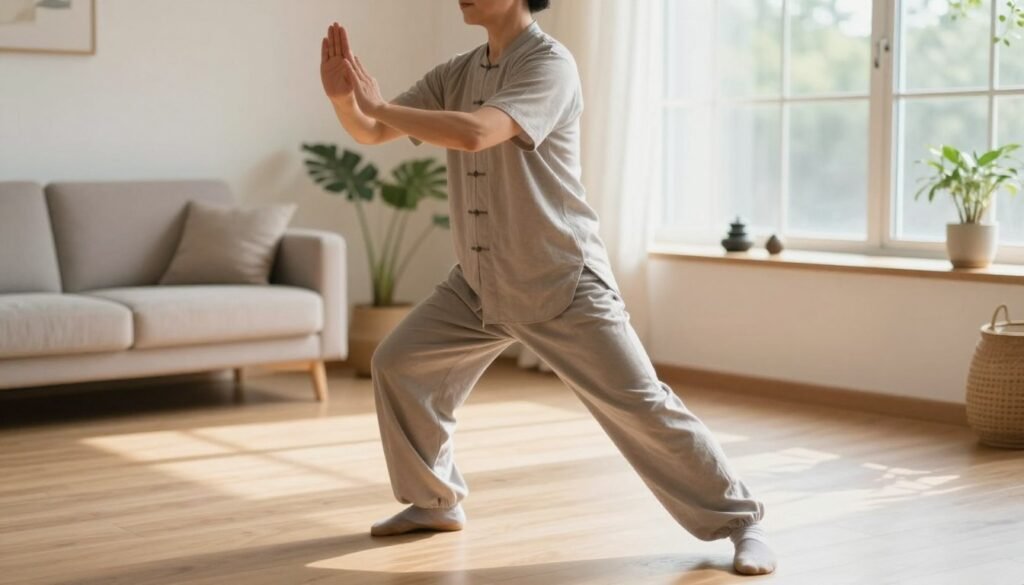
Loosening the Neck, Shoulders, Wrists, and Ankles
Start by standing with your feet shoulder-width apart and your weight evenly distributed. Gently tilt your head from side to side to release tension in the neck. Follow this by rolling your shoulders in slow, circular motions to loosen the upper back.
Next, rotate your wrists and ankles to prepare your extremities for the flowing movements ahead. These small, repetitive actions are a staple of tai chi at home, ensuring that your joints feel fluid and ready for action.
Mobilizing the Hips, Knees, and Spine Gently
Once your upper body feels relaxed, shift your focus to your core and lower body. Gently rock your weight from side to side to mobilize your hips and knees. Keep your spine long and upright, imagining a string pulling the crown of your head toward the sky.
“Preparation is the silent partner of success; by warming up, you honor the body’s need for transition and care.”
You can also perform gentle torso twists to wake up the spine. Remember to keep these movements small and controlled to avoid overstretching your muscles.
Recognizing the Difference Between Useful Sensation and Pain
It is important to listen to your body throughout your tai chi at home session. You should aim to feel a pleasant warmth or a light stretch in your muscles. If you experience sharp, stabbing, or sudden pain, stop the movement immediately.
Distinguishing between a “good” stretch and actual discomfort is a skill that develops over time. Always prioritize your safety while performing your tai chi exercises at home to ensure a sustainable practice.
| Body Area | Warm-up Action | Primary Benefit |
|---|---|---|
| Neck & Shoulders | Slow circles | Reduces stiffness |
| Wrists & Ankles | Gentle rotations | Improves flexibility |
| Hips & Spine | Weight rocking | Enhances balance |
Practice Weight Shifting and Balance With Control
Stability serves as the foundation for every graceful motion you perform. When you practice tai chi at home, your primary goal is to cultivate a deep sense of awareness regarding how your body occupies space. By focusing on your center of gravity, you build the confidence needed for more complex movements.
“Balance is not something you find, it is something you create through constant, mindful adjustment.”
Finding a Stable Stance Before Moving
Before you begin any sequence, take a moment to stand still. Distribute your weight evenly across both feet, ensuring your heels and toes feel firmly planted on the ground. This grounding process helps you prepare your mind and body for the flow of movement.
Transferring Weight From One Leg to the Other
The essence of these movements lies in the slow, deliberate transition of weight. As you shift from one leg to the other, keep your torso upright and avoid leaning forward or backward. Practicing these tai chi exercises at home allows you to refine your proprioception, which is your body’s ability to sense its position in space.
If you feel unsteady, always keep a stable surface like a sturdy chair or wall nearby. This safety measure ensures you can explore your range of motion without the fear of losing your balance. Consistency in these small shifts will eventually lead to greater fluidity.
Keeping the Knees Soft and the Feet Connected to the Floor
Keeping your knees soft is vital for maintaining control and protecting your joints. Avoid locking your knees, as this creates tension and disrupts the natural flow of energy. Your feet should remain fully connected to the floor, acting as the roots that support your entire structure.
| Focus Area | Action | Benefit |
|---|---|---|
| Knees | Keep slightly bent | Reduces joint strain |
| Feet | Maintain full contact | Improves stability |
| Weight | Shift slowly | Enhances balance |
By focusing on these foundational elements, you transform your tai chi exercises at home into a meditative experience. Remember that progress in tai chi at home is measured by the quality of your attention rather than the speed of your movements. Stay patient, stay grounded, and enjoy the process of finding your balance.
Learn Essential Tai Chi Movements for Beginners
You can easily start your practice by mastering a few fundamental movements that form the core of this ancient art. When you perform tai chi exercises at home, the goal is to prioritize smooth transitions over complex choreography. By focusing on these basic patterns, you build the physical awareness needed for a long-term practice.
Opening and Closing the Hands and Arms
The most fundamental movement involves simply raising and lowering your arms in coordination with your breath. As you inhale, gently lift your arms to shoulder height, keeping your elbows soft and relaxed. Exhale as you slowly press your hands back down, feeling the calm energy flow through your fingertips.
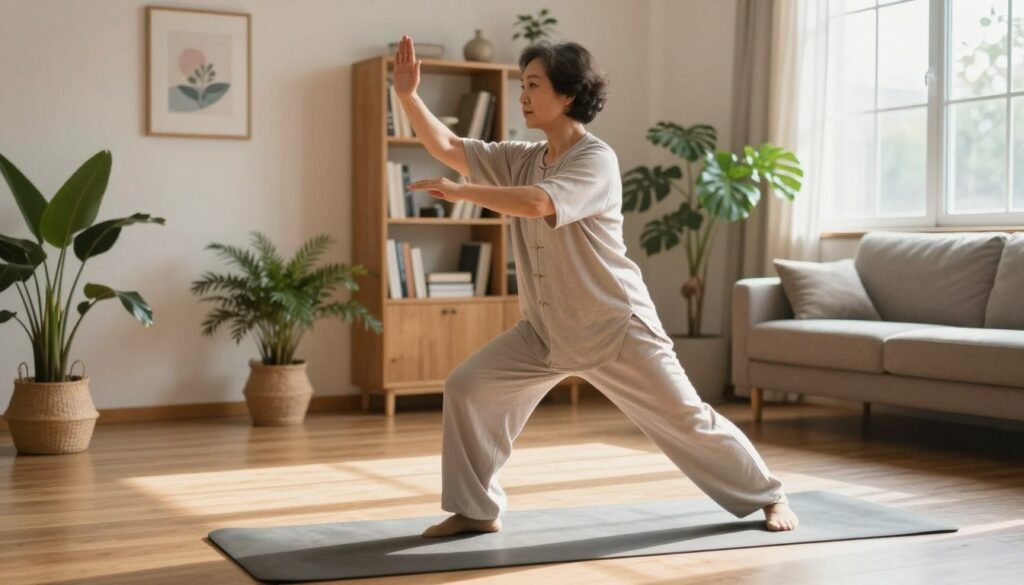
Practicing “Parting the Wild Horse’s Mane”
This movement helps you develop coordination between your upper and lower body. Imagine you are gently pushing aside a curtain as you step forward and shift your weight. Maintaining a steady posture is essential here, as it ensures your movements remain grounded and stable throughout the exercise.
Practicing “White Crane Spreads Its Wings”
This elegant movement emphasizes balance and openness in the chest and shoulders. You will shift your weight back while one arm rises and the other lowers, mimicking the graceful wings of a crane. Following a reliable tai chi practice guide will help you ensure your movements stay within a comfortable range of motion.
Practicing “Cloud Hands” With Small, Controlled Steps
Cloud Hands is a classic movement that teaches you how to shift weight while moving your arms in a circular, flowing motion. Keep your steps small and deliberate to maintain your balance at all times. Practicing this regularly when you do tai chi at home will significantly improve your coordination and inner focus over time.
Follow a Simple Tai Chi at Home Routine
Building a reliable practice routine helps you gain the most from your tai chi exercises at home. By organizing your session into clear, manageable parts, you create a predictable rhythm that supports both physical health and mental clarity.
Begin With Centering and Gentle Warm-Up Movements
Start your session by standing still with your feet shoulder-width apart. Take a few deep breaths to center your energy and clear your mind of daily distractions. Gently rotate your neck, shoulders, and wrists to release any stored tension before you begin the main movements.
Link Weight Shifts With Foundational Hand Patterns
Once you feel loose, begin to shift your weight slowly from one leg to the other. As you move, coordinate your arm movements with your steps to maintain a fluid connection between your upper and lower body. This synchronization is the core of effective tai chi at home practice.
Repeat a Short Sequence Slowly and Smoothly
Select a small group of movements, such as “Cloud Hands” or “Parting the Wild Horse’s Mane,” and perform them in a continuous loop. Focus on keeping your transitions smooth and deliberate rather than rushing through the steps. Repeating a short sequence allows your body to memorize the patterns naturally.
Finish With Standing Stillness and Calm Breathing
Always conclude your tai chi exercises at home by returning to a neutral standing position. Allow your heart rate to settle as you focus on deep, rhythmic breathing for a few minutes. This final period of stillness helps you carry the sense of calm you have cultivated into the rest of your day.
Use Tai Chi Classes Online and Instructional Videos Wisely
Learning Tai Chi from home is more accessible than ever, provided you choose your digital mentors wisely. With a vast array of tai chi resources online, it is easy to feel overwhelmed by the sheer volume of content available. Taking a moment to evaluate your options ensures that your practice remains safe, effective, and enjoyable.
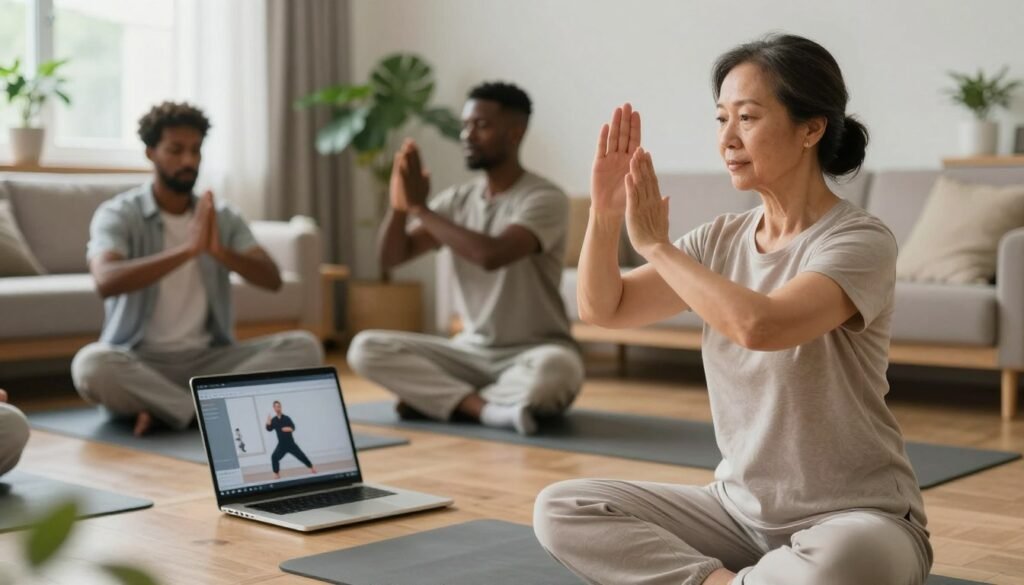
What to Look for in a Qualified Online Instructor
When searching for a teacher, prioritize instructors who emphasize foundational principles over complex choreography. A qualified guide should clearly explain how to modify movements to accommodate different fitness levels or physical limitations. Look for professionals who encourage a relaxed, non-competitive atmosphere that supports your personal health goals.
Check if the instructor provides clear, verbal cues that help you maintain proper alignment. Good teachers will often demonstrate movements from multiple angles, making it easier for you to follow along in your own space. Prioritizing clarity and safety is the best way to ensure you are learning the art correctly from the start.
Comparing Live Tai Chi Classes Online With Recorded Lessons
Deciding between live sessions and pre-recorded content depends largely on your need for feedback and scheduling flexibility. Live tai chi classes online offer the distinct advantage of real-time interaction, where an instructor can observe your posture and offer corrections. This immediate guidance is invaluable for beginners who want to avoid developing bad habits early on.
Conversely, recorded lessons provide the freedom to practice whenever your schedule allows. You can pause, rewind, and repeat specific segments as many times as needed to master a movement. This format is perfect for those who prefer a self-paced approach or have unpredictable daily routines.
| Feature | Live Online Classes | Recorded Lessons |
|---|---|---|
| Feedback | Real-time corrections | Self-assessment |
| Flexibility | Fixed schedule | On-demand access |
| Pacing | Group-led | User-controlled |
Using Tai Chi Instructional Videos Without Copying Advanced Forms Too Soon
It is tempting to jump straight into complex sequences when watching tai chi instructional videos, but patience is your greatest asset. Advanced forms often require a level of balance and coordination that takes time to develop. Focusing on basic weight-shifting and breathing patterns will build a much stronger foundation for your future progress.
Avoid the urge to mimic the speed or depth of an expert performer immediately. Instead, treat these videos as a library of movements to be studied slowly and methodically. By mastering the simple steps first, you ensure that your body remains comfortable and free from unnecessary strain as you grow in your practice.
Choose a Tai Chi Training Program That Fits Your Goals
Selecting a program that aligns with your personal health goals makes all the difference. Whether you are looking to improve your physical stability or simply want a way to unwind, the right tai chi training program will provide the structure you need to succeed.
Taking the time to research your options ensures that your practice remains enjoyable and sustainable. By choosing a path that matches your current energy levels, you can build a lasting habit of wellness.
Selecting Beginner, Health-Focused, or Traditional Instruction
Many people start their journey by looking for beginner-friendly content that emphasizes basic movements. These programs often focus on simple, repetitive motions that are easy to follow without prior experience.
If your primary interest is physical well-being, you might prefer health-focused instruction. These sessions often highlight gentle stretching and joint mobility, making them ideal for those practicing tai chi at home to manage stiffness or tension.
Traditional instruction, on the other hand, dives deeper into the history and philosophy of the art. While rewarding, these programs may require more patience as you learn complex sequences and specific martial applications.
Evaluating Lesson Length, Form Complexity, and Practice Frequency
When you explore tai chi classes online, consider how much time you can realistically dedicate each day. Short, ten-minute lessons are often better for building consistency than long, infrequent sessions.
Look for programs that offer a clear progression in form complexity. Starting with simple movements allows you to master your balance before moving on to more intricate patterns that require greater coordination.
Adapting a Program for Mobility, Balance, Stress Relief, or General Fitness
Your goals should dictate the style of movement you choose to prioritize. If you are seeking stress relief, look for instructors who emphasize slow, rhythmic breathing and meditative focus.
For those focused on mobility or balance, prioritize programs that offer modifications for different physical abilities. The following table helps you compare how different styles might support your specific needs:
| Program Focus | Primary Benefit | Complexity Level | Best For |
|---|---|---|---|
| Beginner Basics | Foundational Skills | Low | New Practitioners |
| Health-Focused | Joint Mobility | Moderate | Pain Management |
| Traditional Form | Mental Discipline | High | Long-term Study |
| Stress Relief | Calm & Relaxation | Low | Daily Wellness |
Progress From Basic Movements to a Short Form
Transitioning from individual movements to a cohesive sequence is a rewarding milestone in your journey. When you practice tai chi at home, the goal is to eventually link these movements into a fluid, continuous flow. This process helps you move beyond simple repetition and into a state of active meditation.
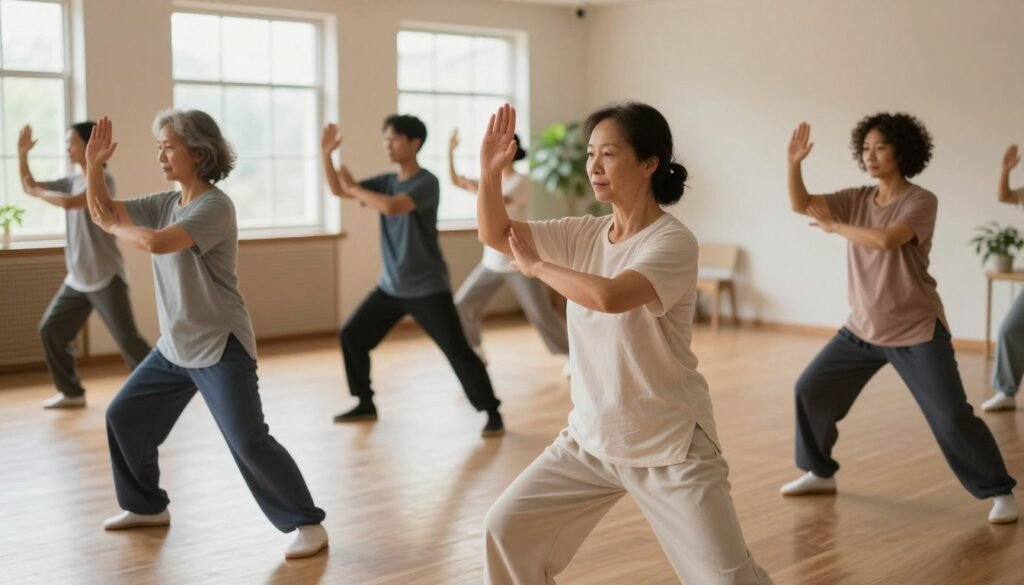
Memorizing Movements in Small Sections
The most effective way to learn a sequence is to break it down into manageable chunks. Focus on mastering just two or three movements before attempting to add more to your routine. Patience is your greatest ally during this phase of learning.
By isolating specific segments, you ensure that each posture is stable and correct. Once you feel comfortable with a small section, you can slowly begin to connect it to the next part of the form.
Improving Transitions, Balance, and Coordination
Transitions are the bridges that connect your movements. Smoothly shifting your weight between postures is essential for maintaining balance and grace. You should focus on the following elements to refine your flow:
- Keep your movements slow and deliberate to maintain control.
- Ensure your weight shifts are complete before initiating the next arm movement.
- Maintain a soft, upright posture to support your center of gravity.
Using a reliable tai chi practice guide can help you visualize how these transitions should look. Consistent attention to these details will naturally improve your overall coordination over time.
Increasing Practice Time Without Sacrificing Relaxation
As you become more familiar with the sequence, you may feel tempted to extend your sessions. It is important to increase your duration gradually to avoid physical tension. A structured tai chi training program lasting about 12 weeks provides a perfect timeline to build your skills.
Always prioritize mental and physical ease over the length of your session. If you find yourself rushing or feeling stiff, return to shorter, more relaxed repetitions. Practicing tai chi at home should remain a restorative experience that leaves you feeling energized rather than exhausted.
Adapt Tai Chi for Different Abilities and Energy Levels
Adapting your routine ensures that you stay consistent with your goals while respecting your body’s current needs. Tai Chi is a versatile practice that welcomes everyone, regardless of their physical condition or daily energy levels. By making small adjustments, you can maintain your momentum and continue your progress safely.
Practicing Seated or Partly Seated Movements
If standing for long periods feels difficult, you can easily perform tai chi exercises at home while seated in a sturdy chair. This approach allows you to focus on the flow of your arms and the depth of your breathing without worrying about your legs. You might also choose to stand while holding onto the back of a chair for extra stability.
- Keep your feet flat on the floor to maintain a grounded connection.
- Ensure your spine remains upright to allow for natural, deep breaths.
- Focus on the circular motion of your hands to capture the essence of the movement.
Reducing Range of Motion During Fatigue or Stiffness
There are days when your body may feel stiff or your energy levels might be lower than usual. During these times, it is perfectly acceptable to reduce the size of your movements. A tai chi practice guide often emphasizes that the internal focus is far more important than the physical reach of your limbs.
By slowing down your transitions and keeping your movements small, you conserve energy while still reaping the benefits of the practice. Listen to your body and prioritize comfort over achieving a wide, sweeping posture. This gentle approach helps you stay consistent with your tai chi at home routine without causing unnecessary strain.
Making Balance Challenges Easier or More Advanced
Balance is a skill that improves over time, but you should always tailor the difficulty to your current comfort level. If you feel unsteady, keep your feet closer together or maintain a wider base of support to increase your stability. You can also keep your weight shifts subtle to avoid feeling off-balance.
For those looking to increase the challenge, you can gradually widen your stance or hold your poses for a few extra seconds. Remember that true progress is measured by your sense of calm and ease rather than the complexity of the movements. Practicing tai chi at home should always be a rewarding experience that supports your long-term health goals.
Practice Safely and Know When to Seek Guidance
Staying safe while you practice tai chi exercises at home requires a bit of mindfulness and common sense. Even though these movements are low-impact, your body still needs to be treated with care and respect. By listening to your physical cues, you can enjoy the many benefits of this practice without unnecessary risk.
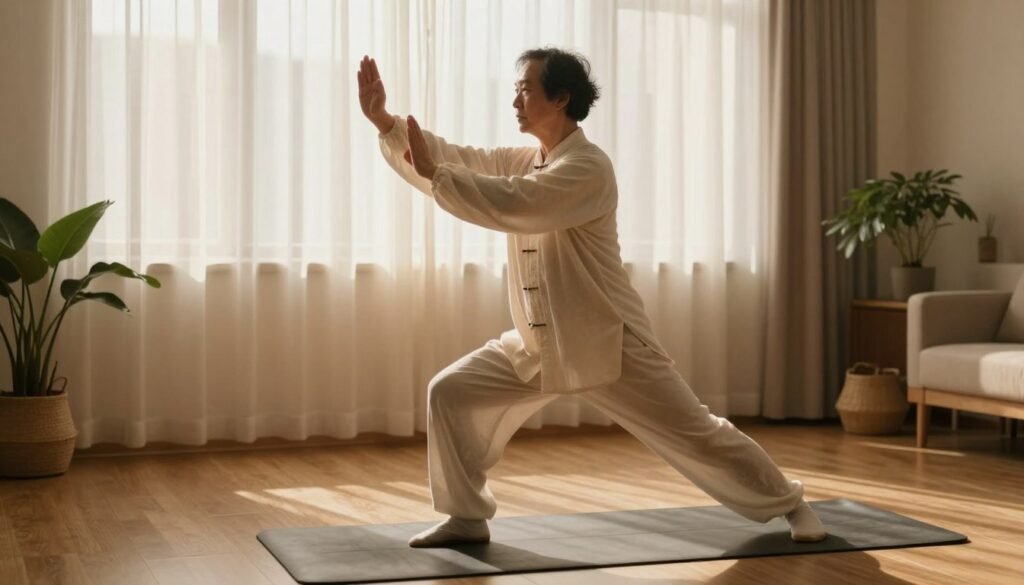
Common Mistakes That Create Unnecessary Strain
Many beginners accidentally create tension by locking their joints or over-extending their reach. It is important to keep your knees soft and your movements fluid rather than rigid. Forcing a posture beyond your natural range of motion often leads to discomfort or muscle fatigue.
Another common error involves holding your breath during complex sequences. Always remember to breathe naturally and rhythmically to keep your energy flowing. Maintaining a stable, grounded stance is also vital to prevent slips or loss of balance while you practice tai chi at home.
Stopping for Sharp Pain, Dizziness, or Unusual Shortness of Breath
Your body will usually provide clear signals when it needs a break. If you experience sharp pain, sudden dizziness, or unusual shortness of breath, stop your session immediately. These are not signs of progress, but rather indicators that you should rest and recover.
Distinguish between the sensation of muscle work and actual pain. While a light stretch or mild fatigue is normal, sharp or shooting sensations are not. Prioritize your comfort and never push through symptoms that feel different from ordinary physical effort.
Discussing New Exercise With a Health Care Professional When Appropriate
If you have a pre-existing medical condition or a history of joint issues, it is wise to consult your doctor before starting. This is especially important if you take medication that might affect your balance or blood pressure. A quick conversation with a health care professional can provide peace of mind.
They can offer personalized advice on how to adapt your routine to suit your specific needs. Taking this proactive step ensures that your experience with tai chi at home remains safe, sustainable, and deeply rewarding for your long-term health.
Use Tai Chi Resources Online and Track Your Progress
You can enhance your home practice by utilizing high-quality digital tools and keeping a thoughtful record of your growth. Integrating these elements into your daily life helps turn a simple exercise into a meaningful wellness journey.
Finding Reliable Tai Chi Practice Guides and Demonstrations
The internet offers a wealth of information, but quality varies significantly. When searching for tai chi resources online, look for instructors who emphasize safety, alignment, and slow, deliberate movement rather than speed or complex choreography.
High-quality tai chi instructional videos often provide multiple camera angles. These visual aids allow you to observe subtle weight shifts and hand placements that are difficult to describe in text alone.
Recording Sessions, Repetitions, and How the Body Feels
Keeping a simple log acts as a personal tai chi practice guide that evolves with you. Instead of just marking off days, try to note how your body feels during and after each session.
“The journey of a thousand miles begins with a single step.”
Consider tracking the following metrics to gain a better understanding of your development:
| Metric | What to Record | Why it Matters |
|---|---|---|
| Duration | Minutes spent | Builds endurance |
| Balance | Confidence level | Tracks stability |
| Mood | Stress reduction | Measures mental calm |
Measuring Progress Through Consistency, Ease, Balance, and Calm
True progress in this practice is rarely about how many forms you have memorized. It is measured by the ease of your movement and the depth of your relaxation during each session.
Over time, you will notice that your balance improves and your breathing becomes more natural. Consistency is the secret ingredient that transforms these small, daily efforts into lasting health benefits for your mind and body.
Conclusion
Building a sustainable routine for tai chi at home offers a path to lasting physical and mental wellness. You gain strength, flexibility, and improved balance by focusing on steady, mindful movements. This practice serves as a gentle way to nurture your body while finding quiet moments of relaxation in your daily life.
Success comes from listening to your body and adapting each movement to your current energy levels. You should prioritize natural breathing and comfortable posture over complex forms. Always consult with a health care professional if you have concerns about starting a new physical activity. Using a reliable tai chi practice guide helps you maintain focus on your personal growth and steady improvement.
Explore various tai chi resources online to find instructors who align with your specific goals and comfort level. Tracking your sessions allows you to see how consistency leads to greater ease and coordination. Your progress is measured by the calm you feel and the steadiness you develop over time. Enjoy the process of moving with intention and discovering the benefits of this ancient art in your own space.